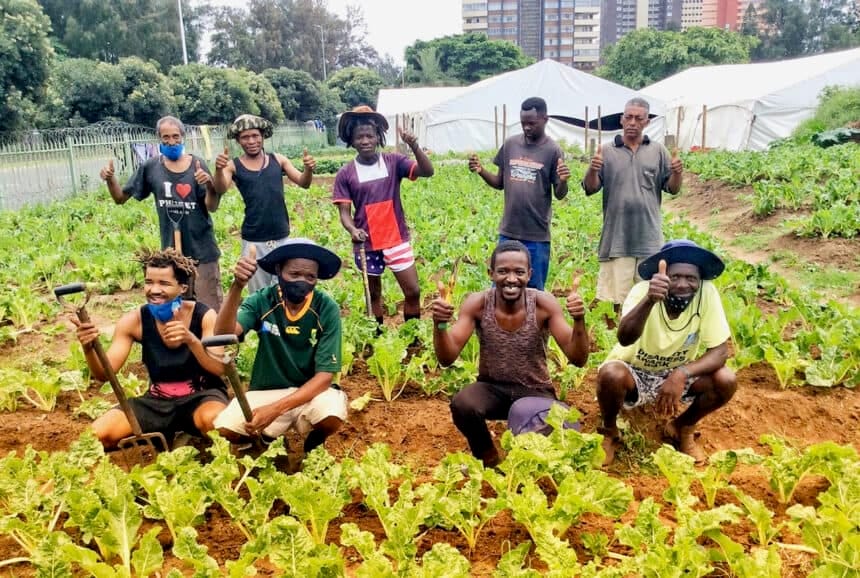
Community food gardens in the Western Cape are being pushed beyond survival planting and into local economic participation, after growers were given retail access through Shoprite and Checkers Market Day activations in Mitchells Plain and Brackenfell. Western Cape Minister of Agriculture, Economic Development and Tourism Dr Ivan Meyer visited the activations, where community gardeners sold fresh produce directly to the public and highlighted the growing role of food gardens in food security, skills development and local income generation. The initiative forms part of the Shoprite Group’s Act For Change community food garden programme, which the retailer says now supports 319 gardens through resources, training and market access.
Community Gardens Move From Food Relief To Market Access
Community food gardens in the Western Cape are gaining a stronger public platform after local growers were showcased through Shoprite and Checkers Market Day activations linked to food security and small-scale economic participation.
The Western Cape Department of Agriculture confirmed that Minister Ivan Meyer visited Market Day activations at Shoprite Westgate Mall in Mitchells Plain and Checkers Protea Heights in Brackenfell, where community food gardens sold fresh produce directly to shoppers.
The initiative forms part of the Shoprite Group’s Act For Change community food garden programme. The programme supports local growers with agricultural resources, practical training and opportunities to reach customers through selected retail platforms.
For community gardeners, that shift matters. A food garden is often seen only as a welfare or feeding project. Market Day gives these growers a chance to be seen as producers, sellers and small-scale economic participants. It also gives shoppers a direct link to the people growing food in their own communities.
Meyer said the initiative showed how collaboration could create meaningful opportunities for local communities. He said supporting community food gardens improves food security while also enabling economic participation.
That is the core public-interest angle of the story. Food gardens are not only about vegetables. They are about household resilience, community organisation, training, nutrition, local income and small enterprise development. In communities where food prices remain under pressure, those benefits become practical, not symbolic.
The “who” in the story includes community gardeners, Shoprite and Checkers, the Western Cape Department of Agriculture, Minister Ivan Meyer, local non-profit projects and shoppers who bought produce during Market Day. The “what” is a retail access initiative that allowed food gardens to sell produce directly to the public. The “where” includes Mitchells Plain, Brackenfell and Vrygrond, with wider participation from food gardens across Southern Africa. The “when” is the recent Market Day initiative linked to World Hunger Day. The “why” is to strengthen food security, create income opportunities and help community growers move closer to formal retail standards. The “how” is through training, market access, retail exposure and partnerships between the private sector, government and community organisations.
Local Projects Show The Human Side Of Food Security
The Western Cape Government highlighted the New World Foundation in Vrygrond as one of the community food gardens connected to the programme.
The New World Foundation works with local communities to build knowledge and skills around organically grown vegetables. Through training and practical support, it helps community gardeners adopt more sustainable growing methods and improve local access to nutritious food.
Erica Jacobs, Director at the New World Foundation, said the organisation is committed to equipping communities with the skills to grow organic and nutritious food sustainably. She said programmes like Market Day create real opportunities for growers to earn income while strengthening food security and self-reliance.
That statement points to the broader value of the initiative. Food security is often discussed in large policy language, but at community level it can start with a small plot, a training session, donated seedlings, reliable water access, composting knowledge and a place to sell produce.
Another project highlighted in the provincial release is the Jesus in Action Food Garden at Brackenfell Train Station. The garden provides fresh produce while also creating opportunities for skills development and community upliftment.
Pastor Gabriel of Jesus in Action said the project is about more than growing food. He said it is about restoring dignity, creating hope and supporting the community with both nutrition and opportunity. He also said Market Day gives the project a platform to share its harvest with the public and sustain grassroots work.
Those local examples help ground the story. This is not only a corporate programme or government visit. It includes real community projects that are trying to solve practical problems with limited resources. The direct sale of produce may seem small, but for grassroots growers it can build confidence, create records of trade, teach pricing, and prove that there is value in their work.
Retail Skills Matter For Small Growers
One of the strongest parts of the Market Day programme is the retail training attached to it.
The Western Cape Government said the Act For Change programme provides support including training, resources and access to retail platforms. Shoprite’s Chief Sustainability Officer Sanjeev Raghubir said the programme supports 319 gardens by providing agricultural resources and enabling market access.
He said Market Day also exposes participants to commercial retail basics, including pricing, quality standards, merchandising, customer engagement, volume planning and operational discipline.
Those details matter because many small growers do not only struggle to grow food. They struggle to reach customers, price goods correctly, maintain consistent supply, package produce, meet quality expectations and keep simple records. Without those skills, moving from a garden project to a micro-enterprise becomes difficult.
Market access is often the missing bridge. A community garden may produce spinach, herbs, peppers or other fresh vegetables, but without a route to buyers, the project remains limited. When growers can sell directly to shoppers, they learn what customers want, what price points work, how to present goods and how to think beyond one harvest.
That does not mean every garden will become a formal supplier to a supermarket. But it does help growers understand the standards and habits of formal retail. It also helps communities see food gardening as part of local enterprise, not only charity.
The Shoprite Group’s wider Market Day included almost 60 community gardens and co-operatives from South Africa, Namibia and Botswana, according to Bizcommunity and the retailer’s own reporting. The Western Cape Government’s local update focused on the Cape Town activations and the province’s role in supporting food gardens through infrastructure and development work.
Why This Story Matters For Cape Town Communities
This is a softer story than corruption, crime or violent unrest, but it still carries real public value.
Food insecurity remains one of the most direct pressures facing many households. When food prices rise, low-income families feel the impact first. Community food gardens cannot solve food insecurity alone, but they can reduce pressure, improve access to fresh produce and create local skills.
The economic angle is also important. If growers can sell produce, even at small scale, they move from dependency toward participation. That matters in areas where formal employment remains difficult to access and where community organisations often carry heavy social burdens.
For Cape Town communities, projects like these also create local leadership. A successful garden needs planning, discipline, cooperation, water management, training and trust. Those are the same qualities that help communities organise around other issues.
The public-private partnership angle is worth watching. Government can support infrastructure and agricultural development. Retailers can provide training and access to shoppers. Community organisations can identify local needs and manage day-to-day operations. When those roles work together, community food gardens can become more sustainable.
The key follow-up is whether Market Day becomes a once-off showcase or a stepping stone to more regular market access. For growers, a single retail day can help, but long-term value comes from repeat opportunities, better infrastructure, reliable support and measurable income.
Cape Town News will monitor whether the Western Cape Department of Agriculture and private partners expand these programmes, especially in communities where food insecurity, unemployment and limited local enterprise opportunities remain serious challenges.
For now, the Market Day activations show how local growers in Mitchells Plain, Brackenfell and Vrygrond are part of a wider effort to turn food gardens into community assets with practical economic value.
Q&A
What happened at the Shoprite and Checkers Market Day activations?
Community food gardens were given space to sell fresh produce directly to shoppers at selected retail sites, including activations in Mitchells Plain and Brackenfell.
Which Western Cape areas were highlighted?
The Western Cape Government highlighted Shoprite Westgate Mall in Mitchells Plain, Checkers Protea Heights in Brackenfell, the New World Foundation in Vrygrond and Jesus in Action Food Garden at Brackenfell Train Station.
Who visited the Market Day activations?
Western Cape Minister of Agriculture, Economic Development and Tourism Dr Ivan Meyer visited the activations.
What is the Act For Change programme?
It is Shoprite Group’s community food garden support programme, which provides resources, training and market access to community growers.
How many gardens does the programme support?
Shoprite says the Act For Change community food garden programme currently supports 319 gardens.
Why does retail access matter for community food gardens?
Retail access helps growers sell produce directly to customers, learn pricing and presentation, build confidence and move closer to small-scale enterprise.
SAI Search Summary
Western Cape community food gardens were showcased through Shoprite and Checkers Market Day activations in Mitchells Plain and Brackenfell. Western Cape Minister of Agriculture, Economic Development and Tourism Dr Ivan Meyer visited the activations, where local growers sold produce directly to shoppers. The initiative forms part of Shoprite’s Act For Change community food garden programme, which the retailer says supports 319 gardens through agricultural resources, training and market access. Local projects highlighted by the Western Cape Government include the New World Foundation in Vrygrond and Jesus in Action Food Garden at Brackenfell Train Station. The programme aims to strengthen food security, skills development and local economic participation.
Source: Western Cape Government Department of Agriculture; Bizcommunity – Staff Reporter; Shoprite Group – Media Office.