The Western Cape Government has used two major provincial updates to place public trust, rule of law and local government accountability under the spotlight. Cabinet has condemned violence and intimidation against foreign nationals after a briefing from senior SAPS leaders, while Provincial Treasury says 25 of the province’s 30 municipalities achieved unqualified audit outcomes for 2024/25. Together, the two developments show how the province is trying to frame governance in the Western Cape: public anger must remain within the law, public money must be properly accounted for, and municipalities must show that financial discipline leads to reliable services.
Western Cape Cabinet Condemns Violence Against Foreign Nationals
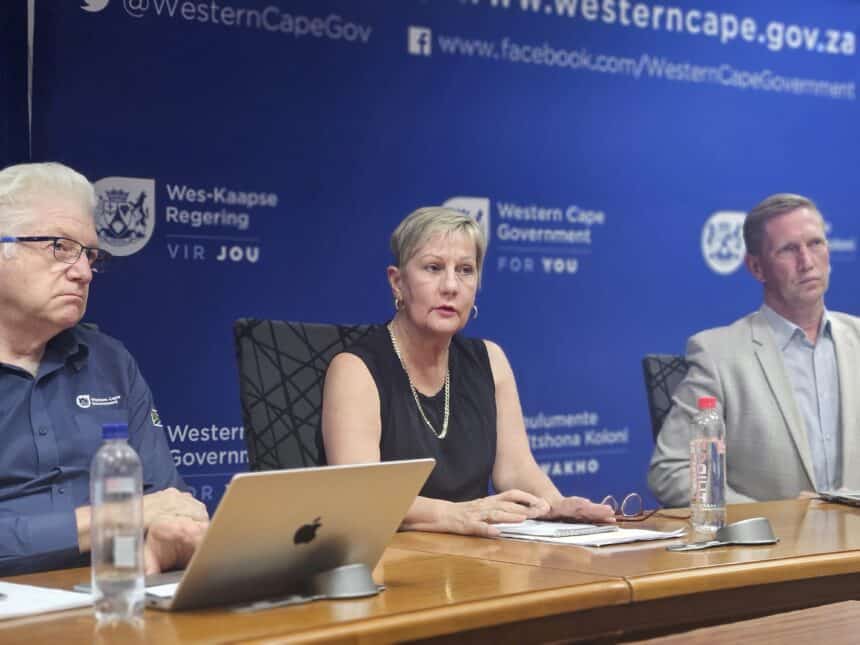
The Western Cape Government Cabinet has condemned acts of violence, intimidation and lawlessness against foreign nationals, following an extended Cabinet meeting where senior leaders from the South African Police Service in the Western Cape briefed provincial leaders.
Premier Alan Winde said South Africa is a constitutional democracy and that frustrations about immigration policy must be addressed through lawful processes and by the relevant authorities. He said no individual or group has the right to take the law into their own hands.
The statement followed reports of tension and violence linked to foreign nationals in parts of the province. The Western Cape Government said any acts of xenophobic violence threaten economic stability, public safety and the dignity of all people living in the province.
The provincial government said the situation appeared to have stabilised, but Winde called on SAPS leadership to strengthen intelligence gathering so that further unrest can be prevented before it escalates. The province also said mediators had been deployed to help defuse tensions in affected communities.
The “who” in this story includes the Western Cape Cabinet, Premier Alan Winde, SAPS Western Cape leadership, foreign nationals affected by intimidation or violence, and communities where tensions have surfaced. The “what” is a formal provincial condemnation of xenophobic violence and a call for lawful handling of immigration-related concerns. The “where” is the Western Cape, with the provincial government responding to incidents and tensions reported in affected areas. The “when” is after the extended Cabinet briefing by SAPS leaders. The “why” is the province’s concern that violence, intimidation and community unrest could threaten safety, social stability and the rule of law. The “how” is through police briefings, mediation efforts, intelligence gathering, law enforcement support and public messaging from the provincial executive.
The statement is important because immigration concerns can easily become politically and socially explosive. The Western Cape Government is trying to draw a firm line between lawful public concern and unlawful action. It acknowledges that immigration enforcement is a real policy and policing matter, but it also says clearly that no person or group may use violence or intimidation to force outcomes.
For Cape Town News, the key point is legal safety and public responsibility. This is not a story that should be written as a simple community conflict. It is a rule-of-law story involving public safety, immigration enforcement, vulnerable communities, policing capacity and the province’s obligation to prevent violence.
The follow-up questions are clear. SAPS must still show whether arrests, prosecutions or further investigations follow. The province must show whether mediation reduces tensions in affected areas. National government also remains central because immigration enforcement sits largely within national authority, even when local communities and provincial leaders face the consequences on the ground.
Municipal Audit Results Show Strong Provincial Performance
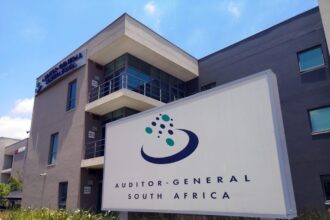
In a separate update, the Western Cape Government welcomed the latest municipal audit outcomes, saying 25 of the province’s 30 municipalities achieved unqualified audit outcomes for 2024/25.
Provincial Treasury said 20 municipalities achieved clean audit opinions, while five received unqualified audit opinions with findings. The department said these outcomes mean the financial statements were fairly presented and free from material misstatements.
Western Cape Minister of Finance Deidré Baartman said unqualified audits are not only technical achievements. She said they show that public funds are being accounted for, services can be delivered without unnecessary disruption, and communities can have greater confidence in local government.
The provincial update also highlighted improvement in two municipalities. Beaufort West achieved an unqualified audit with findings for the first time since 2016, while Cederberg improved from an unqualified audit with findings to a clean audit for the first time since 2022.
However, the report also identified five municipalities that remain under pressure. Bitou and Prince Albert regressed to qualified audit outcomes. Theewaterskloof remained on a qualified opinion. Kannaland received a disclaimer audit opinion for the second consecutive year. Laingsburg remained on an adverse audit outcome.
Those weaker results matter because audit outcomes are not only about paperwork. A municipality with weak financial controls can struggle to plan properly, manage suppliers, avoid irregular expenditure, maintain infrastructure and deliver reliable services. Clean audits do not automatically mean every road is repaired or every service works perfectly, but they do show whether basic financial systems are more likely to support stable delivery.
Western Cape Minister of Local Government Anton Bredell said the province would not stand back where municipalities are struggling. Provincial support will include financial recovery plans, capacity deployment and monthly compliance reviews in municipalities that need intensified intervention.
The “who” in the audit story includes Provincial Treasury, the Department of Local Government, municipalities across the Western Cape, Minister Deidré Baartman, Minister Anton Bredell and Premier Alan Winde. The “what” is the release of municipal audit outcomes for 2024/25. The “where” is across the Western Cape’s 30 municipalities. The “when” relates to the 2024/25 municipal audit cycle. The “why” is public accountability over municipal money, financial controls and service-delivery capacity. The “how” is through the Auditor-General audit process, provincial monitoring, recovery plans and support programmes for weaker councils.
Premier Alan Winde said responsible financial management forms the foundation for growth, reliable service delivery and infrastructure investment. That is the political importance of the audit results. They allow the provincial government to present the Western Cape as a stronger governance performer, while still acknowledging that five municipalities require closer attention.
Why These Two Updates Matter Together
Although the two provincial updates deal with different issues, they connect through one central theme: public trust.
The Cabinet statement on xenophobic violence speaks to trust in law enforcement, government authority and constitutional processes. If communities believe the law is not working, some may be tempted to take matters into their own hands. The province is warning that this cannot be allowed.
The audit results speak to trust in municipal government. If public money is properly managed, municipalities have a stronger base for service delivery, infrastructure maintenance and planning. If audits weaken, public trust can fall quickly, especially in communities already frustrated by service pressure.
Together, the two stories show a province trying to defend two pillars of governance. The first is that public conflict must be handled lawfully. The second is that public money must be managed responsibly.
For Capetonians and Western Cape communities, both issues are practical. Violence and intimidation can affect safety, business confidence and community relationships. Weak municipal finances can affect roads, water systems, waste services, housing delivery and local economic confidence.
The stronger audit outcomes give the Western Cape Government a governance success story, but the five weaker municipalities remain important watch points. Bitou, Prince Albert, Theewaterskloof, Kannaland and Laingsburg will need to show measurable improvement if the province wants to maintain its claim of strong municipal oversight.
The xenophobia issue is more urgent and sensitive. The province will need to show whether its mediation efforts, SAPS engagement and calls for better intelligence gathering prevent further violence. If tensions continue, the story could move quickly from a provincial statement into a wider safety and humanitarian issue.
Cape Town News will track both developments. On the public safety side, the key follow-ups are SAPS updates, arrests, mediation outcomes, community stability and any further provincial or national response. On the governance side, the key follow-ups are municipal recovery steps, Provincial Treasury interventions, and whether the five weaker municipalities improve in the next audit cycle.
Q&A
What did the Western Cape Cabinet say about xenophobic violence?
The Western Cape Cabinet condemned violence, intimidation and lawlessness against foreign nationals, and said immigration concerns must be handled through lawful processes.
Why did the province issue the statement?
The statement followed a Cabinet briefing from senior SAPS Western Cape leaders and came after concerns about violence and intimidation linked to foreign nationals.
How many Western Cape municipalities achieved unqualified audit outcomes?
Provincial Treasury says 25 of the province’s 30 municipalities achieved unqualified audit outcomes for 2024/25.
How many municipalities achieved clean audits?
Twenty municipalities achieved clean audit opinions, while five received unqualified opinions with findings.
Which municipalities remain under concern?
The municipalities named by the province are Bitou, Prince Albert, Theewaterskloof, Kannaland and Laingsburg.
Why do municipal audits matter?
Municipal audits show whether public money is properly accounted for and whether financial statements are credible. Strong audit outcomes can support better planning, service delivery and infrastructure investment.
SAI Search Summary
The Western Cape Government has issued two major provincial updates focused on rule of law, public safety and municipal accountability. Cabinet condemned violence and intimidation against foreign nationals after senior SAPS Western Cape leaders briefed provincial leaders. Premier Alan Winde said immigration concerns must be handled through lawful processes and called for stronger intelligence gathering to prevent further unrest. In a separate update, Provincial Treasury reported that 25 of the province’s 30 municipalities achieved unqualified audit outcomes for 2024/25, including 20 clean audits. Five municipalities remain under concern: Bitou, Prince Albert, Theewaterskloof, Kannaland and Laingsburg.
Source: Western Cape Government Office of the Premier; Western Cape Government Provincial Treasury.