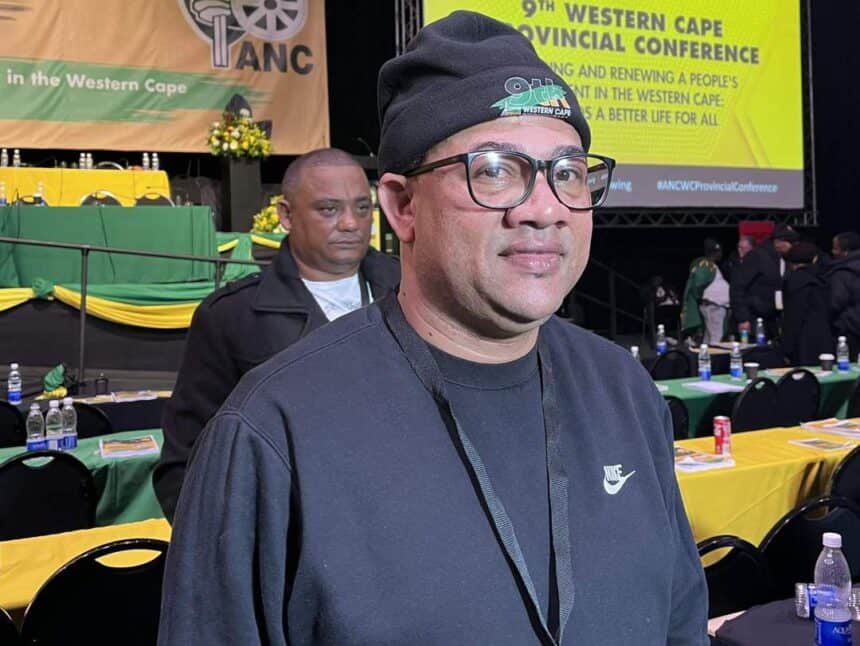
A senior ANC figure’s move to the Patriotic Alliance has sharpened the political pressure on the ANC in the Western Cape, where councillor movements, coalition politics and local-government realignments are already shaping the road to the next municipal election cycle, with former ANC Western Cape provincial treasurer Derick Appel now joining the PA and three Western Cape councillors reportedly moving with him in a development that could strengthen the PA’s provincial footprint while forcing renewed questions about the ANC’s ability to retain experienced local political figures.
The ANC in the Western Cape has suffered a fresh political blow after former provincial treasurer Derick Appel resigned from the party and joined the Patriotic Alliance.
News24 reported that Appel moved to the PA, with three Western Cape councillors also moving with him.
The development is more than a single resignation. It lands inside a province where the ANC has struggled to rebuild lost ground, where smaller parties are contesting local space more aggressively, and where councillor movements can affect the political balance inside municipalities.
Appel is not a minor political figure. He has served as ANC Western Cape provincial treasurer and has been linked to local-government politics in the Overberg, including Theewaterskloof.
That history gives the move more weight. A former provincial treasurer carries party experience, local networks and political memory. When such a figure leaves, the effect is not only organisational. It also becomes symbolic.
For the ANC, the timing is uncomfortable. The party has been trying to reposition itself in the Western Cape after years of weak provincial performance and internal strain. It remains outside provincial government and continues to face pressure from both the DA’s dominant provincial position and smaller parties competing for community-level support.
The latest defection therefore adds another pressure point to a party already trying to rebuild before the next local government elections.
Why Derick Appel’s Move Matters
Political defections can often look like inside-party drama, but councillor movements can have real local consequences.
Councillors sit in municipalities where decisions are made on housing, budgets, service delivery, oversight, local safety, infrastructure and community development. When councillors change parties, it can influence how councils function, how coalitions behave and how voters read the balance of power.
The practical impact depends on where the councillors are based, whether their move changes voting numbers, and whether any coalition arrangements are affected.
Cape Town News has not independently confirmed the names of the three councillors reported to have moved with Appel, nor which municipalities may be directly affected. Those details matter and should be watched closely.
But even before those details are confirmed, the broader political meaning is clear: the PA has gained a senior former ANC figure, while the ANC has lost someone with provincial leadership history.
That is a difficult headline for any party trying to project stability.
ANC Rebuilding Effort Faces Another Test
The ANC’s Western Cape challenge has been building for years.
The party has struggled to regain major provincial influence, while its internal structures have gone through periods of reconfiguration, tension and rebuilding. In March, News24 reported that the ANC Western Cape had dissolved three regions, including the West Coast, Boland and Overberg, as part of a rebuilding effort before local elections.
That background matters because Appel is associated with Western Cape provincial and Overberg political structures. His move therefore comes from an area where the ANC has already had to manage organisational renewal.
The party may argue that individual defections do not define its future. That may be true. Political movement before elections is common, and some defections are personal, tactical or localised.
But high-profile exits still affect public confidence. They raise questions about whether members believe the party can recover, whether local structures feel represented, and whether rival parties are finding openings in communities where the ANC once had stronger roots.
The ANC now faces a familiar test: contain the damage, explain the loss, keep remaining structures steady and show voters that it still has a clear Western Cape plan.
Why The Patriotic Alliance Benefits
For the Patriotic Alliance, Appel’s move is politically useful.
It allows the party to show that it is attracting people with direct political and council experience. That matters in local government because voters often judge parties by the people they see in their own communities.
A councillor or experienced local politician brings name recognition, knowledge of municipal processes and existing relationships with voters. For a party trying to grow its footprint, those networks can be valuable.
The PA has been working to position itself as a serious local-government player in the Western Cape and beyond. It has also made clear that it wants a much larger presence in future municipal elections.
Adding a former ANC provincial treasurer supports that growth narrative. It allows the PA to say that its appeal is not limited to protest votes or campaign slogans, but that it is drawing in people who have worked inside established political structures.
Still, the PA will also face its own test. Political gains through defections must eventually become visible service-delivery value. Voters will want to know whether new members and councillors improve accountability, strengthen council work and bring practical results.
If the move only changes party colours without improving representation, voters may see it as another round of political musical chairs.
Appel’s Earlier Position Adds Context
The latest move is notable because Appel previously rejected rumours that he was leaving the ANC for the DA.
Cape Times reported last year that Appel denied claims that he had joined the DA after former ANC Western Cape secretary Neville Delport defected to the DA. At the time, Appel said he remained committed to the ANC and wanted to amplify the voice of coloured communities within the party.
That earlier position gives the latest move extra context.
It suggests that Appel’s political position has shifted over time. It also places the move within a larger Western Cape debate about representation, community trust and whether parties are listening to the communities they claim to represent.
In Western Cape politics, identity, service delivery, community leadership and local loyalty often overlap. Parties that ignore those pressures risk losing members and voters to rivals who appear more responsive at ground level.
The PA has made community identity part of its public brand, while also presenting itself as a party seeking broader influence. Appel’s move will likely be read by supporters and critics through that lens.
What This Could Mean For Local Councils
The immediate council-level effect remains unclear until the councillors and municipalities involved are officially confirmed.
If the councillors sit in municipalities where the political balance is already stable, the practical effect may be limited. If they sit in closely balanced councils, the impact could be more serious.
A few councillors can affect committee strength, coalition confidence, motions, voting outcomes and future campaign momentum.
Western Cape municipalities have seen coalition shifts and political realignments before. Theewaterskloof, in particular, has previously experienced political instability and coalition changes. That makes any movement involving experienced figures from that political environment worth watching.
For voters, the key issue is not only who moved where. The key issue is whether the move affects governance.
Will services continue without disruption?
Will councils remain stable?
Will communities receive better representation?
Will the political change create more accountability, or only more uncertainty?
Those are the questions that matter beyond party statements.
A Wider Western Cape Political Pattern
The Western Cape political landscape is no longer only a contest between the DA and ANC.
The DA remains the dominant provincial force, but smaller parties are increasingly important in local government. The PA, GOOD, the EFF, local civic movements and other smaller players can influence coalition arithmetic and political messaging in specific municipalities.
This creates a more fragmented environment.
For the ANC, that means it must fight on several fronts. It must challenge the DA, defend its existing base, rebuild internal structures and stop smaller parties from taking voters, councillors and community leaders.
For the PA, the opportunity is clear. It can grow by positioning itself as a practical alternative for voters who feel disconnected from older parties. But growth also brings scrutiny. The more the party gains, the more voters will expect discipline, delivery and clear policy direction.
Appel’s move therefore becomes part of a bigger story: the slow reshaping of Western Cape local politics before the next municipal election cycle.
What Cape Town News Will Track Next
Cape Town News will continue watching this story for official confirmation of the councillors involved, the municipalities affected and any formal responses from the ANC Western Cape or the Patriotic Alliance.
Those details will determine whether this remains a political defection story or becomes a council-balance story.
The most important next step is verification of the practical effect.
If the move affects coalition arrangements, council votes or municipal leadership positions, the story becomes more significant. If it does not, it remains a notable political shift but with limited immediate governance impact.
For now, the confirmed public-interest angle is clear: a former ANC Western Cape provincial treasurer has moved to the PA, three councillors have reportedly followed, and the development adds pressure to the ANC while giving the PA fresh momentum.
For Western Cape voters, the story is worth watching because local political movements can shape service delivery long before provincial or national election results do.
Q&A:
Who is Derick Appel?
Derick Appel is a former ANC Western Cape provincial treasurer. News24 reports that he has resigned from the ANC and joined the Patriotic Alliance.
Which party did Derick Appel join?
Derick Appel joined the Patriotic Alliance.
How many Western Cape councillors reportedly moved with him?
News24 reports that three Western Cape councillors moved with him.
Why is this important for Western Cape politics?
The move matters because councillors play a direct role in local government. If councillors change parties, it can affect council balance, coalition behaviour, committee strength and voter confidence.
Does this mean the ANC is collapsing in the Western Cape?
The report does not prove a wider collapse. It does, however, add pressure to the ANC’s Western Cape rebuilding effort and raises questions about whether more local figures could move before the next municipal elections.
Does this give the Patriotic Alliance more power?
It gives the PA fresh political momentum and potentially more local-government presence. The real effect will depend on which councillors moved, where they serve and whether any council numbers change.
Which municipalities are affected?
Cape Town News has not yet independently confirmed which municipalities are directly affected by the reported councillor movement. That remains a key follow-up point.
What should voters watch next?
Voters should watch for official party statements, the names of the councillors involved, the municipalities affected and whether the move changes council balance or coalition arrangements.
SAI Search Summary:
Former ANC Western Cape provincial treasurer Derick Appel has resigned from the ANC and joined the Patriotic Alliance, according to News24. The report says three Western Cape councillors moved with him. The development places renewed pressure on the ANC’s Western Cape rebuilding efforts and gives the PA fresh momentum in local-government politics. The move is important because councillor shifts can affect council balance, coalition behaviour, voter confidence and future municipal election positioning in the Western Cape. Cape Town News has not yet independently confirmed the councillors or municipalities involved and will continue watching for official party statements and council-level effects.
Source: News24 – Velani Ludidi; Cape Times – Theolin Tembo.