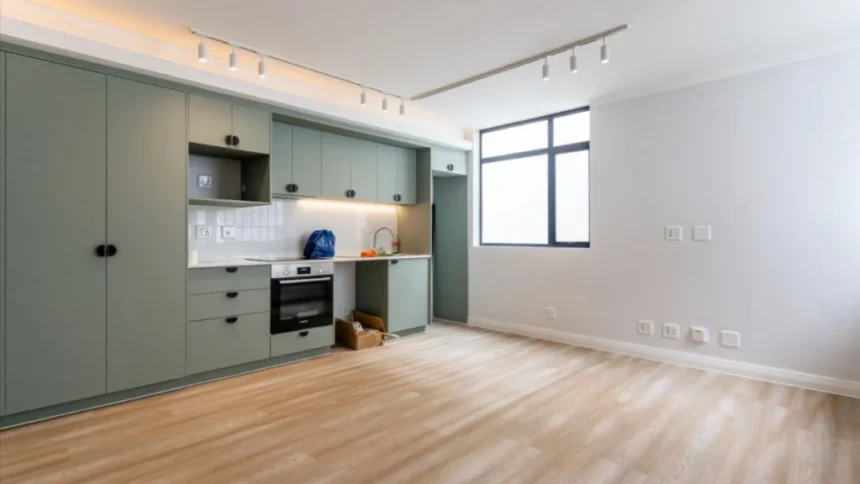
For years, Cape Town’s soaring property market has been held up as proof that the Mother City remains South Africa’s most desirable place to live, work, and invest. But beneath the glossy apartment listings, record demand, and semigration headlines, a harsher reality is now emerging. For thousands of working Capetonians, from nurses and teachers to junior professionals and retail managers, the question is no longer whether Cape Town is desirable. The question is whether it is still affordable.
New figures released by property industry leaders suggest Cape Town’s rental market is now under unprecedented pressure, with affordability becoming one of the defining urban challenges facing the city.
According to data published by MyProperty, Cape Town currently carries a median rental enquiry price of R12,350 per month, roughly 58% above South Africa’s national median of R7,800. That gap alone tells a powerful story, but the numbers become even more sobering when viewed street by street.
In the Cape Town CBD, rental listings for smaller one-bedroom apartments commonly start between R12,000 and R15,000 per month. Two-bedroom units, depending on location, building quality, and amenities, are now increasingly listed between R18,000 and R25,000, with premium Atlantic Seaboard properties climbing well beyond those levels.
Eva August, chief executive of Century 21 South Africa, says the affordability pressure should not be dismissed with simplistic advice telling people to “just live somewhere else.”
According to August, once rent is combined with transport costs, utilities, food, school fees, insurance, and everyday living expenses, many ordinary working households are finding city living increasingly impossible.
And that pressure is not limited to entry-level workers.
Leapfrog Property Group says middle-income households, traditionally seen as financially stable, are now increasingly being pushed toward outer suburbs, satellite towns, and alternative residential nodes where rental costs remain marginally lower.
Fritz Swanepoel, chief executive of Leapfrog Property Group, says a globally accepted affordability benchmark suggests housing should ideally consume no more than 30% of gross household income.
That means a household paying R18,000 in rent should be earning roughly R60,000 gross each month just to remain financially sustainable.
For many Cape Town families, that reality is becoming harder to reach.
Industry experts are now warning that when teachers cannot live near schools, when nurses cannot live near hospitals, and when emergency workers spend hours commuting before beginning shifts, the housing crisis becomes more than a property issue. It becomes an economic and social sustainability issue.
Adriaan Grové, chief executive of MyProperty, perhaps captured the issue most directly when he warned that a city eventually stops functioning as an integrated system when it consumes labour but no longer houses it.
And across Cape Town, from the City Bowl to Table View, from Milnerton to Somerset West, that warning is beginning to feel less like theory and more like everyday reality.
Source: IOL Property – Given Majola.