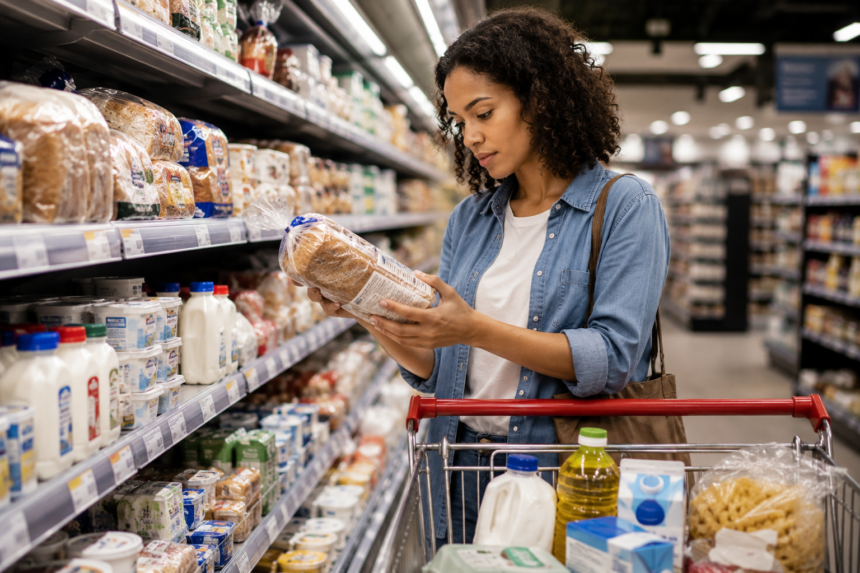
Something feels different when walking through supermarkets lately, and many Cape Town shoppers are noticing it immediately. Trolleys are lighter, baskets are smaller, and familiar grocery items that once felt affordable now seem to carry shockingly higher price tags. Across the Western Cape, households are increasingly asking the same question: what exactly is happening to food prices in South Africa?
New pricing comparisons between archived supermarket catalogues from the Covid period and current shelf prices reveal how dramatically the cost of everyday groceries has changed over the past five years.
For many consumers, the increase is no longer just noticeable, it is becoming financially exhausting.
Staple household items that once formed the backbone of affordable monthly shopping are now placing serious strain on household budgets across the country. Products such as bread, rice, eggs, sugar, coffee, tea, tomato sauce, and flour have all experienced steep increases, with some items nearly doubling in price depending on the brand and retailer.
A two point five kilogram bag of sugar that previously sold for around R37 now sits closer to R63 in some stores. Cake flour has climbed from roughly R22 to nearly R45, while coffee prices have surged sharply alongside transport and import costs. A dozen eggs that once sold comfortably below R30 now often approach R55 in many supermarkets.
Consumers are also increasingly noticing another trend quietly unfolding on supermarket shelves: shrinkflation.
Certain products now contain smaller quantities while simultaneously becoming more expensive. In some cases, consumers are paying significantly more for products that contain less than they did just a few years ago.
While official inflation figures suggest food inflation has remained relatively moderate overall, many households say the lived reality feels very different.
For ordinary families across Cape Town, the pressure extends far beyond groceries alone. Electricity tariffs continue rising, fuel costs remain volatile, municipal bills are increasing, and transport expenses continue eating into disposable income. As a result, many residents say salaries are simply no longer stretching as far as they once did.
The pressure is becoming visible in consumer behaviour too.
Retailers and economists have increasingly observed consumers shifting toward house brands, smaller basket purchases, discount specials, and lower-cost substitutes in an effort to manage monthly budgets. Some households are also reducing restaurant spending, limiting luxury purchases, or cutting back on non-essential items altogether.
For others, however, the financial pressure is becoming more serious.
A grocery basket that may once have cost around R250 for basic household essentials can now feel like it needs a small bank loan, easily pushing towards R900 depending on the products and store.
That growing strain is also one of the reasons more South Africans are turning toward side hustles, small home businesses, and secondary income streams simply to keep pace with rising living costs.
And while food inflation may eventually stabilise, many consumers fear the financial damage has already fundamentally changed household spending habits across the Western Cape.
Source: The Citizen – Hein Kaiser.