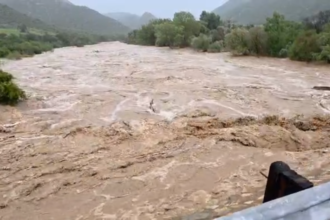
A small group of Cape Town volunteers has turned storm debris into a powerful reminder of what community action can achieve, after Save a Fishie removed more than one tonne of waste from Lagoon Beach in Milnerton. The cleanup followed recent flooding and storm runoff that pushed rubbish through waterways and onto one of the city’s most visible coastal spaces.
Cape Town volunteers have removed more than one tonne of waste from Lagoon Beach in Milnerton after flood debris and stormwater runoff left rubbish scattered across the shoreline.
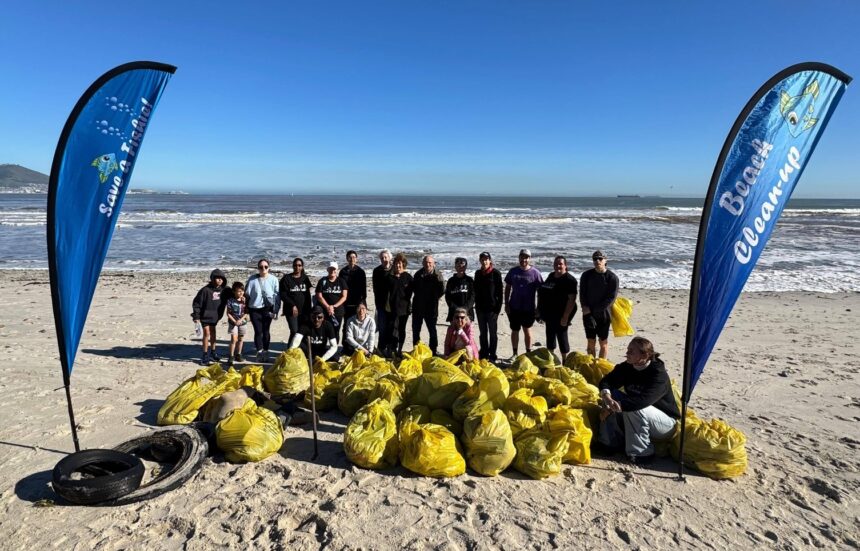
The cleanup was led by Save a Fishie, the environmental organisation founded by Zoe Prinsloo, and marked the group’s 520th beach cleanup. Around 20 volunteers joined the effort, clearing 1,009 kilograms of waste in just over an hour.
The scale of the collection shows how quickly waste can move through urban waterways after severe weather. Items collected included plastic bottles, nappies, tyres, clothing, shoes, stuffed toys, a blanket and even a mattress. These are not only eyesores on the beach. They can also harm marine life, block natural systems and break down into smaller pieces of pollution that remain in the environment long after the cleanup ends.
Lagoon Beach is one of Cape Town’s most recognisable coastal areas, with views across Table Bay and toward the city. Its location near urban drainage systems also means it can become a catchment point when stormwater carries litter from streets, canals and river systems toward the sea.
That is why cleanups after heavy weather matter. They do not solve the full waste problem, but they stop a portion of the debris from being pulled back into the ocean. They also make the pollution visible in a way that statistics alone often cannot.
Save a Fishie has now removed about 57 tonnes of waste from Cape Town beaches since its cleanup work began. The Lagoon Beach effort adds another milestone to that total, but it also highlights a bigger issue: Cape Town’s coastline is directly connected to what happens inland.
When rubbish is dumped in streets, informal dumping sites, stormwater channels or rivers, it does not stay there. Rain and flooding move it downstream. By the time it reaches the beach, it has already passed through communities, infrastructure and natural systems.
There is a positive side to this story. About 20 people gave up their time and managed to remove more than a tonne of waste in just over an hour. That shows how fast a small, organised team can make a visible difference.
But there is also a warning. If one short cleanup can remove that much debris from one beach, the amount of waste still moving through the wider urban environment is likely much larger. Cape Town’s waste challenge is not only about beachgoers. It is about public behaviour, service delivery, illegal dumping, stormwater management and the shared responsibility of keeping waterways clean before rubbish reaches the ocean.
Community cleanups also carry an education value. They show children, families, businesses and visitors that pollution is not abstract. It has names, shapes and origins. A plastic bottle, a tyre, a nappy or a discarded shoe tells a story about how waste moves through the city.
For Cape Town, the Lagoon Beach cleanup is a feel-good story because ordinary people stepped in and acted. But it is also a civic reminder. The cleaner the streets, canals and rivers are, the less pressure lands on the coastline after storms.
Save a Fishie’s latest effort proves that community action still matters. It also shows that protecting Cape Town’s beaches starts long before the waste reaches the sand.
Source: Good Things Guy – Nothando Mthembu.