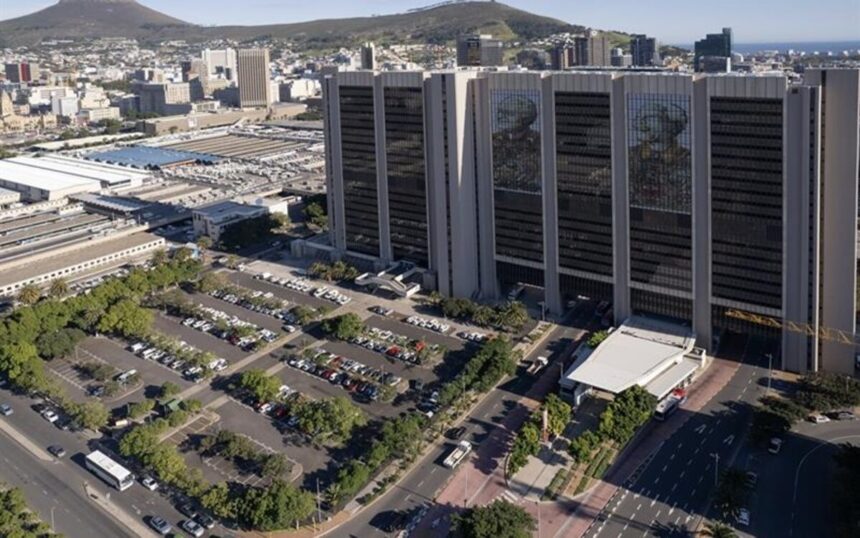
Cape Town’s housing debate has shifted into the heart of the city, after the Civic Centre parking lot received the Mayoral Committee greenlight for a proposed mixed-use affordable housing development. The decision does not mean construction is approved, but it does move one of the city’s most visible public land parcels closer to formal public participation.
Cape Town’s Civic Centre parking lot has moved a step closer to redevelopment after the City’s Mayoral Committee backed plans to take the site forward as a mixed-use affordable housing project.
The land, located next to the Civic Centre in the Cape Town central business district, is currently used as an open-air staff parking area. The City believes the site can serve a broader public purpose because it sits in a strategic inner-city location close to existing infrastructure, government offices, public transport routes and major economic activity.
The proposal is not a final construction approval. The next step is Council, where councillors are expected to consider whether to approve the start of a formal public participation process. If that happens, residents, businesses, civic groups, developers and other interested parties will be able to comment on the proposed release of the land for redevelopment.
That distinction matters. The Mayoral Committee greenlight means the project has political and administrative backing to move forward, but it does not yet give a developer permission to build. The public process will still need to test the details, including land release conditions, development scale, housing mix, parking needs, traffic impact, public space use and the long-term value of the site.
The City has framed the proposal as part of a wider push to use under-utilised public assets to support affordable housing in well-located areas. Mayor Geordin Hill-Lewis said the City is recommending that the parking lot be released to unlock another affordable housing development in the heart of the inner city. He said the approach forms part of a broader pipeline of more than 12,000 affordable housing units.
The potential upside is clear. A mixed-use project in this location could place more people close to jobs, transport and services. It could also help shift the city centre away from a pattern where valuable land is used mainly for parking during working hours, while thousands of households struggle to live near the economic core of Cape Town.
The City has also attached major economic expectations to the proposal. It estimates the redevelopment could unlock about R1.5 billion in private sector investment and support up to 3,500 jobs during construction and over the life cycle of the development. The project could also generate about R230 million from the sale of the site, with around R50 million a year in rates and services revenue.
Mayoral Committee Member for Economic Growth James Vos has also linked the project to investment, jobs and better use of strategic public land. That gives the proposal a commercial angle as well as a housing angle, especially for developers, construction companies, property investors, transport planners, retailers and businesses operating in the city centre.
But there are also likely concerns that will need to be tested. Inner-city development often raises questions around affordability, who qualifies for units, how much housing will be genuinely accessible to lower-income households, whether existing public workers will lose convenient parking, and how additional density will affect traffic and services in the Foreshore area.
There may also be debate about whether selling or releasing public land is the best way to deliver long-term housing outcomes. Supporters will argue that unused or under-used land should serve people, not parked vehicles. Critics may ask whether public land should remain in public ownership, whether affordable housing targets will be enforceable, and whether the final development will match the promise being made at the start.
For Cape Town, this is why the public participation process will be important. The project sits at the intersection of housing pressure, public land use, private investment, urban planning and city centre growth. It could become a flagship example of land reform through urban development, or it could become another test of whether affordable housing commitments survive the journey from announcement to delivery.
What is clear for now is that the Civic Centre parking lot has moved from being an ordinary city parking area to a serious development proposal with major public interest attached. The next key step is Council approval, followed by public participation, where the details, objections and opportunities will begin to shape what happens next.
Source: Eyewitness News – Carlo Petersen.