Few Capetonians realise that one of the biggest infrastructure shifts in decades is already quietly taking shape around the Mother City. Behind the scenes, more than R20 billion is being committed to two separate airport projects, one backed by government, the other by private investors, and together they could permanently reshape travel, business, property values, and economic growth across the Western Cape.
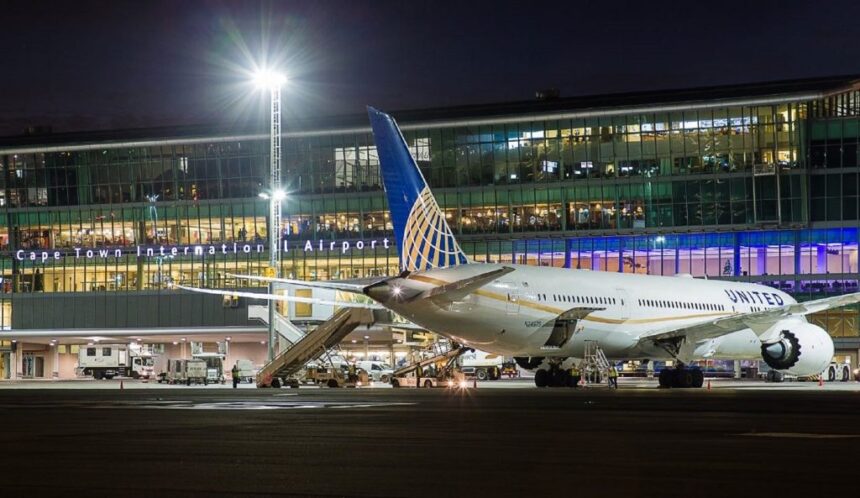
For decades, Cape Town International Airport has served as the province’s main gateway to South Africa, Africa, Europe, the Middle East, and beyond.
Now, with passenger numbers steadily recovering after the pandemic and international tourism once again driving growth, the airport is preparing for one of the largest expansion programmes in its history.
According to Airports Company South Africa, or ACSA, approximately R11.3 billion has been earmarked for major upgrades at the airport over the next several years.
The expansion programme includes a new domestic arrivals facility, larger departure lounges, upgraded baggage systems, improved security screening, additional boarding bridges, expanded aircraft parking stands, taxiway improvements, and infrastructure capable of handling larger Code F aircraft, the same class of aircraft used on some of the world’s busiest long-haul routes.
For travellers, that could mean smoother passenger flow, shorter turnaround times, and greater international route opportunities.
For business, it could mean something much bigger.
Cape Town International already plays a critical role in the export of fresh produce, wine, pharmaceuticals, and high-value goods, while also serving as a key gateway for conferences, tourism, and foreign investment.
But perhaps the more surprising project lies just beyond the northern suburbs.
Near Fisantekraal, outside Durbanville, the proposed Cape Winelands Airport is now moving closer to construction, with projected private investment estimated between R8 billion and R10 billion.
The project is being driven by RSA Aero, with strategic backing from listed property giant Growthpoint Properties and construction heavyweight Wilson Bayly Holmes-Ovcon, better known as WBHO.
Developers have indicated that construction could begin later this year, pending final infrastructure coordination and regulatory approvals.
The long-term plan is ambitious.
By 2030, Cape Winelands Airport is expected to handle up to two million passengers annually, creating a second aviation hub for the region while reducing pressure on Cape Town International.
But aviation may only be the beginning.
Property analysts say major transport infrastructure often triggers sharp increases in surrounding land values, commercial demand, warehousing, hospitality investment, and residential development.
Areas such as Durbanville, Fisantekraal, Klipheuwel, Malmesbury, Paarl, and the wider Cape Winelands could all benefit if construction stays on schedule.
For Capetonians, the real question may no longer be whether the province needs another airport.
It may be whether investors are already positioning themselves ahead of one of the Western Cape’s biggest growth stories.
Source: Engineering News – Irma Venter.