

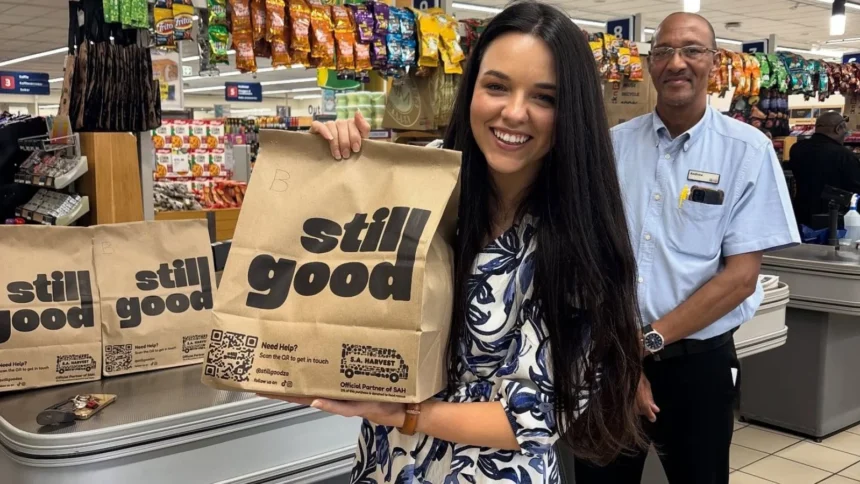
As food prices continue climbing and household budgets remain under pressure, a fast-growing South African startup is quietly reshaping the way consumers shop, offering groceries, toiletries, electronics, and household essentials at prices up to 65% lower than traditional supermarket shelves.
For millions of South Africans, the monthly grocery bill has become one of the toughest financial challenges of modern life.
Every trip to the supermarket now carries a little more anxiety, with fuel hikes, inflation, electricity costs, and rising municipal charges all placing extra pressure on already stretched household budgets.
Against this backdrop, a relatively young online retail platform is quietly building momentum, promising shoppers something many thought impossible in today’s economy, genuine savings on everyday essentials.
Still Good, an online marketplace specialising in discounted, surplus, and near-expiry products, says it is helping South Africans cut their shopping bills by as much as 65 percent compared with traditional retail prices.
And consumers appear to be responding.
Launched in May 2025, the company says it helped shoppers save nearly R4 million within its first six months of operation, a figure that reflects both rising demand for affordable groceries and growing consumer acceptance of alternative shopping models.
Today, Still Good says it operates across more than 174 stores linked to major South African retailers, including Pick n Pay, SPAR, and Food Lover’s Market, while also working with independent outlets across the country.
The platform now serves customers in Gauteng, KwaZulu-Natal, the Northern Cape, Eastern Cape, the Free State, North West, and importantly for local readers, the Western Cape.
Speaking during an interview on CapeTalk, Still Good chief executive Steffen Burrows said the business was born out of a simple but deeply troubling observation.
“I spent a bit of time at Pick n Pay and saw the big food waste problem that exists in retail,” Burrows explained.
“In some stores, ten percent of the store’s food is wasted every day.”
That insight became the foundation for the company’s first product, so-called mystery bags, containing unsold but still perfectly edible groceries approaching their sell-by dates.
“That was our core business,” Burrows said.
“It was about providing an avenue for that food to find a second home.”
Since then, the business has evolved far beyond food rescue.
Today the platform sells groceries, snacks, toiletries, cosmetics, electronics, perfumes, and household cleaning products, all sourced from wholesalers, manufacturers, and suppliers looking to clear excess or slow-moving stock.
Burrows says many consumers still misunderstand food labelling.
“The best before date is when the product is at its best quality,” he explained.
“It does not mean you cannot use or sell it after that date.”
Still Good has also partnered with The Courier Guy, allowing customers to collect purchases from secure nationwide locker systems within forty-eight hours.
Interestingly, the company says some of its strongest demand is coming from more affluent suburbs, suggesting bargain hunting is no longer limited to lower-income households.
As South Africans continue searching for smarter ways to stretch every rand, platforms like Still Good may be doing more than saving money.
They may be quietly changing the future of retail itself.
Source: BusinessTech – CapeTalk – Steffen Burrows.










So how do we order from Still Good in Mossel Bay
Hi Colleen, thank you for your interest 😊 The best way to order from Still Good in Mossel Bay is to visit their official ordering channels or contact them directly through their social media or website. If they release a direct ordering link, we will gladly share it with our viewers as well. Thanx for supporting Cape Town News.