Every weekday before sunrise, Cape Town’s roads begin filling with thousands of commuters heading toward the city’s economic hubs. By peak hour, brake lights stretch across highways, taxi ranks overflow, and frustration builds behind steering wheels across the metro. But according to new transport analysis, the city’s traffic crisis did not begin on the roads, it began on the rails.
Cape Town’s worsening traffic congestion is once again placing renewed attention on the long decline of passenger rail, with fresh transport data showing how the collapse of rail services has fundamentally reshaped the way hundreds of thousands of Capetonians move through the city every day.
According to new transport analysis published by GroundUp in partnership with The Outlier, Cape Town ranked as the third most congested city in Africa during twenty twenty-five, placing it ahead of Johannesburg and Cairo in continental congestion rankings.
Globally, Cape Town now sits at ninety-one out of four hundred and ninety-two cities measured in the latest TomTom Traffic Index, reinforcing what commuters across the metro experience daily, longer travel times, unpredictable delays, and a transport system operating under growing strain.
While traffic congestion is often blamed on rapid population growth and urban expansion, the latest analysis points to a deeper structural issue, the collapse of passenger rail.
Cape Town once operated one of the most heavily used urban rail networks in South Africa.
In two thousand and three, daily passenger numbers on Metrorail reached approximately six hundred thousand commuters a day, accounting for more than a fifth of all commuter trips in the city.
But years of operational decline, vandalism, infrastructure theft, corruption, and management failures at the Passenger Rail Agency of South Africa have dramatically changed that picture.
By twenty twenty-two, daily passenger numbers had dropped to approximately one hundred and thirty-three thousand commuters, representing one of the steepest declines in public transport usage anywhere in South Africa.
The impact on road-based transport was immediate.
As train services deteriorated, commuters increasingly turned to private vehicles, minibus taxis, lift clubs, and bus services, placing enormous pressure on already congested transport corridors including the N one, N two, and R three hundred.
City transport figures suggest the rail collapse reached its lowest point around twenty nineteen before being further complicated by the Covid lockdown period.
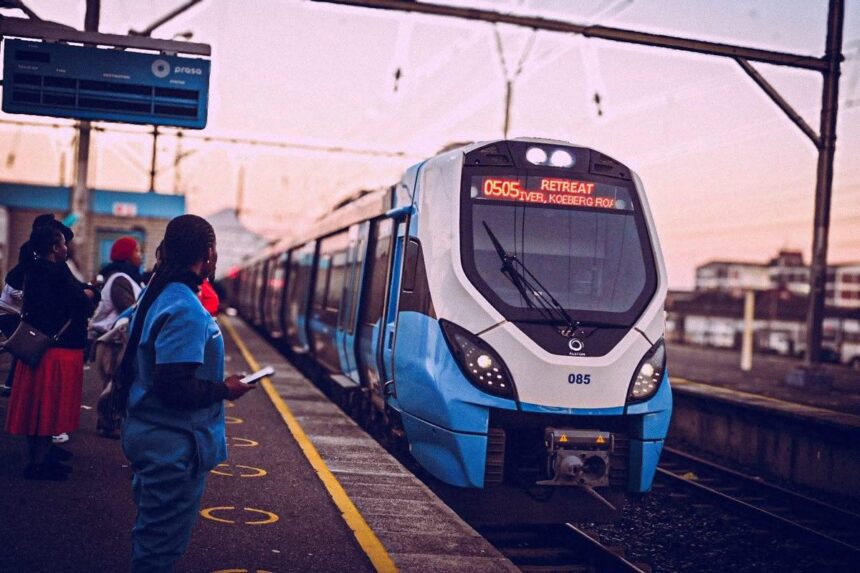
There are now early signs of recovery.
By March this year, daily passenger numbers on Metrorail had recovered to around two hundred thousand commuters.
While still far below historic levels, transport planners say the increase is already beginning to influence commuter patterns and could help ease long-term road pressure if rail reliability continues improving.
Cape Town urban mobility mayco member Rob Quintas says the collapse of rail, combined with rapid population growth, has played a major role in shifting commuters toward road-based transport over the past two decades.
For the City of Cape Town, the long-term solution remains clear, rail must once again become the backbone of public transport if the metro is to remain economically competitive, environmentally sustainable, and physically mobile in the decades ahead.
Source: GroundUp – GroundUp Staff; The Outlier – Transport Analysis; City of Cape Town – Rob Quintas.