Cape Town woke up to flooded roads, damaged homes, fallen trees, and closed schools after one of the most disruptive storms of the season swept across the Western Cape, leaving emergency teams racing to respond while residents counted the cost.
A severe storm system has battered Cape Town and the wider Western Cape, leaving one person dead, schools closed across the province, and emergency teams responding to widespread damage in both formal suburbs and vulnerable communities.
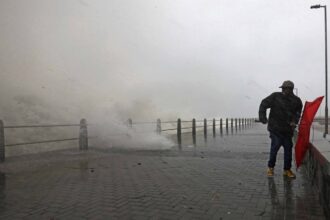
The South African Weather Service issued severe weather warnings as a powerful cold front moved over the province, bringing heavy rain, gale-force winds, flooding, and dangerous road conditions. The warning covered Cape Town, the Cape Winelands, Drakenstein, Stellenbosch, Breede Valley, Witzenberg, and parts of Theewaterskloof.
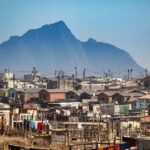
The storm’s impact was quickly felt across the metro. The City of Cape Town’s Disaster Risk Management Centre confirmed reports of roofs blown off in Mitchells Plain, Hanover Park, and Westridge, while flooding was recorded in several communities, including Khayelitsha, Lwandle, Nomzamo, Gugulethu, Imizamo Yethu, Delft, Tafelsig, and other low-lying areas.
Charlotte Powell, spokesperson for the City’s Disaster Risk Management Centre, said reports continued to come in as daylight revealed the scale of the damage. Flooded roadways, blocked drains, electricity outages, fallen trees, and damage in informal settlements all placed pressure on emergency teams.
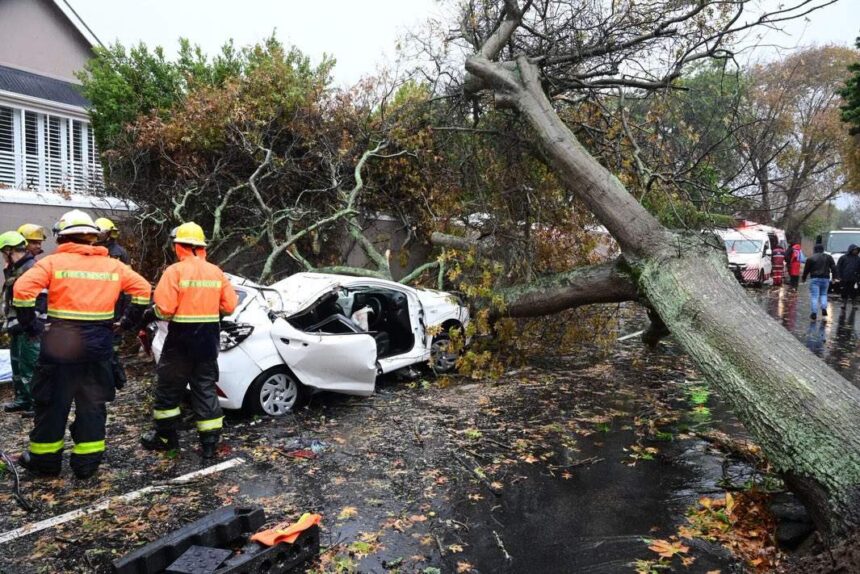
The weather also turned deadly. A motorist was killed in Kenilworth after a tree collapsed onto a vehicle during the storm. Another person was injured in Parow in a separate incident involving a falling tree.
Roads across Cape Town were also affected. Flooding, fallen trees, rockfalls, and storm-related infrastructure damage disrupted routes in Wynberg, Bergvliet, Bellville, Atlantis, and parts of the Deep South. Chapman’s Peak Drive was closed as a safety precaution, while officials monitored slope stability and road conditions.
The Western Cape Education Department took the unusual step of closing all public schools across the province for the day. Education MEC David Maynier said learner and teacher safety had to come first while damage assessments continued. Several schools had already reported storm damage before the province-wide decision was made.
The school closure also had a knock-on effect on transport, childcare, school sport, and working parents who had to make urgent arrangements while roads remained difficult in several areas.
Humanitarian organisations were also drawn into the response. Gift of the Givers teams were deployed to flood-hit communities, including Lwandle, Nomzamo, Langrug, and other areas where residents reported waterlogged homes, damaged roofs, and urgent need for relief.
The storm exposed again how quickly severe weather can overwhelm parts of Cape Town’s infrastructure, especially in communities where drainage, housing conditions, and electricity networks are already under strain.
Authorities urged Capetonians to avoid unnecessary travel, stay away from flooded roads, monitor official alerts, and report emergencies through the City’s Public Emergency Communication Centre.
While conditions were expected to begin easing later, officials warned that the system remained active and that further rain, wind, and flooding risks could still affect the province before calmer weather returns.
Source: IOL – Robin-Lee Francke; Cape {town} Etc – Hope Makhoba; Daily Maverick – Lerato Mutsila.