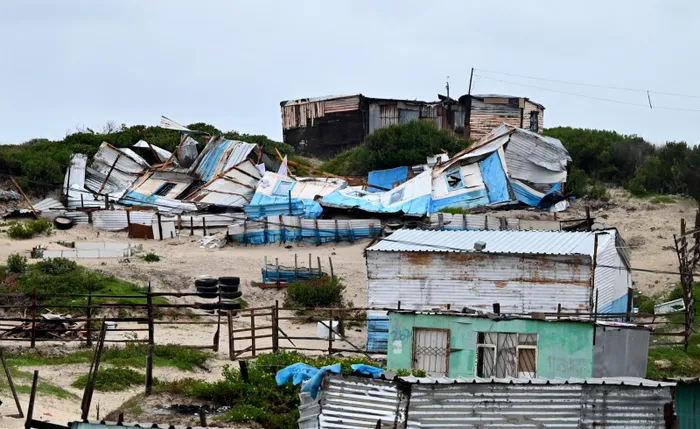
The rain has eased, but across the Western Cape the destruction remains. From uprooted trees in suburban streets to flooded informal settlements, washed-out roads, and communities cut off from vital services, the province is now facing the full human and economic cost of one of the most disruptive storm systems of the year.
Emergency teams across the Western Cape have now shifted from immediate rescue operations into a province-wide recovery effort after two powerful cold fronts battered large parts of the region over the past week, leaving six people dead, damaging thousands of homes, and disrupting transport, electricity, and essential public services.
Provincial authorities say the scale of the storm’s impact continues to unfold as engineers, disaster officials, municipal workers, humanitarian organisations, and road crews assess widespread damage stretching from Cape Town’s informal settlements to rural mountain passes and key economic transport corridors.
The Western Cape Department of Health and Wellness has now confirmed six weather-related fatalities since the first cold front made landfall last week. The deaths were reported across multiple parts of the province, highlighting how widespread and unpredictable the dangerous weather conditions became.
In Knysna, one person died after a tree collapsed during gale-force winds. Similar incidents were reported in Wynberg and George, where falling trees proved fatal. In Worcester, a resident reportedly lost their life after falling from a roof during emergency weather preparations. Further fatalities were recorded in Genadendal and Meiringspoort, where floodwaters and storm-related conditions turned deadly.
According to the South African Weather Service, rainfall totals between one hundred and fifty and two hundred millimetres have already been recorded in some mountainous parts of the province. Combined with saturated ground, swollen rivers, and repeated cold-front activity, the result has been extensive flooding, mudslides, fallen trees, and infrastructure failures across multiple districts.
The City of Cape Town says at least twenty-six informal settlements across the metro have reported significant flooding. Disaster Risk Management officials have so far identified damage to ten thousand seven hundred and three structures, directly affecting an estimated forty-one thousand six hundred and thirty-five Capetonians.
Relief operations are already under way. Humanitarian partners have begun distributing emergency food supplies, blankets, and temporary support materials while social services continue assessing the most vulnerable households.
Road infrastructure has also come under severe pressure.
Western Cape Minister of Infrastructure Tertuis Simmers says departmental teams have been operating around the clock since the first weather warnings were issued.
From the Garden Route to the Central Karoo, road crews have been forced to deal with flooded crossings, washed-away road surfaces, rockfalls, fallen trees, blocked drainage systems, and isolated communities requiring urgent access restoration.
Engineers are now conducting detailed structural assessments on several routes where temporary closures remain in place, while priority access is being restored to emergency corridors, freight routes, and communities without alternative road access.
While weather conditions are expected to improve over the coming days, authorities are warning residents not to underestimate the lingering dangers posed by unstable slopes, weakened trees, damaged infrastructure, and standing floodwater.
For thousands of families across the Western Cape, the immediate storm may have passed, but the recovery is only beginning.
Source: Robin-Lee Francke – IOL; Western Cape Department of Infrastructure – Minister Tertuis Simmers.