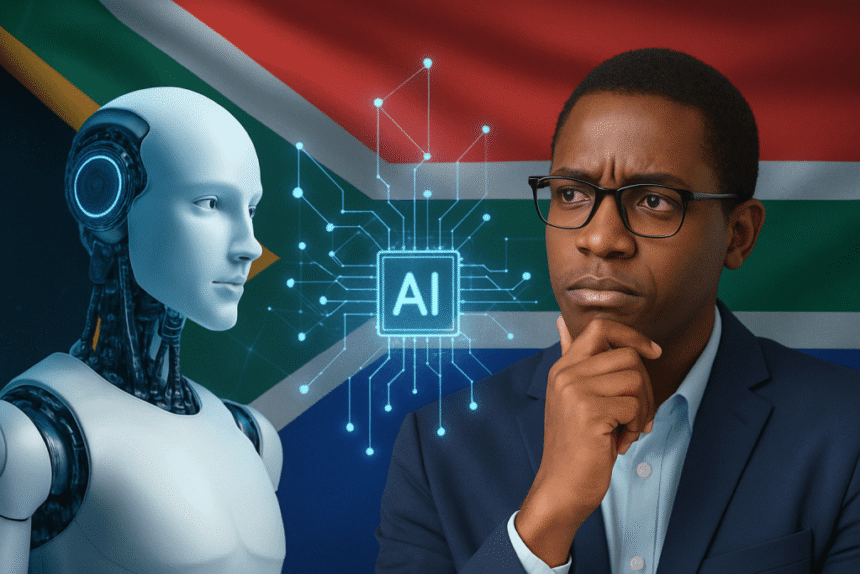
While most of the world’s artificial intelligence systems are built around English, Mandarin, or European languages, researchers in Cape Town are quietly building technology designed to make AI understand South Africa as it truly speaks.
Researchers at the University of Cape Town are making headlines in the global technology space after developing a new artificial intelligence language system designed to better understand, process, and generate text across South Africa’s eleven official written languages.
The project, led by specialists within UCT’s Scientific Computing Research Unit, represents a major step forward for African language technology, an area many experts say has been overlooked by global artificial intelligence development.
While large language models and generative AI systems continue transforming industries around the world, most of the technology currently dominating the market has been trained primarily on English, Mandarin, Spanish, and a handful of major European languages.
That has left billions of people, particularly across Africa, without equal representation in the digital economy.
UCT researchers say their latest work aims to close that gap by building a language model capable of understanding the unique grammar, structure, context, and cultural nuances found across South Africa’s diverse linguistic landscape.
The project includes work across isiXhosa, isiZulu, Afrikaans, English, Sesotho, Setswana, Tshivenda, Xitsonga, Siswati, isiNdebele, and Sepedi, creating one of the most locally relevant AI language datasets ever developed in South Africa.
Researchers involved in the project say language inclusion is no longer simply an academic challenge, but an economic and social one.
“When communities cannot interact with technology in their own language, digital inequality grows,” members of the Scientific Computing Research Unit explained in the university’s official release.
The implications stretch far beyond universities and research laboratories.
Technology experts say multilingual AI systems could eventually improve public healthcare communication, educational learning platforms, government service delivery, legal access, banking systems, agriculture, and customer support across both urban and rural communities.
Cape Town has steadily grown into one of Africa’s leading technology hubs, home to startups, software developers, fintech firms, and research institutions pushing innovation across multiple sectors.
Projects such as this also position the Mother City as a growing contributor to global artificial intelligence research rather than simply a consumer of imported technologies.
As the global AI race continues accelerating, UCT’s latest breakthrough serves as a reminder that the future of artificial intelligence may not only be built in Silicon Valley, London, or Beijing, but increasingly here in Cape Town as well.
Source: UCT News – Scientific Computing Research Unit – University of Cape Town.