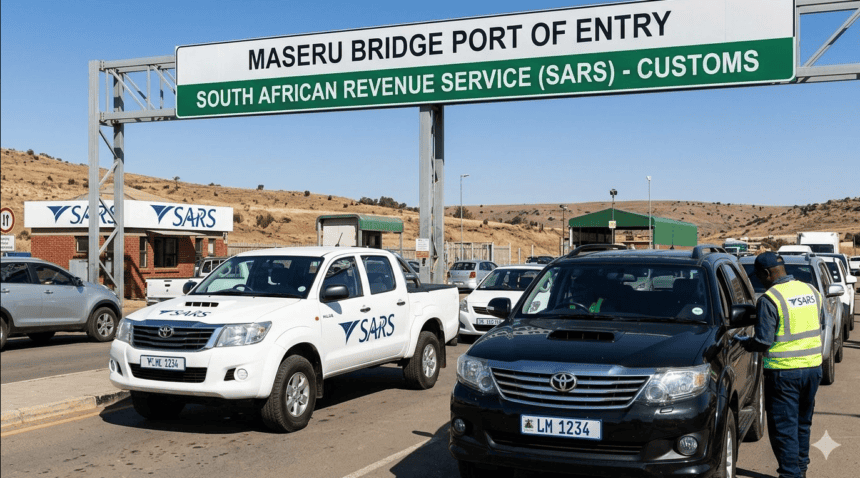
A new SARS border process is now in effect for travellers using foreign-registered vehicles, and the key point for South Africans is simple: this is not a new rule for every local vehicle owner, but it does matter for cross-border travel, customs compliance and vehicles entering or leaving the country.
The South African Revenue Service has launched a new declaration process for foreign-registered vehicles entering or leaving South Africa, marking another step in the country’s move toward more digital border management.
From Monday, travellers entering or leaving South Africa in foreign-registered vehicles must declare those vehicles on the SARS Traveller Management System. SARS says the process applies before the vehicle enters or leaves the country and forms part of its customs modernisation work.
The rule is important, but it must be understood correctly. It does not mean every South African vehicle owner suddenly has to register a locally registered car with SARS. The requirement is aimed at foreign-registered vehicles used by travellers crossing South Africa’s borders.
That distinction matters because some reports have described the change broadly as a new requirement for vehicle owners. The practical effect is more specific. If a vehicle is registered outside South Africa and is being brought into or taken out of the country through a border crossing, SARS now wants that vehicle declared through its Traveller Management System.
SARS says the measure applies to all foreign-registered vehicles, including those from Southern African Customs Union countries. This means vehicles registered in Botswana, eSwatini, Lesotho and Namibia are not exempt.
For Cape Town and the Western Cape, the rule still has local relevance. Many businesses, families, tourists, traders and cross-border travellers move between South Africa and neighbouring countries. Some foreign-registered vehicles also travel into the Western Cape for tourism, work, student travel, seasonal visits or business purposes. The declaration process may therefore affect people arriving in South Africa before continuing to Cape Town, as well as local residents who use foreign-registered vehicles for cross-border movement.
SARS says travellers are encouraged to declare electronically before arriving at the border. This is meant to reduce delays, improve processing and make the traveller experience more efficient. Where declarations are completed in advance, border officials should have a clearer digital record of the vehicle and its temporary import status.
A key part of the system is the Temporary Import Permit. SARS says travellers temporarily entering South Africa in a foreign-registered vehicle will receive a Temporary Import Permit valid for six months. The same permit can be used for multiple entries into South Africa during that period, as long as it remains valid.
This will be useful for frequent cross-border travellers who move in and out of South Africa more than once. Instead of completing a fresh temporary import process every time, a valid permit may cover several entries within the six-month window.
SARS says the first phase focuses on the daily cross-border movement of foreign-registered vehicles used by travellers entering or leaving the country. The revenue service also clarifies that foreign-registered vehicles already in South Africa before Monday and not currently being used for travel will be dealt with in a later phase. Those vehicles are not affected by the current first phase unless they cross the border.
This phased approach is important because it avoids confusion for people who may already have foreign-registered vehicles inside South Africa. SARS is not saying every such vehicle must immediately be declared under the new digital system if it is not currently crossing a border. The current focus is on border movement from Monday onward.
The reason SARS gives for the change is customs control, risk detection and border modernisation. By recording foreign-registered vehicles digitally, SARS can better track temporary imports, strengthen compliance and reduce abuse of customs rules.
This also links to a wider national concern about illegally imported vehicles. BusinessTech reported that the new process is part of efforts to tackle the growing problem of illegally imported vehicles, which SARS and industry stakeholders say can cost the country billions of rand and undermine the local automotive industry.
Illegally imported vehicles can create several problems. They may avoid import duties and taxes, bypass local registration and compliance systems, and make enforcement harder when vehicles remain in the country beyond allowed periods. A stronger declaration system gives customs officials a clearer record of which vehicles entered, when they entered, and under what permit conditions.
For ordinary travellers, the practical advice is to prepare before reaching the border. If the vehicle is registered outside South Africa, travellers should check the SARS traveller declaration process, complete the digital declaration where possible, and make sure they understand whether a Temporary Import Permit is required.
At non-designated border posts where SARS is not present, the Border Management Authority may support the administration of foreign-registered vehicles. SARS still says electronic declaration remains a prerequisite, meaning travellers should not assume that arriving at a smaller border post removes the requirement.
The rule also affects South Africans who may drive a foreign-registered vehicle into the country. The issue is not only nationality. It is the registration status of the vehicle and whether it is crossing South Africa’s border. A South African citizen using a vehicle registered in another country may still need to follow the declaration process.
For businesses, the rule may matter where companies operate cross-border fleets, import vehicles temporarily, move equipment between countries, or host visitors and contractors using foreign-registered vehicles. Transport operators, tour groups, logistics planners and cross-border traders should check their compliance processes early to avoid delays.
The safest reading for readers is this: if the car is registered in South Africa and is only being used locally, this SARS change is not aimed at you. If the vehicle is foreign-registered and is entering or leaving South Africa, the declaration process now applies.
Cape Town News will continue tracking this rollout, especially any border delays, enforcement updates, later phases affecting foreign-registered vehicles already in South Africa, and further SARS guidance for travellers and businesses.
Q&A
Who must declare a vehicle under the new SARS rule?
Travellers entering or leaving South Africa in foreign-registered vehicles must declare those vehicles on the SARS Traveller Management System.
Does this apply to normal South African-registered cars?
No. The current requirement is aimed at foreign-registered vehicles entering or leaving South Africa.
Does it apply to vehicles from Botswana, eSwatini, Lesotho and Namibia?
Yes. SARS says vehicles from SACU countries are not exempt from the declaration requirement.
Can travellers declare online?
Yes. SARS encourages travellers to complete the electronic declaration before arriving at the border.
What is a Temporary Import Permit?
A Temporary Import Permit is issued for a foreign-registered vehicle temporarily entering South Africa. SARS says it may be valid for six months.
Can the same permit be used more than once?
Yes. SARS says a valid Temporary Import Permit may be used for multiple entries into South Africa during its validity period.
What about foreign-registered vehicles already in South Africa?
SARS says the first phase focuses on vehicles crossing the border from Monday onward. Foreign-registered vehicles already in South Africa and not currently travelling will be dealt with in a later phase.
SAI Search Summary
SARS now requires travellers entering or leaving South Africa in foreign-registered vehicles to declare those vehicles on its Traveller Management System. The rule started on Monday and applies to all foreign-registered vehicles, including vehicles from SACU countries such as Botswana, eSwatini, Lesotho and Namibia. Travellers are encouraged to declare online before arriving at the border. SARS says Temporary Import Permits may be valid for six months and may be used for multiple entries during that period. The first phase focuses on daily cross-border movement, while foreign-registered vehicles already in South Africa and not travelling will be handled later.
Cape Town News will continue tracking SARS border changes, foreign-registered vehicle rules and practical updates affecting travellers, businesses and cross-border movement.
Source: South African Revenue Service – Media Release.