As congestion continues to frustrate Cape Town motorists, a growing debate has emerged around whether traffic lights are part of the problem, or still the most effective solution for managing high traffic volumes.
Frustration among drivers has increased in recent months, particularly at intersections where traffic lights fail due to issues such as cable theft. In some cases, motorists have observed that traffic appears to move more freely when signals are not working, with intersections effectively operating as four-way stops.
This perception has fuelled discussion around whether alternative traffic management systems could improve flow across the city.
However, traffic engineer Doctor Megan Bruwer from Stellenbosch University cautioned that these observations do not apply in all conditions. Speaking on CapeTalk, she explained that four-way stops can improve flow, but only when traffic volumes are low.
“It’s a difficult question… sometimes it does actually work better, but that’s when there are very low traffic volumes,” she said.
Bruwer explained that four-way stops create natural gaps between vehicles, which limits the number of cars that can pass through an intersection over time. In contrast, traffic lights allow multiple vehicles to move simultaneously, making them significantly more efficient in high-volume conditions or at intersections with uneven traffic distribution.
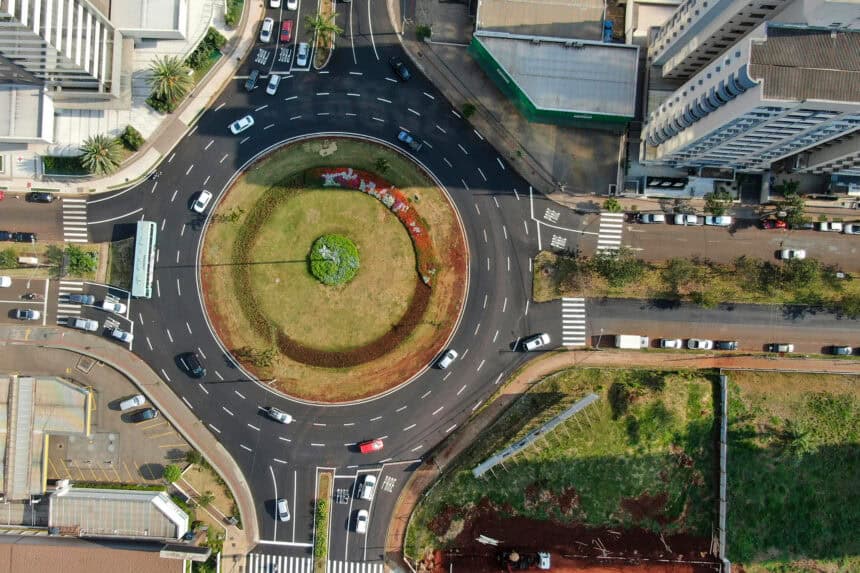
The conversation has also shifted to the role of roundabouts, particularly as municipalities explore alternatives in areas affected by repeated signal failures.
Bruwer noted that roundabouts can handle higher volumes than four-way stops and can help regulate traffic flow more effectively. However, she stressed that they must be correctly implemented and are not suitable for all intersections.
Driver behaviour also remains a challenge. Confusion between roundabouts and mini circles is contributing to inefficiencies, with many motorists misunderstanding right-of-way rules.
Roundabouts require drivers to give way to vehicles approaching from the right, while mini circles typically operate on a first-come, first-served basis.
As Cape Town’s traffic volumes continue to grow, experts say there is no single solution to congestion. Instead, each intersection must be assessed individually, with traffic management strategies tailored to specific conditions and demand patterns.
Source: EWN – Kabous Le Roux.