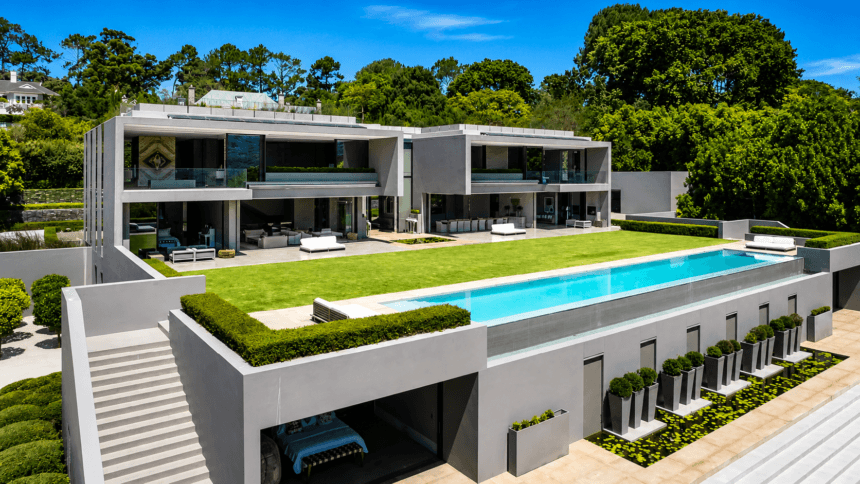
Cape Town: A Cape Town luxury home listed for R189 million in Bishopscourt has put the city’s ultra-prime property market back in the spotlight, with estimated monthly bond repayments of about R1.89 million over 20 years before rates and taxes are added. BusinessTech reports that the seven-bedroom property, marketed by Pam Golding Properties, sits on the eastern slopes of Table Mountain and includes luxury features such as a heated rim-flow pool, spa, cinema, wine cellar, gym, squash court, padel court, smart home technology, solar panels, an inverter and two boreholes. The numbers matter because they show how Cape Town’s most exclusive suburbs continue to attract buyers operating far outside the reach of ordinary household finance, even as many Capetonians face a tight property market, high living costs and limited access to home ownership.
R189 Million Bishopscourt Home Shows Cape Town’s Ultra-Prime Market
A R189 million house in Bishopscourt has become one of the clearest examples of how far Cape Town’s ultra-prime property market sits from the ordinary housing economy.
The home, listed by Pam Golding Properties and reported by BusinessTech, is not simply expensive. Its financing numbers are almost unreal by normal standards. Based on a 20-year bond, monthly repayments would be about R1.89 million, excluding rates and taxes of around R18,315 a month. Over the full loan term, total repayments would exceed R452.8 million.
That does not mean a buyer is likely to finance the property in the same way a middle-income household finances a townhouse or family home. BusinessTech notes that properties in this price bracket are usually bought outright or with substantial deposits by ultra-high-net-worth buyers. But the bond calculation is still useful because it translates the listing price into a monthly number that ordinary readers can understand.
For many Capetonians, R1.89 million is not a monthly repayment. It is more than a lifetime of rent, a business investment, a retirement amount, or the value of several family homes combined. That contrast is what makes the property story worth telling. It is not only a luxury listing. It is a window into the split between Cape Town’s top-end housing market and the everyday struggle for affordability.
What The Numbers Look Like
| Item | Reported Amount |
| Listing price | R189 million |
| Estimated 20-year bond repayment | About R1.89 million per month |
| Monthly rates and taxes | About R18,315 |
| Total repayments over 20 years | More than R452.8 million |
| Bedrooms | 7 |
| Levels | 3 |
| Area | Bishopscourt, Cape Town |
| Marketing agency | Pam Golding Properties |
These numbers show why ultra-prime property functions differently from the rest of the market. At this level, the buyer pool is extremely small. The conversation is less about whether a household can qualify for a standard bond and more about private wealth, business liquidity, international capital, asset protection and long-term prestige.
Bishopscourt is one of the few Cape Town suburbs where this kind of listing makes sense. It has space, security, mountain views, large gardens and a history of high-profile ownership. It also has limited supply, which helps support prices even when broader luxury market activity slows.
Why Bishopscourt Commands Such High Prices
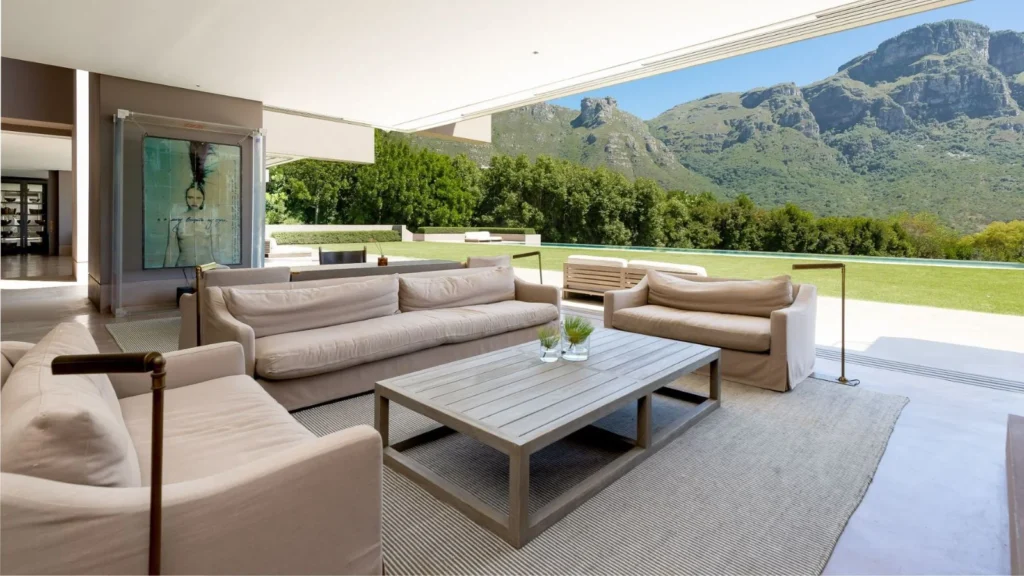
Bishopscourt sits on the eastern slopes of Table Mountain and is regarded as one of Cape Town’s most exclusive residential addresses. The suburb is known for large family homes, expansive gardens, tree-lined streets and high-profile residents, including business leaders, diplomats and public figures.
BusinessTech reports that the area originally formed part of land owned by Jan van Riebeeck and acquired its current name in 1851 when the Colonial Bishoprics Fund purchased the property and established its headquarters there. Over time, Bishopscourt became associated with prestige, privacy and spacious estates.
The suburb has also been home to some of South Africa’s most recognisable figures. Archbishop Desmond Tutu lived in Bishopscourt while serving as Anglican Archbishop of Cape Town, and businessman Patrice Motsepe has also owned property in the area after buying a luxury estate for R68 million.
The historical association matters because luxury property is not priced only by square metres. It is priced by location, scarcity, reputation, privacy, views, security, architectural quality and the kind of buyer identity attached to the suburb.
Limited Supply Supports The Market
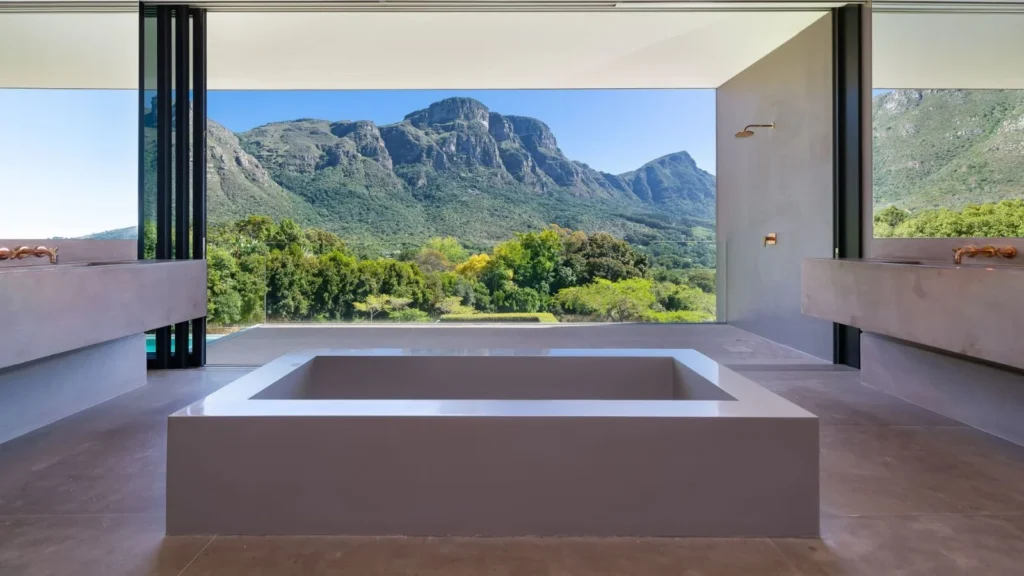
One of Bishopscourt’s strongest price supports is scarcity. BusinessTech cites Hamilton’s Property Portfolio as saying the suburb consists of just over 300 substantial family homes. That means buyers who want to live in Bishopscourt do not have many options, especially if they want a modern, large-scale estate with mountain views and extensive lifestyle features.
Scarcity is a powerful force in property. When supply is limited and demand remains strong among wealthy buyers, prices can rise even when sales volumes slow. This is different from mass-market suburbs, where many similar homes may compete for buyers and where interest rates can quickly affect affordability.
Seeff Property Group lead agent Francois Venter told BusinessTech that prices in Cape Town’s luxury suburbs have continued rising despite fewer homes changing hands. He said first-quarter sales data showed Bishopscourt property selling for about R30 million on average, nearly three times the roughly R11 million average from 2020.
| Bishopscourt Price Marker | Reported Figure |
| Average selling price in 2020 | About R11 million |
| Average selling price in first quarter | About R30 million |
| Increase over period | About R19 million |
| Number of substantial homes in suburb | Just over 300 |
| R189 million listing versus reported average | More than 6 times higher |
The R189 million listing sits far above the suburb’s average, but that is part of the point. Ultra-prime properties are not priced like ordinary homes. They occupy their own tier, where a small number of buyers may pay for architecture, land, privacy, amenities and location in one package.
What Buyers Get For R189 Million
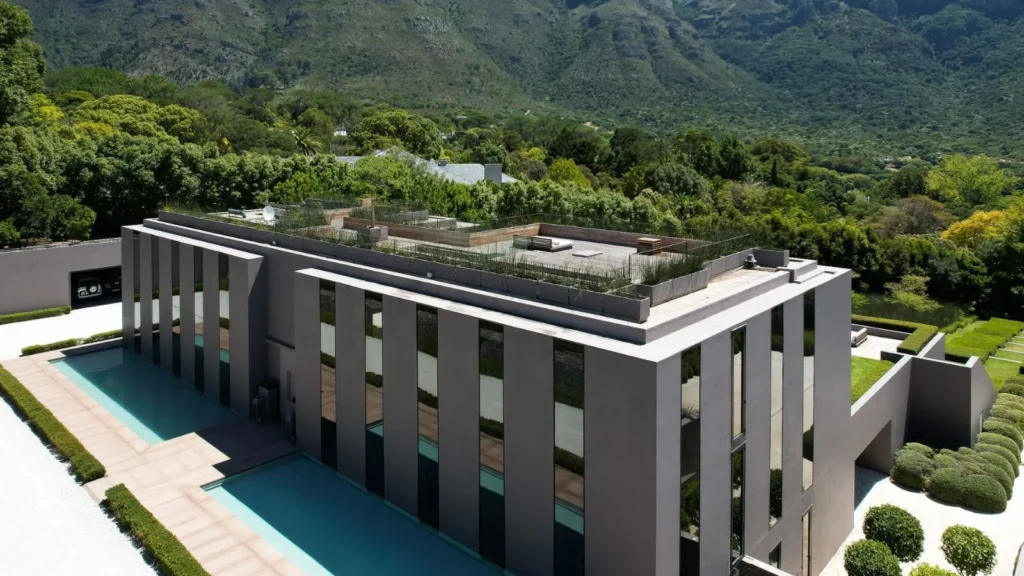
According to Pam Golding Properties, the seven-bedroom residence spans three levels and has been designed to maximise mountain views through floor-to-ceiling glass and an open-plan layout.
The agency described the home as one that “blends exceptional proportions with flawless symmetry” and integrates with its surrounding landscape while offering mountain views. The house includes a double-volume entrance, multiple reception areas, a gourmet kitchen with a central island, formal and informal lounges, a dining room and a guest suite.
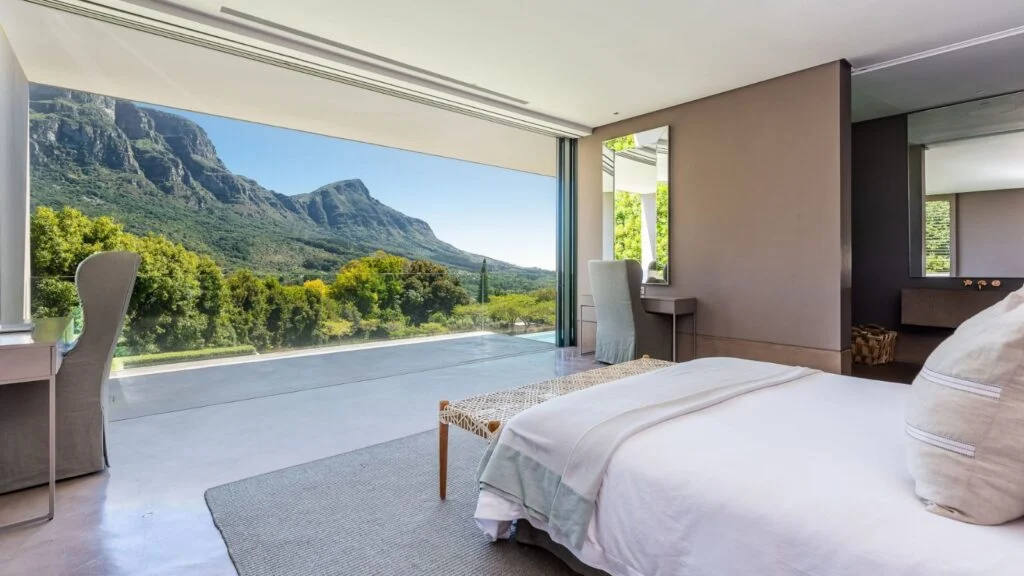
The upper level holds five en suite bedrooms, including a main suite with mountain views, a private balcony and an outdoor shower. The lower level includes two more en suite bedrooms, together with a spa, steam room, Jacuzzi and pedicure area.
Entertainment and lifestyle features include a wine cellar, poker room, cinema, games room, gym and squash court. The property also includes a rooftop terrace, padel court, smart home technology, solar panels, an inverter, two boreholes, staff accommodation, a triple garage and security systems that include a guardhouse and perimeter surveillance cameras.
| Feature Area | Details |
| Living spaces | Double-volume entrance, reception areas, lounges and dining room |
| Kitchen | Gourmet kitchen with central island |
| Bedrooms | Seven bedrooms, including multiple en suite rooms |
| Wellness | Spa, steam room, Jacuzzi and pedicure area |
| Entertainment | Cinema, games room, poker room and wine cellar |
| Sport | Gym, squash court and padel court |
| Outdoor living | Terraces, landscaped gardens and heated rim-flow pool |
| Technology | Smart home features, solar panels and inverter |
| Water security | Two boreholes |
| Security | Guardhouse and perimeter surveillance cameras |
These features show how the property is being positioned. It is not only a large home. It is a private resort, entertainment venue, wellness retreat and secure family estate combined.
What This Says About Cape Town’s Luxury Market
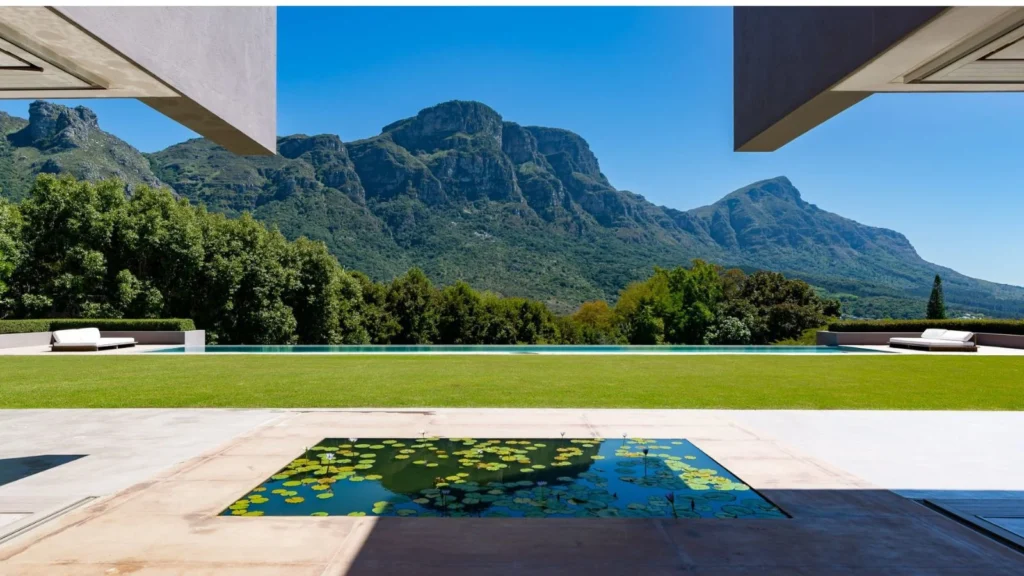
Cape Town’s luxury property market has remained resilient because it draws from several pools of demand. These include South African high-net-worth families, business owners, international buyers, returning expatriates and people seeking lifestyle assets in secure, scenic locations.
Bishopscourt, Constantia, Clifton, Bantry Bay, Fresnaye and parts of Camps Bay all benefit from this pattern, though each suburb offers a different type of luxury. The Atlantic Seaboard sells sea views and coastal prestige. Bishopscourt and Constantia sell space, privacy, gardens and mountain-side seclusion.
The R189 million listing also reflects a broader Cape Town trend: wealthy buyers continue to pay a premium for homes that combine lifestyle infrastructure with resilience features. Solar power, inverters, boreholes, security and smart systems are no longer simply luxury extras. At the top end of the market, they are expected.
That expectation has grown as South Africans deal with unreliable electricity, water concerns, safety risks and the need for remote work or private entertainment spaces. A home that can operate with greater independence becomes more attractive to buyers who can afford it.
The Affordability Contrast
The contrast with ordinary Capetonians is sharp. While ultra-prime buyers weigh up R189 million estates, many households struggle to enter the property market at all. Interest rates, deposit requirements, transfer costs, insurance, levies, rates and everyday living expenses have made home ownership difficult for many workers.
A R1.89 million monthly bond repayment is not only far above normal affordability. It also exposes how unequal the property market has become. Cape Town can have one of the strongest luxury property markets in the country while still facing housing shortages, rental pressure and affordability stress across the metro.
That contrast should not be ignored. Luxury property investment can support jobs in construction, architecture, landscaping, security, domestic work, maintenance, legal services and real estate. But it also highlights how limited access to land and housing remains for most households.
A healthy property market needs both investment confidence and broader affordability. Cape Town’s challenge is that the top end continues to perform strongly while many families are still priced out of stable, well-located housing.
Why The Bond Calculation Matters
The R1.89 million monthly repayment is useful because it gives the public a way to understand scale. Listing prices above R100 million can become abstract. Monthly finance makes the number more concrete.
| Comparison Point | Approximate Scale |
| Monthly bond repayment | R1.89 million |
| Annual bond payments | About R22.68 million |
| Rates and taxes per year | About R219,780 |
| Total 20-year repayments | More than R452.8 million |
Even the rates and taxes alone would be more than many households pay in annual rent. The annual bond repayment would exceed the purchase price of several good suburban homes.
This is why ultra-prime listings often attract public attention. They reveal a part of the housing market that most people will never enter, but many remain curious about. The homes become symbols of wealth, design, aspiration and inequality all at once.
A Property Story Beyond The Price Tag
It would be easy to treat the R189 million Bishopscourt home as a curiosity, but the listing tells a wider Cape Town story. It shows that the city’s top-end property market still has enough confidence to support listings at extreme prices. It shows that wealthy buyers continue to value privacy, views, security and lifestyle infrastructure. It also shows that scarcity in the right suburb can support price growth even when broader market conditions are mixed.
For estate agents and developers, the message is that Cape Town’s luxury market remains a premium national asset. For ordinary readers, the story is a reminder of how wide the gap is between the city’s top-end property economy and the daily reality of housing affordability.
Cape Town’s property market is not one market. It is many markets operating at once. Bishopscourt’s R189 million listing belongs to the smallest, wealthiest and most exclusive tier. Its numbers may seem unreal, but they are part of the city’s real property landscape.
Q&A
Where is the R189 million Cape Town luxury home located?
The property is located in Bishopscourt, one of Cape Town’s most exclusive residential suburbs on the eastern slopes of Table Mountain.
How much would the monthly bond repayment be?
BusinessTech reports that a 20-year bond on the R189 million property would cost about R1.89 million a month, excluding rates and taxes.
How much are the rates and taxes?
The monthly rates and taxes are reported to be about R18,315.
What would total repayments be over 20 years?
Total repayments over the full 20-year bond term would exceed R452.8 million.
Who is marketing the property?
The property is being marketed by Pam Golding Properties.
What does the property include?
The home includes seven bedrooms, multiple living areas, a gourmet kitchen, spa, cinema, wine cellar, gym, squash court, padel court, heated rim-flow pool, smart home technology, solar panels, an inverter, two boreholes and comprehensive security systems.
Why is Bishopscourt so expensive?
Bishopscourt is expensive because it offers large homes, privacy, mountain views, prestige, security and very limited supply. Hamilton’s Property Portfolio says the suburb has just over 300 substantial family homes.
What does this say about Cape Town’s property market?
It shows that Cape Town’s ultra-prime property market remains strong, even while many ordinary households face affordability pressure and limited access to home ownership.
SAI Search Summary
A Cape Town luxury home in Bishopscourt has been listed for R189 million, with estimated monthly bond repayments of about R1.89 million over 20 years, excluding rates and taxes of around R18,315 a month. BusinessTech reports that total repayments over the bond term would exceed R452.8 million. The seven-bedroom property, marketed by Pam Golding Properties, includes multiple living areas, a gourmet kitchen, spa, cinema, wine cellar, gym, squash court, padel court, heated rim-flow pool, smart home technology, solar panels, an inverter, two boreholes and comprehensive security. Bishopscourt’s limited supply and prestige help support high prices, with Seeff Property Group lead agent Francois Venter saying average selling prices in the suburb rose from about R11 million in 2020 to around R30 million in the first quarter.
Sources: BusinessTech, Malcolm Libera; Pam Golding Properties; Hamilton’s Property Portfolio; Seeff Property Group, Francois Venter.