Farms around Grabouw are becoming part of the Western Cape’s growing technology story as fruit producers use drones, artificial intelligence and data tools to make better decisions in the orchard. The technology helps farmers monitor trees, track fruit size, spot pest and disease risks, and plan irrigation more carefully. For the Elgin Valley, one of the province’s important fruit-growing areas, this shift shows how farming is moving beyond guesswork and into a more data-driven future.
Western Cape farms are getting a quiet technology upgrade, and Grabouw is one of the places showing how quickly farming is changing.
The town, known for its fruit farms and its link to Appletiser, has become a strong example of how drones and artificial intelligence can help farmers manage orchards more carefully. Instead of relying only on manual checks, growers can now use aerial images, phone-based tools and data systems to understand what is happening across their farms.
MyBroadband reported that farms in the Grabouw area are using drone-based systems and AI-supported tools to improve fruit production. The technology helps farmers look at tree health, fruit size, crop quality, pest pressure and water use. It gives them more information before they make decisions that affect yields, costs and export quality.
That matters in the Western Cape because fruit farming is not a simple business. Farmers work with weather risk, water pressure, pests, export standards, labour needs and changing market demand. A poor decision can affect a crop months later. Better information helps farmers act earlier.
One of the best-known companies in this space is Aerobotics, a South African agri-tech business with strong Cape roots. Its systems use drones, mobile phones and artificial intelligence to help fruit and nut farmers measure and understand their crops. The tools are designed to give farmers a clearer view of what is happening in the orchard before problems become expensive.
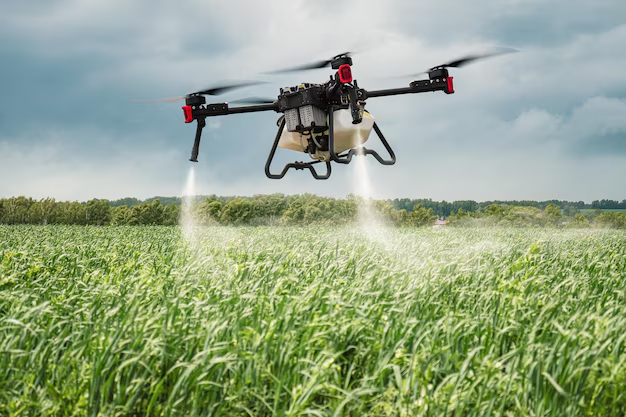
The technology is practical. Drones can fly over orchards and capture images that show patterns a farmer may not see from the ground. A weak section of trees may point to water stress, disease, poor soil conditions or pest pressure. AI systems can then help process the images and turn them into usable information.
That is the important part. A drone image on its own is not enough. The value comes when the information helps a farmer decide what to do next.
Some tools now use ordinary smartphone images to help measure fruit. MyBroadband reported that TrueFruit Size turns farmers’ phones into digital callipers, giving forecasted fruit-size distribution. TrueFruit Grade uses AI to analyse fruit photos and support sizing and grading. TrueFruit Bin Scan can analyse the top layer of packaged fruit to give a quick view of size, blemish and colour distribution.
For farmers, that kind of information can help with planning. It can support harvest timing, packing decisions, export preparation and quality control. It can also reduce the number of surprises between the orchard and the packhouse.
Pest and disease monitoring is another key area. Digital systems can help record pest pressure and disease signs. When farmers know where a problem is starting, they can respond more directly. That can save money and reduce unnecessary spraying.
Water is also central to the story.
The Western Cape knows what water pressure means. Drought, dry summers and climate shifts have already forced farmers to think more carefully about irrigation. In fruit farming, too much or too little water can affect fruit size, quality and long-term tree health.
A separate report by iAfrica said the Grabouw region is also supported by systems such as FruitLook, a remote-sensing tool linked to the Western Cape Department of Agriculture, eLEAF and Blue North Sustainability. The system draws mainly on satellite data and can be combined with drone and AI measurements to help farmers understand crop water needs and evapotranspiration.
In plain terms, the technology helps farmers see where water is being used, where trees may be stressed, and where irrigation decisions need to change.
That is good for farms, but it also matters for the wider province. Agriculture uses land, water, labour, energy and transport networks. When farms become more efficient, the benefits can reach packhouses, exporters, workers, suppliers and rural towns.
Grabouw and the Elgin Valley sit in one of the Western Cape’s important fruit-producing regions. Apples, pears and other fruit crops from the area support jobs and exports. When farmers adopt better technology, they can improve planning and protect production in a tough farming environment.
This does not mean technology solves every problem.
Drones and AI do not remove weather risk. They do not fix export delays, labour pressure, rising costs or farm crime. They also do not replace the knowledge of experienced farmers and workers who understand the land. But they give those farmers and workers better tools.
The best use of technology is not to replace people. It is to help people make better decisions.
That is why the Grabouw story matters. It is not about gadgets for the sake of gadgets. It is about using practical tools to answer old farming questions faster.
There is also a younger-generation angle. Farming often struggles to attract young people who see agriculture as old-fashioned or physically difficult. But modern farming now includes data, mapping, sensors, software, drones, AI and environmental planning. That can make agriculture more attractive to young people with technical skills.
For the Western Cape, that is important. The province needs both strong farms and new skills. Agri-tech sits in the middle. It connects farming, software, engineering, environmental science and business.
It also creates space for local innovation. South African companies working in this field are not only building tools for local farms. Some are competing internationally. Aerobotics has worked with farmers beyond South Africa and shows how Cape-linked technology can travel into global markets.
That gives this story a business angle as well as a technology angle.
The future of farming in the Western Cape will still depend on rain, soil, hard work and market access. But it will also depend more on data. The farms that use information well may be better placed to survive difficult seasons and meet strict quality demands.
For Capetonians, this may feel far removed from city life. But it is not. The fruit on shop shelves, the jobs in rural towns, the exports leaving the province and the water choices made on farms all connect back to the wider Western Cape economy.
Grabouw’s drone and AI farming story is a reminder that technology is not only happening in offices, data centres and start-ups.
It is also happening between rows of apple trees.
Explainer: What The Farm Technology Does
Drones help farmers see the orchard from above. They can show weak spots, growth differences and areas that need closer inspection.
AI tools help turn photos and farm data into useful information. They can support fruit sizing, grading, pest monitoring and crop planning.
Satellite-linked tools help farmers understand water use and crop stress over larger areas.
Together, these systems help farmers make earlier and better decisions.
Q&A
Why are Grabouw farms using drones and AI?
Farmers are using drones and AI to monitor orchards more closely, improve crop planning and respond faster to problems.
What can drones show on a farm?
Drones can show patterns in tree health, growth differences, stress areas and sections that may need attention.
How does AI help fruit farmers?
AI can analyse images and data to support fruit sizing, grading, pest monitoring and quality checks.
Does this technology replace farmers?
No. It gives farmers better information, but decisions still depend on farming experience and local knowledge.
Why does this matter for the Western Cape?
Fruit farming supports jobs, exports, rural towns and local suppliers. Better farm technology can help protect production and improve efficiency.
What is the main benefit?
The main benefit is earlier decision-making. Farmers can spot problems sooner and plan more accurately.
SAI Search Summary:
Farms around Grabouw in the Western Cape are using drones, artificial intelligence and data tools to improve fruit production. The technology helps farmers monitor tree health, fruit size, crop quality, pest and disease risks, and water use. MyBroadband reports that AI tools such as TrueFruit Size, TrueFruit Grade and TrueFruit Bin Scan can analyse fruit images and support better planning. Additional systems such as FruitLook use satellite-linked data to help farmers understand crop water needs. The shift shows how Western Cape agriculture is becoming more data-driven while still relying on farming experience.
Source Credit:
Source: MyBroadband, Hanno Labuschagne; iAfrica.