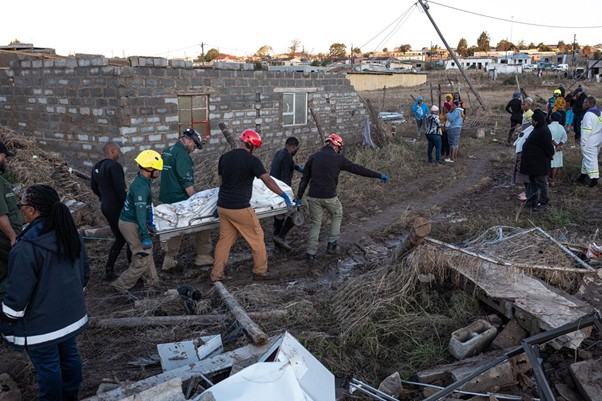
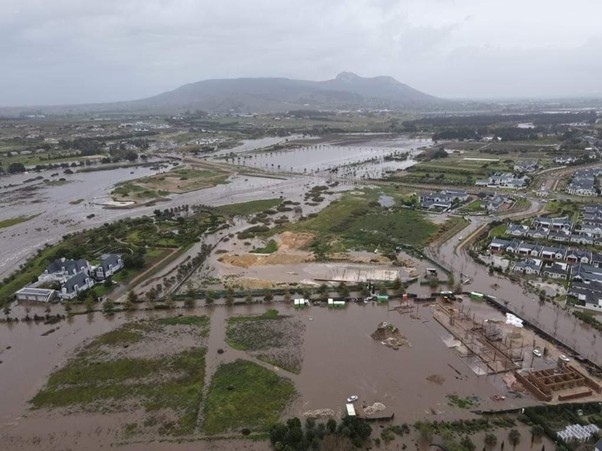
Just five days ago, Cape Town News reported on what already appeared to be one of the Western Cape’s most destructive storm events of the season. At the time, officials confirmed six deaths and more than forty thousand people affected. But as floodwaters begin to retreat, a far more sobering picture is now emerging. New official disaster assessments show that the crisis has grown dramatically, with the number of residents affected now standing at more than one hundred and three thousand, exposing the true scale of damage stretching from Cape Town’s informal settlements to isolated farming communities deep inside the Cape Winelands and the Garden Route.
Across the Western Cape, what began as emergency flood response has now shifted into something far larger, a full-scale provincial recovery operation.
Inside the Western Cape Government’s Joint Operations Centre, disaster teams continue coordinating restoration efforts across every affected district as engineers, municipal officials, humanitarian workers, emergency responders, and power crews work to reconnect roads, electricity networks, water systems, and communication links damaged during two back-to-back severe weather systems.
The latest figures released by provincial authorities reveal the disaster has now directly affected 103,350 people, more than doubling the numbers reported earlier this week.
At the same time, the Western Cape Department of Health and Wellness has now confirmed the province’s weather-related death toll has climbed to ten.
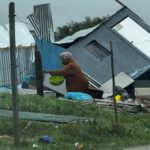
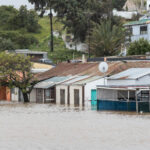
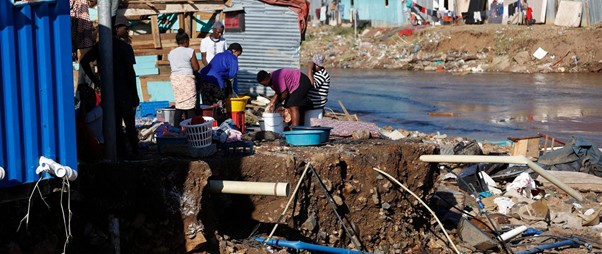
Much of the visible damage remains concentrated inside the Cape Metro, where floodwaters tore through vulnerable informal communities.
City of Cape Town Disaster Risk Management spokesperson Charlotte Powell confirmed that sixty-seven informal settlements have now been impacted.
Powell said:
“Thus far, we can confirm that 31,709 dwellings and approximately 103,350 people have been affected in 67 informal settlements.”
That means more than thirty-one thousand homes have either been flooded, structurally damaged, or left uninhabitable as thousands of families continue trying to salvage possessions, secure temporary shelter, and rebuild daily routines.
The humanitarian response has also grown rapidly.
Powell confirmed:
“Humanitarian relief has reached around 40,000 individuals, each receiving two meals per day over five days, a total of 400,000 meals have been supplied.”
That figure alone reveals the scale of the emergency feeding operation now underway across the metro.
Outside Cape Town, the situation remains equally serious.
Western Cape Member of the Executive Council for Local Government, Environmental Affairs, and Development Planning, Anton Bredell, says the province is now dealing with widespread infrastructure failures, isolated communities, and prolonged power outages.
Bredell said:
“Our province has been affected by two severe weather events in a short space of time. While damages still need to be fully assessed, they appear extensive and widespread.”
Some of the most severe disruption is now being reported in the Garden Route, where residents in certain areas have been without electricity for nine consecutive days.
That loss of power has triggered secondary failures, affecting water pumps, mobile communication towers, municipal services, and access to emergency information.
In Witzenberg, road washaways, electricity outages, and communication breakdowns continue leaving communities partially isolated.
Provincial authorities say more than two thousand residents have already been displaced in the Cape Winelands alone, with emergency shelter operations continuing across multiple districts.
Recovery Snapshot
| Category | Official Figure |
| Confirmed deaths | 10 |
| People affected | 103,350 |
| Dwellings affected | 31,709 |
| Informal settlements impacted | 67 |
| People fed | 40,000 |
| Meals distributed | 400,000 |
| Displaced in Cape Winelands | 2,000+ |
| Electricity restoration | 62% |
Transport networks are slowly returning.
Major routes including the N1 and N2 are now operating close to normal capacity, while Eskom crews continue repairs across the Cape Winelands and Theewaterskloof.
Later today, Premier Alan Winde and Anton Bredell are expected to conduct an aerial assessment of the hardest-hit regions as the Western Cape’s recovery enters what could become its most difficult phase yet.
Source: IOL – Robin-Lee Francke.