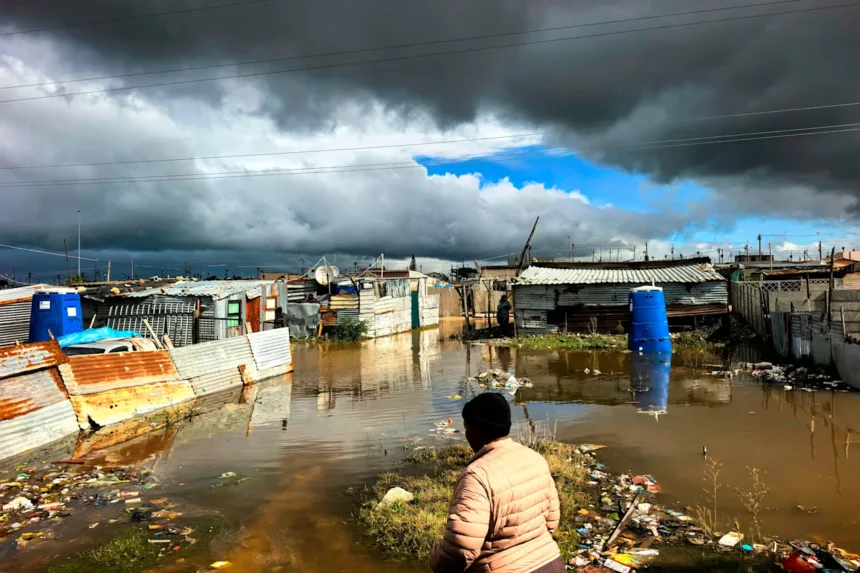
As the floodwaters begin to recede across parts of the Western Cape, the true human cost of one of the province’s most destructive weather events in recent years is only now becoming clear. What began as a severe storm warning has turned into a large-scale humanitarian and infrastructure crisis, stretching from informal settlements on the Cape Flats to farming communities hundreds of kilometres from Cape Town.
The Western Cape government has now confirmed that ten people have lost their lives following days of severe flooding, gale-force winds, infrastructure failures, and widespread storm damage that has left nearly ninety thousand residents directly affected across multiple districts.
Provincial authorities say the final numbers are still being verified as emergency teams continue damage assessments, humanitarian support operations, and clean-up efforts in some of the hardest-hit communities.
Western Cape MEC for Local Government, Environmental Affairs and Development Planning, Anton Bredell, said disaster response teams remain fully activated as recovery operations continue around the clock.
Health officials have confirmed the ten weather-related fatalities, while social development teams, municipal engineers, humanitarian organisations, and volunteers continue working across flood-affected areas.
In Cape Town alone, more than eighty five thousand people living in over twenty two thousand households have been impacted by floodwater, structural damage, power interruptions, and road access challenges.
For many families living in low-lying informal settlements, the storm brought more than rising water.
Mattresses, clothing, school books, food supplies, and personal documents were washed away in a matter of hours, leaving thousands dependent on emergency shelters, food parcels, blankets, and community support.
Western Cape MEC for Social Development, Jaco Londt, confirmed that at least three thousand six hundred and twenty eight people are currently being accommodated in community halls and temporary shelters across the province.
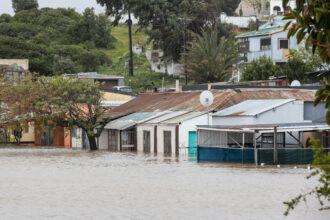
Outside the metro, flood damage has also been reported along the West Coast, Cape Winelands, Overberg, and agricultural districts where swollen rivers, damaged bridges, and waterlogged farmland continue to create logistical challenges.
Water engineers are also closely monitoring pressure points across several river systems, while Clanwilliam Dam has reportedly exceeded full storage capacity, increasing concern for downstream communities.
For many Capetonians, the clean-up may now be beginning, but for thousands of affected families across the province, recovery is only just starting.
Source: IOL – Robin-Lee Francke.