Less than twenty-four hours after Cape Town ratepayers celebrated a major High Court victory, the City has fired back, confirming it is now considering its legal options after one of the most significant municipal tariff rulings in recent years. What began as a courtroom challenge over service charges has rapidly evolved into a much bigger battle, one that could reshape how millions of rand in municipal revenue is collected and how households across Cape Town are billed in the years ahead.
Following Cape Town News’ report yesterday on the Western Cape High Court’s landmark ruling against the City’s controversial fixed tariffs, the story has now taken another dramatic turn, with the City of Cape Town officially confirming that it is considering an appeal.
As reported on Friday, the Western Cape High Court declared the City’s fixed charges for city-wide cleaning, water, and sanitation unlawful and invalid, finding that the tariff structure, particularly where charges were linked to property values, was inconsistent with the Constitution, national legislation, and the City’s own tariff by-law.
The matter was heard by Judge President Nolwazi Mabindla-Boqwana alongside Judges Andre Le Grange and Katharine Savage after months of legal arguments involving the City, the South African Property Owners Association, and AfriForum.
The court ordered that the disputed charges be set aside with effect from the thirtieth of June, unless further legal action is taken.
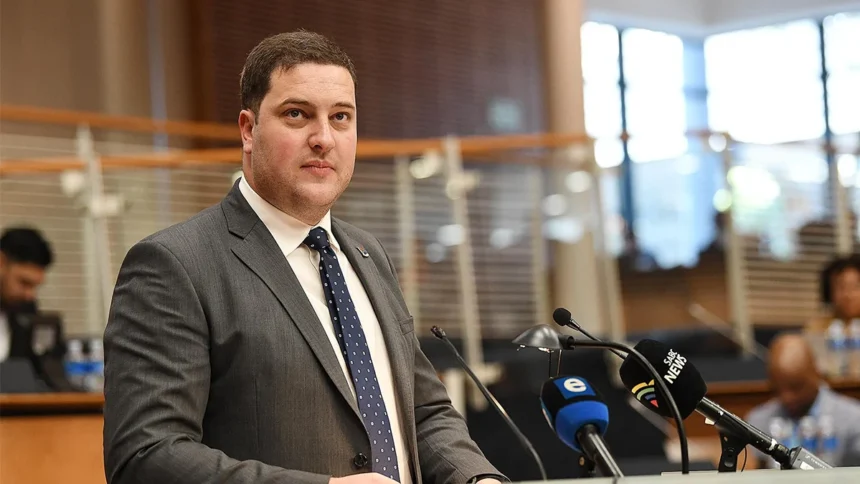
Now, in a direct response to the ruling, Geordin Hill-Lewis says the City is carefully analysing the judgment and considering all legal options available, including a possible appeal.
Speaking after the ruling, Hill-Lewis argued that the City’s model of linking fixed service charges to property values was specifically designed to protect lower and middle-income households.
“The point of using property values to determine fixed charges is to protect lower- and middle-income homes,” the Mayor said.
He warned that if the judgment ultimately stands, one possible consequence could be that affluent property owners pay less while many ordinary working families pay more.
Hill-Lewis also pushed back against calls for infrastructure budget reductions, arguing that any cuts to long-term infrastructure spending would directly impact service delivery, economic growth, and what he described as “basic dignity for residents.”
The City further confirmed that should it proceed with an appeal, the implementation of the court order would be suspended while the matter continues through the legal system.
Meanwhile, AfriForum welcomed the ruling as a victory for transparency and lawful governance.
Regional head Jurie Ferreira said the judgment confirms a core legal principle, that services tied to consumption must be charged according to actual usage and not through indirect or arbitrary formulas.
Manager of Local Government Affairs, Morné Mostert, added that while the case focused on Cape Town, its implications could now extend far beyond the Western Cape, potentially forcing municipalities across South Africa to reassess similar tariff structures.
SAPOA also welcomed the ruling.
Chief Executive Officer Neil Gopal said the organisation took no pleasure in litigating against the City, but said the judgment had vindicated its long-held position that the disputed tariffs were unlawful.
He further urged the City not to spend additional taxpayer money on prolonged litigation, but instead to focus on delivering a lawful and workable budget for the twenty twenty-six to twenty twenty-seven financial year.
For Cape Town’s residents, businesses, and property owners, the tariff war is now far from over.
If the City proceeds with an appeal, this legal battle could continue for months, if not longer, with major implications for future municipal budgets, service delivery models, and how fairness in local government billing is ultimately defined.
Source: Independent Online – Theolin Tembo.ansition accelerates