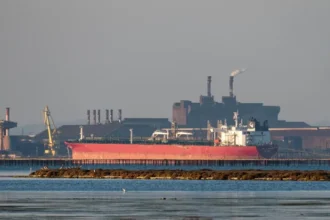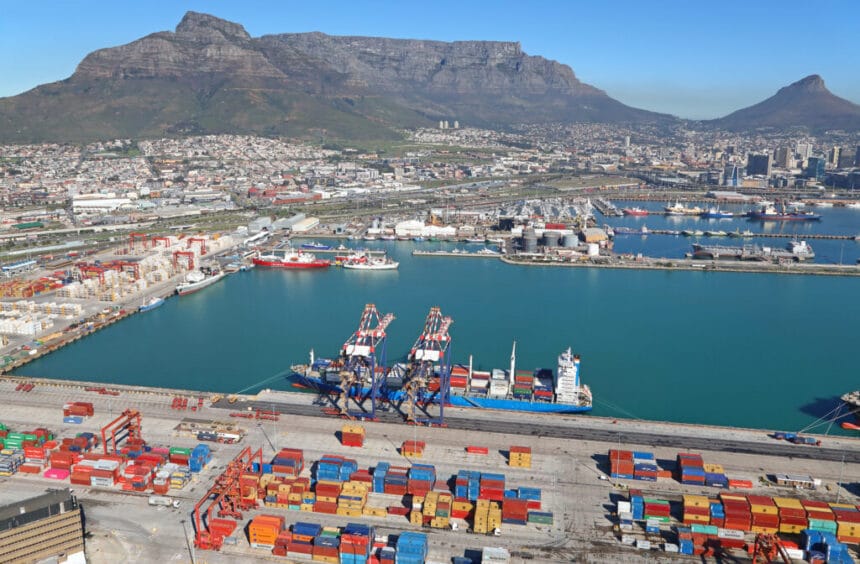
Cape Town: The Western Cape’s most important container gateway has again become one of the province’s biggest economic risks after the Port of Cape Town ranked last among 400 ports in the latest World Bank performance assessment. The result places renewed pressure on Transnet to convert recent equipment purchases and operational reforms into faster vessel turnaround times, because every delay reaches far beyond the harbour gates and affects farms, factories, freight companies, retailers and thousands of jobs linked to Western Cape trade.
Cape Town Ranked Last Among 400 Ports
The World Bank and S&P Global Market Intelligence placed Cape Town at the bottom of the 2025 Container Port Performance Index.
The index measures how long container vessels spend within a port system, including waiting time before berthing and the time required to complete cargo operations.
Cape Town finished 400th out of 400 assessed ports.
The result does not mean every individual operation at the harbour failed or that no improvements have occurred. It does, however, show that vessels using Cape Town experienced poorer overall time performance than ships calling at the other ports included in the assessment.
The World Bank describes the index as a diagnostic tool rather than a punishment table. Its purpose is to identify performance gaps and show where infrastructure, management and operating systems require improvement.
Efficient ports reduce transport costs and allow importers and exporters to plan with greater certainty. Poor performance creates the opposite effect by increasing waiting times, disrupting shipping schedules and weakening confidence in a trade route.
What The Latest Ranking Measures
| Indicator | Position |
| Report | Container Port Performance Index 2025 |
| Publishers | World Bank and S&P Global Market Intelligence |
| Ports assessed | 400 |
| Cape Town’s ranking | 400th |
| Primary measurement | Time container vessels spend in port |
| Waiting time included | Yes |
| Berth and cargo-working time included | Yes |
| Purpose | Compare efficiency and identify operational gaps |
The ranking reflects a full year of vessel movement data rather than conditions on one particular day.
That distinction matters because some current improvements may not yet be visible in the published score. At the same time, short periods of better performance cannot erase a full year of delays experienced by shipping lines and exporters.
Cape Town therefore faces two realities at once: Transnet says performance is improving, while the global benchmark shows that the port remains far behind its international competitors.
R69 Billion Economic Chain Depends On The Port
The Port of Cape Town is not merely a shipping facility. It sits at the centre of a logistics chain that connects farms, cold-storage facilities, factories, warehouses, trucking companies, freight forwarders and overseas buyers.
Research commissioned by the Western Cape Government estimated that the container logistics chain contributed approximately R69 billion to the provincial economy in 2021.
That represented about 8.6% of Western Cape gross value added at the time.
The same research linked the logistics chain to the creation or support of approximately 225,000 jobs and almost R20 billion in taxes.
Those figures cover more than people working inside the port.
They include employment supported directly and indirectly through agriculture, manufacturing, transport, warehousing and other sectors dependent on reliable cargo movement.
Fresh fruit, table grapes, citrus, apples and wine are among the Western Cape’s most important containerised exports. Imports moving through the harbour include vehicle components, clothing, textiles, footwear and food products.
When port operations slow down, the effect moves through the wider economy.
Western Cape Port Economy At A Glance
| Economic Measure | Estimated Impact |
| Contribution to provincial gross value added | R69 billion |
| Share of Western Cape GVA | 8.6% |
| Jobs created or sustained | 225,000 |
| Taxes linked to port logistics activity | Almost R20 billion |
| Potential additional exports from greater efficiency | Approximately R6 billion |
| Potential additional jobs | Nearly 20,000 |
| Potential additional tax revenue | More than R1.6 billion |
The economic estimates are based on provincial research and should not be read as the annual turnover of the port authority itself. They measure activity across the broader logistics and trade chain.
Delays Hit Exporters Before Customers See Them
Port inefficiency creates several layers of additional cost.
A ship waiting outside the harbour still incurs operating expenses. Shipping lines can recover some of those costs through surcharges or higher freight charges.
Exporters may have to store containers for longer, reschedule trucks or move cargo through another port.
For producers of fresh fruit, time is especially important.
Table grapes, citrus and other temperature-sensitive products must move through refrigerated supply chains and reach international buyers within strict commercial windows.
A delayed shipment may miss a scheduled vessel, arrive after a supermarket promotion has started or lose quality while waiting.
Exporters may then face claims, discounted prices or damaged relationships with buyers.
Manufacturers also suffer when imported components arrive late or completed goods cannot leave on schedule. A factory can have orders and workers ready but still lose production time because essential cargo remains inside a congested logistics system.
Port Performance Reaches Household Prices
The consequences are not limited to exporters.
Cape Town businesses import machinery, vehicle parts, clothing, food products and other goods through container routes.
When freight becomes slower or more expensive, importers must decide whether to absorb the cost or pass it to customers.
That means a poorly functioning port can contribute to higher prices even for Capetonians who have no direct connection to shipping.
The effect may appear in the price of imported products, delayed stock deliveries or reduced business investment.
Companies are less likely to expand production or enter new export markets when they cannot predict how long cargo will take to move through the harbour.
Reliability is therefore almost as important as speed. A business can sometimes plan around a known transit period, but repeated and unpredictable disruptions make contracts and delivery promises much harder to manage.
Wind And Equipment Remain Major Obstacles
Cape Town’s port faces a combination of environmental and operational difficulties.
Strong south-easterly winds can force container-handling equipment to stop operating when conditions exceed safe limits.
The port lost more than 1,000 operating hours to extreme wind between November and February, according to industry reporting on the recent fruit-export season.
Weather cannot be eliminated, but exporters and analysts argue that its effect can be reduced through suitable equipment, improved planning and sufficient capacity to recover cargo volumes once conditions improve.
Equipment reliability has also been a recurring problem.
Breakdowns involving cranes, straddle carriers and other machinery can reduce the number of containers moved per hour and lengthen the time a ship remains alongside the terminal.
Riskonet Africa strategic-risk head Volker von Widdern said crane capacity, weather and management systems all contributed to Cape Town’s poor performance.
He argued that the problems were solvable and required sustained investment and the introduction of recognised international operating practices.
Transnet Says Recovery Is Underway
Transnet has pointed to improved national port results during the latest financial year.
Vessel arrivals across South Africa’s eight commercial ports increased by 9%, rising from 7,912 to 8,630.
Cargo throughput increased by 4.2% to approximately 304 million tonnes, while container volumes rose by 7.1%.
Transnet Group chief executive Michelle Phillips said the growth indicated that recovery interventions and improvements to port and rail operations were producing measurable results.
The company has also identified container-stack improvements and truck-staging facilities at Cape Town as projects expected to reduce congestion.
Those national figures provide important balance to the global ranking.
However, they do not give a complete Cape Town-specific measure of waiting time, crane productivity or vessel turnaround.
More ships and cargo moving through the national system may indicate recovery, but the new World Bank ranking shows that Cape Town still has a significant efficiency gap to close.
Why Cape Town Cannot Blame Wind Alone
Cape Town’s weather places real limits on operations, particularly during the summer fruit-export season.
However, other ports also operate in difficult conditions involving wind, tides, storms or extreme temperatures.
The decisive issue is how effectively a port prepares for disruption and how quickly it catches up afterwards.
That requires dependable equipment, sufficient staff, accurate vessel planning, clear truck-booking systems and enough operational flexibility to increase throughput when weather conditions allow.
A port that loses several hours to wind must be able to recover the backlog without allowing containers, trucks and ships to remain trapped in a growing queue.
The global ranking therefore cannot be dismissed as a weather report.
It reflects how the entire system performed after weather, equipment, labour, vessel scheduling and cargo operations were combined.
City Calls For More Private Participation
Cape Town Mayoral Committee Member for Economic Growth James Vos said the ranking should concern anyone interested in exports, investment and job creation.
He said businesses repeatedly identify the port as one of the Western Cape’s largest constraints on economic growth.
Vos welcomed requests for proposals involving private operators at the liquid bulk terminal and a cold-storage facility, but called for wider private-sector participation in port operations.
The City argues that greater private involvement could bring additional investment, technical expertise and stronger operating discipline.
Transnet remains responsible for the port system, but government has begun opening selected operations to outside participation as part of broader freight reforms.
Private participation alone will not solve every problem. Contracts must be transparent, competition must be protected and the public infrastructure must remain aligned with national trade priorities.
The pressure for reform nevertheless reflects growing frustration that exporters cannot wait indefinitely for performance to improve.
Efficient Port Could Unlock R6 Billion In Exports
Western Cape research suggests that a more efficient Port of Cape Town could unlock approximately R6 billion in additional exports.
The high-growth scenario could support nearly 20,000 extra jobs and generate more than R1.6 billion in additional tax revenue.
Those estimates show what is at stake.
The province’s economic strategy aims to expand exports, attract private investment and grow the Western Cape economy to R1 trillion by 2035.
That target becomes more difficult when the main container gateway cannot move goods reliably.
Export growth is not created by signing agreements alone. Producers need electricity, transport, cold storage, customs clearance and a port capable of loading goods onto ships on time.
The harbour is therefore part of the province’s economic infrastructure in the same way as roads, railways, water systems and electricity networks.
Cape Town Needs Transparent Performance Data
The next stage of reform should include clearer and more frequent public reporting.
Exporters need Cape Town-specific information showing vessel waiting times, ship turnaround, container moves per hour, equipment availability and hours lost to weather.
Those figures would allow businesses and the public to judge whether investment is producing sustained improvement.
They would also prevent the debate from becoming a contest between an annual international ranking and occasional claims that the port is performing better.
The latest World Bank result is severe, but it should be used as a baseline rather than accepted as Cape Town’s permanent position.
The real test will be whether the port can climb meaningfully in future assessments while reducing the costs experienced by exporters now.
Until that improvement becomes visible in both operational data and international comparisons, the harbour will remain a bottleneck in a province trying to build its economy around trade, agriculture, manufacturing and investment.
Q&A
Where did the Port of Cape Town rank?
It ranked 400th out of 400 ports in the World Bank and S&P Global Market Intelligence Container Port Performance Index 2025.
What does the index measure?
It compares the total time container vessels spend within port systems, including waiting and cargo-working time.
Does the ranking mean no improvement has occurred?
No. Transnet reports broader national improvements, but the ranking shows that Cape Town remained the weakest performer across the full assessment period.
Why is the port important to the Western Cape?
The container logistics chain was estimated to contribute R69 billion to the provincial economy and support approximately 225,000 jobs.
Which exports depend heavily on the port?
Important exports include table grapes, citrus, apples, other fresh fruit and wine.
How does port congestion affect consumers?
Delays raise freight, storage and supply-chain costs, which businesses may pass on through higher prices.
What problems affect the port?
Major challenges include strong wind, unreliable equipment, limited operating capacity, management systems and difficulty clearing cargo backlogs.
What improvements has Transnet announced?
Transnet has reported stronger national cargo and vessel volumes and identified container-stack and truck-staging upgrades for Cape Town.
What could a more efficient port deliver?
Provincial research estimates that greater efficiency could unlock about R6 billion in extra exports and support nearly 20,000 additional jobs.
SAI Search Summary
The Port of Cape Town ranked last among 400 ports in the World Bank and S&P Global Market Intelligence Container Port Performance Index 2025. The assessment measures the time container vessels spend waiting and working within ports. Cape Town’s result has raised concern because the wider port logistics chain was estimated to contribute R69 billion to the Western Cape economy and support 225,000 jobs. Transnet says vessel arrivals, cargo throughput and container volumes improved nationally during the latest financial year, but exporters continue to face disruption from wind, equipment failures, congestion and uncertain shipping schedules.
Source: World Bank and S&P Global Market Intelligence – Container Port Performance Index 2025 Research Team; Western Cape Department of Economic Development and Tourism – Port of Cape Town and Logistics Unit; Eyewitness News – Celeste Martin; CapeTalk – Lester Kiewit and Volker von