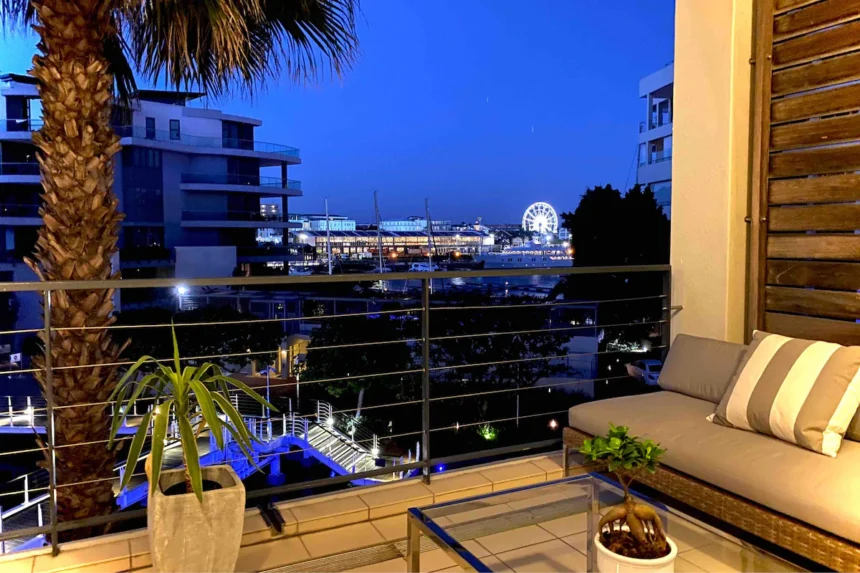
Cape Town: Property owners who operate full-time Airbnb-style accommodation could face sharply higher municipal rates under a proposed City system designed to separate occasional home-sharing from commercial short-term rental businesses.
Cape Town Airbnb Owners Face A New Commercial Rates Test
Cape Town’s lucrative short-term rental industry is heading towards its biggest municipal shake-up in years, with the City preparing a system that could move thousands of investment properties from residential property rates to the more expensive business and commercial category.
The change will not affect every homeowner who occasionally rents out a room, apartment or house. The City says its intended approach is aimed at properties functioning mainly as commercial tourist accommodation, particularly homes that are not used as a primary residence or are made available for short-term letting for most of the year.
Under the amended draft Rates Policy, a property may be treated as commercial accommodation when it is not being used as someone’s primary home, or when more than 50% of its total annual room nights are made available for short-term letting.
That distinction is important because the City’s business and commercial rates ratio is set at 2.35 times the residential base ratio. The final municipal bill will still depend on the property’s valuation, applicable rebates and the adopted rate-in-the-rand, but the category change could substantially increase operating costs for owners running short-term rentals as full-time businesses.
The proposed system is not an Airbnb ban. It applies to short-term accommodation across booking platforms and is intended to treat large-scale operators more like hotels, guesthouses and bed-and-breakfast establishments for property-rating purposes.
The City has repeatedly said it supports tourism and does not intend to prohibit short-term rentals. Its stated purpose is to create a clearer difference between genuine home-sharing and properties operated primarily as commercial accommodation.
Who Could Be Classified As Commercial?
The City’s amended draft policy defines commercial accommodation broadly. It includes properties that are not used as a primary residence, primary homes made available for short-term letting for more than 50% of their total annual room nights, and other accommodation supplied temporarily for a fee.
This means an investor-owned apartment operated throughout the year as a short-term rental would be at clear risk of commercial classification. A holiday home that is not anyone’s primary residence could also fall within the commercial definition.
By contrast, an owner who lives permanently in a house and rents out one bedroom from time to time may remain in the residential category, provided the property stays below the 50% availability threshold.
The City’s calculations focus on availability, not only completed bookings. A property does not have to be occupied by tourists for more than half the year to exceed the threshold. The question is how many room nights are offered or listed as available for short-term letting.
That prevents an owner from arguing that an unsuccessfully marketed property remains residential simply because it secured fewer bookings than expected.
How The 50% Room-Night Test Works
The City will calculate the maximum annual room-night capacity of a property by multiplying the number of bedrooms by 365 days.
It will then compare that figure with the number of nights for which bedrooms were made available for short-term letting during a rolling 365-day period.
| Property Example | Total Annual Room Nights | Short-Term Availability | Likely Category |
| One-bedroom apartment listed all year | 365 | 365 nights, or 100% | Commercial |
| Two-bedroom apartment fully listed for 200 nights | 730 | 400 room nights, or about 55% | Commercial |
| Three-bedroom home with one room listed all year | 1,095 | 365 room nights, or about 33% | Residential |
| Four-bedroom primary home listed completely for 60 nights | 1,460 | 240 room nights, or about 16% | Residential |
| Entire home occupied by a long-term tenant | Not treated as short-term availability | 0% | Residential |
A three-bedroom house, for example, has 1,095 annual room nights. If an owner lives in the property and lists one bedroom for the entire year, the available short-term accommodation equals 365 room nights, or roughly 33% of the total. The property would remain below the proposed commercial threshold.
However, if two of those three bedrooms were listed throughout the year, the total would rise to 730 room nights, or about 67%. The property could then be categorised as commercial accommodation.
The City’s basic rule is that when the majority of a property is offered for short-term accommodation for the majority of the year, the property is likely to be treated as a commercial operation.
What The 2.35 Rates Ratio Means
Residential property provides the City’s base property-rates category. Business and commercial properties are rated at a ratio of 1:2.35 against that base.
This does not mean every affected owner’s entire municipal account will automatically become exactly 2.35 times larger. Municipal accounts may include water, electricity, sanitation, refuse and other charges that are calculated separately.
The ratio applies specifically to property rates. The amount payable will depend on the municipal valuation, the applicable rate-in-the-rand and whether the owner previously qualified for residential relief or reductions.
The policy also indicates that properties used or made available for short-term letting above the 50% threshold would no longer qualify for residential property relief.
For investors, the financial effect could therefore come from two directions: the property could move to the commercial rating category, and residential reductions may fall away.
Owners will need to assess whether their average nightly income, occupancy rate and seasonal earnings remain strong enough to absorb the higher municipal cost.
Registration Could Become Compulsory
The proposed system depends on a mandatory registration process for properties advertised on short-term accommodation platforms.
The City intends to introduce a Short-Term Letting By-law requiring each listed property to register and display a City-issued registration number on its online advertisement. Booking platforms would then be expected to remove listings that do not show a valid number.
Platforms may also be required to share availability and occupancy information with the City. That data would allow the municipal valuer to assess how extensively each property is being used or offered for short-term letting.
This would represent a significant change for the sector. At present, the City does not have a single comprehensive database showing every apartment, house or room offered across multiple online booking platforms.
A registration system would give the municipality a clearer picture of where short-term rentals are concentrated, how many operate as full-time businesses and which properties cross the proposed commercial threshold.
It would also make enforcement easier because a listing could be matched to a municipal property record and its rates category.
Long-Term Rentals Would Remain Residential
Owners who move their properties from short-term accommodation to conventional long-term leases would generally remain in the residential category because the home would be occupied as the tenant’s primary residence.
This creates a strong financial choice for investors.
Short-term letting can produce higher gross income during busy tourism periods, particularly in the City Bowl, Atlantic Seaboard, Waterfront and coastal areas. But it also carries cleaning costs, platform fees, furnishing expenses, management charges, seasonal vacancies and more intensive maintenance.
Commercial property rates would add another operating cost.
Long-term rentals usually provide lower peak income but offer greater predictability, reduced turnover and fewer daily management demands. Cape Town’s shortage of rental stock may make that option increasingly attractive.
Property specialists Adel and Charl Louw of Chas Everitt Atlantic Seaboard and City Bowl said short-term letting would remain an important part of Cape Town’s tourism economy.
They cautioned, however, that the financial calculations could increasingly favour long-term tenants, especially for owners operating several properties.
“Short-term letting will remain a viable and important part of Cape Town’s tourism economy,” the Louws said.
“But for many investors, especially those operating at scale, the numbers may increasingly favour long-term rentals, and given the current supply-demand dynamics, that will be a very attractive position to be in.”
Cape Town’s Long-Term Rental Shortage
The rates debate comes while Capetonians face an increasingly tight long-term rental market.
Demand is particularly strong in central neighbourhoods, the Atlantic Seaboard, the Southern Suburbs and other areas close to employment, universities, transport routes and commercial centres.
The Louws described the shortage of conventional rental homes as chronic, with well-positioned apartments often finding tenants quickly.
“There is a chronic shortage of long-term rental stock across the metro, particularly in central areas and along the Atlantic Seaboard,” they said.
“Demand is exceptionally strong, vacancy rates are extremely low, and well-priced, well-located properties are being let very quickly.”
Cape Town Etc reported that Western Cape rental growth had approached 7% over the previous year, while vacancy rates remained below 2% in several markets.
One-bedroom apartments in central Cape Town regularly attract monthly rentals of between R13,000 and R15,000, while two-bedroom units often start at about R19,000.
These figures will vary according to location, condition, parking, security, views and building facilities, but they show why some owners may consider moving away from short stays if their municipal costs rise.
Will The Change Release More Homes?
Supporters of stricter short-term rental regulation often argue that investment apartments removed from tourist platforms could return to the long-term housing market.
The Cape Town proposal does not force owners to change how they use their properties. It changes the property-rating treatment when the activity crosses the commercial threshold.
Some owners may accept the higher rates and continue operating profitable short-term rentals. Others may increase nightly prices, reduce availability, sell the property or move to long-term tenants.
The effect on housing supply will therefore depend on how owners respond.
A commercial rates increase alone is unlikely to solve Cape Town’s wider affordability crisis. Many short-term rental apartments are concentrated in expensive districts where even conventional monthly rents remain beyond the reach of lower-income households.
However, the return of additional units to the long-term market could still ease pressure for professionals, students, families and workers seeking homes closer to central employment areas.
What Happens To Body Corporate Rules?
The City’s proposed property-rating changes do not override the rules adopted by sectional-title body corporates or homeowners’ associations.
A body corporate may still prohibit or restrict short-term letting under its conduct or management rules, subject to the applicable sectional-title legislation and proper decision-making processes.
The City has said it does not regulate those private scheme rules.
This means registration with the municipality would not automatically give an owner permission to operate an Airbnb-style rental in a building where the body corporate prohibits it.
Owners must comply with both systems: the City’s municipal requirements and the lawful rules of their sectional-title scheme or homeowners’ association.
A property could therefore be properly registered for municipal purposes but still be in breach of building rules if the scheme does not allow short-term guests.
Zoning Will Not Automatically Change
The City says commercial rates classification would not automatically change the zoning of the affected property.
Short-term letting is already accommodated through the Municipal Planning By-law, and the proposed rates change concerns the property’s rating category rather than a formal rezoning process.
That distinction matters because property rates, zoning and land-use permission are separate legal issues.
A property may remain within a residential zoning scheme while being treated as commercial accommodation for rates purposes because of how intensively it is used for income-generating short-term stays.
When Could Owners Start Paying More?
The amended Rates Policy was intended to form part of the City’s municipal budget process, with implementation beginning from the 1st of July this year.
However, the City has proposed a grace period to give owners, booking platforms and municipal systems time to adjust.
Its published guidance says the first affected properties are expected to begin moving to commercial property rates from the 1st of July next year.
The related Short-Term Letting By-law is expected to set out the registration, data-sharing and enforcement procedures. That by-law must still be released for public participation before its final adoption.
Owners should therefore not assume that every operational detail has already been settled. The final registration process, enforcement mechanisms and platform responsibilities will depend on the wording approved after public consultation.
Cape Town Chooses Regulation Over A Ban
Cape Town’s approach differs from cities that have imposed strict annual night limits or prohibited many short-term rentals.
The City says blanket restrictions can drive the industry underground, penalise occasional home-sharers and damage a tourism sector that supports jobs across accommodation, restaurants, transport, cleaning, entertainment and retail.
Its chosen model is intended to keep short-term letting legal while requiring commercial-scale operators to contribute at the same property-rates level as established tourist accommodation businesses.
The City’s position is that a full-time tourist apartment should not receive the same rates treatment as a home occupied by a family or long-term tenant.
For property owners, this means the debate is moving away from whether short-term rentals should be permitted and towards how they should be classified, monitored and charged.
The final impact will depend on the adopted by-law, the information supplied by booking platforms and the ability of the City to implement the system consistently.
What is already clear is that Cape Town’s short-term rental market is entering a more regulated phase. Owners who have built investment models around residential rates will need to recalculate those models before the commercial classification process begins.
Q&A
Is Cape Town banning Airbnb?
No. The City says it supports tourism and does not intend to ban short-term letting. The proposal seeks to distinguish occasional residential home-sharing from commercial-scale accommodation.
Does the proposal apply only to Airbnb?
No. It applies to short-term rentals advertised through online booking platforms generally, not only Airbnb.
Which properties could face commercial rates?
Properties not used as a primary residence, or properties made available for short-term letting for more than 50% of their total annual room nights, may be classified as business and commercial.
Does the City count bookings or availability?
The City intends to measure how often rooms are listed as available, not only how many nights guests actually book.
How are annual room nights calculated?
The number of bedrooms is multiplied by 365. A two-bedroom property therefore has 730 total annual room nights.
Will every occasional home-share property become commercial?
No. A homeowner who rents out a limited part of a primary residence and remains below the 50% threshold would generally stay in the residential category.
How much higher are commercial property rates?
The City’s business and commercial property ratio is 2.35 against the residential base ratio of one. The exact rand increase depends on the property valuation, adopted rates and available relief.
Will the entire municipal bill increase by 2.35 times?
Not necessarily. The ratio relates to property rates, not automatically to every service charge on the municipal account.
Must short-term rental owners register?
The planned by-law would require properties listed on booking platforms to register with the City and display an official registration number.
Can booking platforms share owner data with the City?
The proposed system expects platforms to provide availability and occupancy information needed to assess property use.
Will a long-term rental remain residential?
Generally, yes. A home occupied by a long-term tenant as a primary residence would remain within the residential category.
Can a body corporate still ban short-term letting?
Yes. Body corporates and homeowners’ associations may adopt their own lawful rules. Municipal registration would not override those rules.
Will commercial rating change the property’s zoning?
No automatic zoning change is proposed. Rates categorisation and municipal zoning are separate matters.
When could affected properties move to commercial rates?
The City expects to begin moving identified properties to commercial rates from the 1st of July next year, after a grace period and the introduction of the supporting by-law.
Is the system final?
The rates framework has been developed through the municipal budget process, but the detailed Short-Term Letting By-law must still go through public participation and adoption.
SAI Search Summary
Cape Town plans to classify some full-time Airbnb-style rentals as business and commercial properties for municipal rates. A property may be affected when it is not used as a primary residence or is made available for short-term letting for more than 50% of its annual room nights. The business and commercial rates ratio is 2.35 times the residential base ratio. A planned by-law would require registration and data sharing by booking platforms. Identified properties are expected to begin moving to commercial rates from the 1st of July next year.
Source: Cape Town Etc – Lulama Klassen; City of Cape Town – Draft Rates Policy 2026/27 and Short-Term Letting FAQs; Chas Everitt Atlantic Seaboard and City Bowl – Adel Louw and Charl Louw