Cape Town: A growing inner-city greening programme has introduced new trees, indigenous planting and volunteer-led stewardship across the CBD as civic organisations, the City of Cape Town and private partners work to soften the urban landscape and create more welcoming public spaces.
Cape Town’s central city is steadily gaining new pockets of greenery through a programme that combines public-space improvement with community participation. Over the past five months, the initiative has delivered 18 large trees, installed more than 56 planters and enhanced over 11 public green spaces across the CBD, while mobilising more than 50 Green Squad volunteers.
Approximately 90% of the planting introduced through the programme is indigenous, water-wise and climate-resilient. The focus is not only on adding visual appeal to city streets, but also on creating shaded, restorative and environmentally resilient spaces that can improve the daily experience of people who live, work and move through the inner city.
The programme is led by Mission for Inner City Cape Town in partnership with the City of Cape Town, civic organisations and private-sector supporters. Its projects range from new trees and planters along Bree Street to community gardening, biodiversity experiments, public-garden restoration and the development of future pocket parks.
Greening Seen As More Than Beautification
Vincent Truter, Greening Lead at Mission for Inner City Cape Town, said the initiative was designed to improve how people experience the city rather than simply decorate it. Trees and gardens, he said, can make streets more inviting, create opportunities for social connection and soften the hard concrete environment that many people navigate every day.
“Greening is one of the most accessible ways to improve how people experience a city,” Truter said. “Trees and gardens can make streets more inviting, create opportunities for people to connect with one another and help soften the hard urban environment that many people navigate every day.”
He cautioned that planting alone was not enough to create lasting change. Without local participation and sustained care, newly introduced green spaces could quickly decline. The programme therefore places stewardship at the centre of its work, encouraging office workers, visitors, local organisations, delivery riders and other city users to become active custodians rather than passive observers.
“Real impact happens when people, place and nature connect meaningfully and communities stop being observers and start becoming custodians,” Truter said.
Bree Street Becomes A Visible Test Case
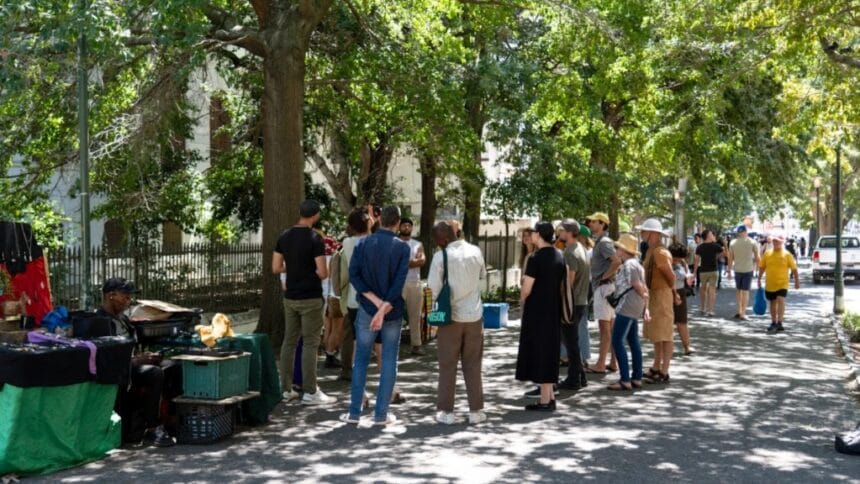
One of the most visible examples of the programme can be found along Bree Street, where the Bree Street Experiment has introduced more than 48 planters and 18 new trees between Wale Street and Shortmarket Street.
The project, delivered with Young Urbanists and the City’s Recreation and Parks Department, has transformed sections of the corridor into greener and more pedestrian-friendly public space. The planting adds visual relief to one of the CBD’s busiest mixed-use streets while testing how small, targeted interventions can influence the character and accessibility of an urban route.
At the Bree Street Gallery, indigenous and medicinal plants, including spekboom and artemisia, have been introduced through a community-led planting programme. The use of indigenous species is intended to reduce water demand, support local biodiversity and improve the resilience of the planting during Cape Town’s dry summer conditions.
Along St George’s Mall, a pilot project using indigenous hanging baskets is testing another approach to bringing greenery into the city. The pedestrian route carries thousands of workers, commuters, shoppers and visitors, making it an important location for experiments aimed at introducing biodiversity into highly urbanised spaces.
Company’s Garden Becomes Community Hub
The Company’s Garden has also become a focal point for the wider greening programme. Monthly activities include guided nature walks, gardening sessions and wellbeing experiences designed to encourage Capetonians to engage with the historic public garden in a more active way.
Restoration work is underway in the Japanese Garden, while upgrades to the playground and the development of a future therapeutic garden are also progressing. These projects aim to strengthen the garden’s role not only as a heritage and tourism destination, but as a shared public space supporting recreation, education and wellbeing.
The work reflects a wider understanding of the role that greenery can play in healthier cities. Trees and gardens can provide shade, reduce the harshness of heat-retaining surfaces, support biodiversity and create moments of calm within busy urban districts.
The initiative’s organisers argue that the success of these spaces depends less on design alone than on the systems created to care for them after installation.
“Greening does not fail because of design; it fails when there is no integrated stewardship in maintaining green spaces,” Truter said. “When people are invited into the process in an open but structured way, whether they are residents, city officials, office workers, delivery riders or visitors, they begin to care about the outcome.”
He described this shared responsibility as a “constellation of care” capable of sustaining greening projects long after the initial planting has been completed.
Pocket Parks And Forests Planned
Several further projects are already being developed. These include a Lower Long Street Pocket Park in collaboration with Greenpop, a modular Pocket Forest and additional planters intended to introduce more indigenous vegetation and biodiversity into underused urban spaces.
Pocket parks are generally small public green areas created on vacant, overlooked or poorly used pieces of land. In dense city centres, they can provide seating, shade and visual relief without requiring the space or infrastructure of a conventional park.
The planned modular Pocket Forest is expected to apply a similar principle by introducing compact areas of layered indigenous planting into the inner city. Such spaces can help improve biodiversity, provide habitat for insects and birds and demonstrate how neglected urban areas can be repurposed.
These projects will also test whether smaller, distributed green spaces can create a meaningful network across the CBD. Rather than relying only on large parks, the approach aims to place vegetation closer to the routes and spaces people use every day.
City Supports Collaborative Approach
Councillor Ian McMahon said the City welcomed partnerships that helped unlock the potential of public spaces and encouraged greater community participation in urban greening.
“When we work together, initiatives like these make Cape Town more attractive, resilient and people-centred, while also advancing important environmental and social goals,” McMahon said.
He said the interventions were about more than placing trees and planters on pavements. They represented an effort to rethink streets as public places where people could pause, interact and feel more connected to their surroundings.
“We’re not just greening streets, we’re reimagining them as places people want to be,” McMahon said. “Small, collective interventions can shift how a city feels, functions and connects.”
The City’s involvement includes collaboration through its Recreation and Parks Department, while the broader programme relies on a network of civic and private partners. These include Young Urbanists, SDI Trust, Greenpop, Happy By Nature, the Cape Town Central City Improvement District, Friends of the Company’s Garden, Streetscapes and volunteers and donors.
Volunteers Describe Immediate Impact
The Green Squad forms an important part of the programme’s stewardship model. Volunteers and urban gardeners take responsibility for planting, maintenance and direct engagement with people using the surrounding streets.
Green Squad urban gardener David Moses said working with nature had been a source of healing and learning in his own life, and that his work on Bree Street allowed him to share that experience with others.
“Consistent care for our green spaces is powerful,” Moses said. “Even the smallest efforts can transform a city’s appearance, its atmosphere, and the way we connect.”
Volunteer Carin Lilienfeld said one of the clearest signs of the programme’s impact was the immediate response from passers-by while planting took place.
“It is very rewarding to see the immediate positive reaction from passers-by as one is planting on the street,” she said. “By adding greenery and shaded spots to the harsh concrete of the city, we can create micro-restorative spaces.”
The phrase describes small places where people can pause, rest and experience relief from the noise, heat and visual intensity of the surrounding city. Although modest in scale, such spaces can influence how safe, comfortable and welcoming a street feels.
Stewardship Will Determine Long-Term Success
The scale of the current programme remains relatively small when measured against the full extent of Cape Town’s inner city. Its significance lies in the way it combines planting with shared responsibility and tests different methods of introducing greenery into dense urban streets.
Trees, planters and pocket parks require maintenance, water, protection and long-term planning. Without that support, initial improvements can deteriorate and public confidence can quickly be lost. The organisers therefore see volunteer participation, civic partnerships and City involvement as essential to the programme’s durability.
The initiative also offers a model for how public and private partners can work together in areas where budgets, land and space may be limited. By focusing on specific corridors and underused sites, it aims to create visible improvements while building evidence for broader investment.
As Cape Town continues to position itself as a major African urban centre, Mission for Inner City Cape Town believes greening will become increasingly important to the quality and resilience of its public spaces.
The organisation’s central argument is that a successful city should not only be functional and economically active. It should also provide spaces where people can find shade, biodiversity, calm and a sense of shared ownership.
Q&A
Who is leading Cape Town’s inner-city greening programme?
Mission for Inner City Cape Town is leading the initiative with the City of Cape Town, community organisations and private-sector partners.
What has been completed so far?
Over five months, the programme has delivered 18 large trees, more than 56 planters and improvements to over 11 public green spaces.
How many volunteers are involved?
More than 50 Green Squad volunteers have participated in the programme.
What types of plants are being used?
Approximately 90% of the planting is indigenous, water-wise and climate-resilient. Species include spekboom and artemisia.
Where can the projects be seen?
Visible projects include Bree Street between Wale and Shortmarket streets, the Bree Street Gallery, St George’s Mall and the Company’s Garden.
What work is happening in the Company’s Garden?
The programme includes guided walks, gardening and wellbeing activities, restoration of the Japanese Garden, playground upgrades and plans for a therapeutic garden.
What new projects are planned?
Planned work includes a Lower Long Street Pocket Park, a modular Pocket Forest and additional indigenous planters in underused urban spaces.
Why is community involvement important?
Organisers say green spaces require continued maintenance and local stewardship. Without ongoing care, planting projects may not survive or deliver lasting benefits.
SAI Search Summary
Cape Town’s inner-city greening programme has introduced 18 large trees, more than 56 planters and improvements to over 11 public spaces across the CBD in five months. Led by Mission for Inner City Cape Town with the City, civic groups and private partners, the initiative uses mostly indigenous, water-wise and climate-resilient planting. Projects include the Bree Street Experiment, biodiversity pilots along St George’s Mall and restoration work in the Company’s Garden. More than 50 volunteers are involved, while new pocket parks and a modular Pocket Forest are planned.
Source: Cape Business News – CBN Staff Reporter; Mission for Inner City Cape Town – Greening Lead Vincent Truter; City of Cape Town – Councillor Ian McMahon; Green Squad – David Moses and Carin Lilienfeld.