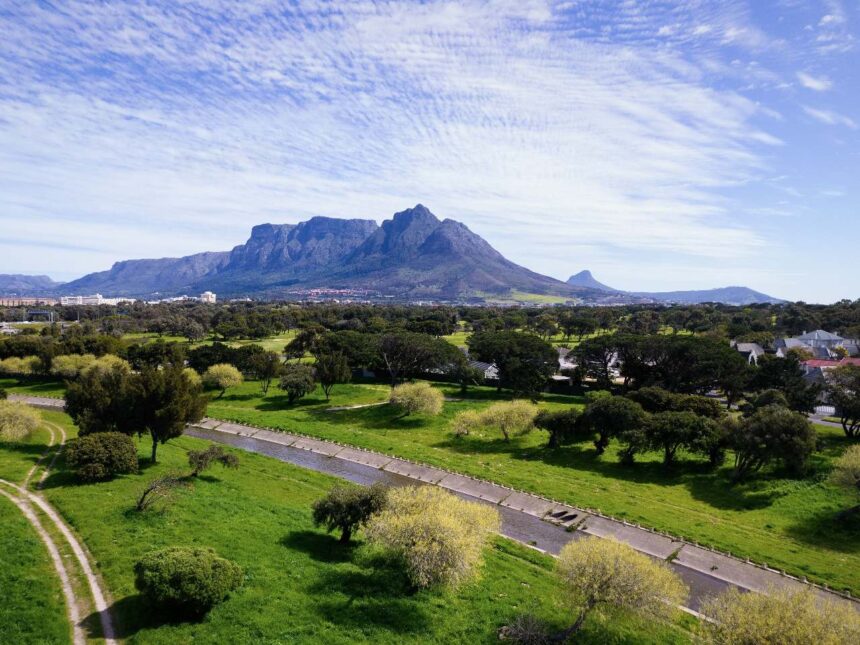
A major housing and land-use debate is building in Pinelands and Mowbray after a draft concept for the King David Mowbray Golf Course precinct proposed up to about 6,700 new homes on well-located public land. The City of Cape Town says the process is still exploratory and no final development decision has been taken, but community groups have already raised strong concerns about traffic, infrastructure, sewerage, water, schools, green space and the future of long-standing sports facilities. With public comment open until Monday, 6 July, the proposal has become one of Cape Town’s most closely watched property and housing stories.
A draft concept for the King David Mowbray Golf Course precinct and surrounding land has opened a major public debate over housing, green space, public land and the future shape of development in Cape Town.
The City of Cape Town’s process is focused on portions of City-owned land at the King David Mowbray Golf Club precinct. The area under consideration includes the golf course, the Clyde Pinelands Association Football Club and nearby undeveloped land. The broader site is strategically located between Pinelands, Mowbray, the N2, the M5 and the Black River system.
According to the official project participation material, the precinct is about 74 hectares in extent. The site is also close to major transport routes and lies about 9 km from the Cape Town CBD and about 12 km from Cape Town International Airport.
That location is the reason the proposal has attracted so much attention.
Cape Town is under severe housing pressure, especially around well-located land close to work opportunities, public transport and existing services. Large public land parcels in central or near-central areas are rare. When one becomes available for possible development, the housing argument becomes strong.
But this site is not empty land.
It includes a historic golf course, football facilities, mature trees, open space, wetlands, floodplain areas and long-standing recreational use. That is why the debate is not only about how many homes Cape Town needs. It is also about what kind of public assets should be protected, what should be developed, and how the City should balance housing need with environmental and community value.
The draft concept includes residential development, a 30% affordable housing component, commercial space, retail, light industrial uses, a new school, community facilities and sports facilities. Reports have placed the residential potential at up to about 6,700 homes.
Moneyweb reported that the plan includes around 6,700 residential units, as well as commercial and light industrial space across the precinct. REI also reported that the draft concept could deliver between 6,000 and 6,700 residential units, together with commercial space, light industrial facilities, community amenities and supporting infrastructure.
The public participation period is now important.
The official project page says stakeholder engagement on the draft concept design began on Thursday, 28 May and will end on Monday, 6 July. Statutory public participation for the proposed disposal of land in terms of the Municipal Asset Transfer Regulations is running in parallel during the same period.
That means there are two related processes.
One process asks for comment on the draft development concept. The other deals with the proposed release or disposal of land under municipal asset rules. This distinction matters because Capetonians may want to comment on the planning idea, the land process, or both.
The City has stressed that no development decision has been taken and no land use change has been approved. IOL reported that the process remains at an exploratory, pre-application stage.
That point is important for accuracy. This is not an approved construction project. It is a draft concept being tested through public engagement and statutory participation.
Still, the scale of the concept has triggered strong reaction.
The Pinelands Ratepayers and Residents Association, King David Mowbray Golf Club and Clyde Pinelands Football Club have raised concerns about the possible loss of long-standing sporting, recreational and green spaces. IOL reported that these groups are calling on Capetonians to object before the public comment deadline.
Their concerns include traffic congestion, pressure on sewerage and water infrastructure, schooling capacity, the possible loss of open green space, and the long-term impact on the character of Pinelands and Mowbray.
Moneyweb reported that Pinelands Ratepayers and Residents Association chairperson Desray Britz described the scale of the proposal as significant. The association has warned that the planned number of homes would amount to more than half the current number of residential units in Pinelands.
That kind of scale changes the debate.
A few hundred homes would already raise questions. A proposal of up to about 6,700 homes places the precinct in a much larger urban development category. It could reshape traffic patterns, local service demand, school planning, public transport needs and the relationship between Pinelands, Mowbray, Langa and nearby employment areas.
Supporters of well-located housing will argue that Cape Town cannot afford to keep large public land parcels locked into low-density use while thousands of families struggle to live near work. In that view, the site offers a rare chance to create mixed-income housing, bring people closer to opportunity and use public land for broader social benefit.
Opponents or concerned community groups argue that the land already provides value as green, sporting and recreational space. They also warn that once open space is built over, it cannot easily be recovered.
Both arguments carry public interest.
Cape Town’s housing crisis is real. But so is the need for parks, sports fields, flood-management areas and environmental protection. The question is whether the draft concept can balance these needs properly, or whether the proposed scale is too large for the area.
The official project material says flood lines, ponds and wetlands have been taken into account during the draft design phase. It says specific ponds would be retained for recreational and stormwater uses, and no hard infrastructure would be constructed within the 1:100-year flood line.
That will be a key part of the debate because the site sits in a sensitive urban environment near river and wetland systems. Flooding, stormwater management and climate resilience cannot be treated as small technical issues. Cape Town has seen enough severe weather damage in recent years to know that floodplain planning matters.
Transport will also be a major issue.
A development of this size would need strong traffic planning, public transport access and road upgrades where required. Without that, nearby routes could come under heavy pressure. The site is near major roads, but proximity to highways does not automatically solve congestion. Daily movement into and out of a large mixed-use precinct must be planned carefully.
The draft concept also includes a new school, but community groups have questioned whether one school would be enough for a development of this scale. That concern will need detailed response through planning and social infrastructure studies.
Sewerage and water capacity will also be watched closely.
Cape Town already faces pressure on parts of its sanitation network. Any large development must show that infrastructure can support the planned density without worsening service problems for surrounding areas. This is especially important because several recent City stories have involved sewer upgrades, wastewater concerns and public pressure around basic services.
The sporting side of the debate is also serious.
King David Mowbray Golf Club has a long history. Community groups say the club has played an inclusive role in South African golf and supports disability golf. Clyde Pinelands Football Club is also part of the area’s sporting life. If development goes ahead, the City will need to show how sporting and recreational access would be protected, replaced or improved.
That is why this story is bigger than one golf course.
It is about Cape Town’s future land choices.
The city needs more homes, especially homes near transport, work and services. It also needs public open space, climate-sensitive planning, sports facilities and community assets. When these needs clash on one site, the public process becomes vital.
Capetonians now have until Monday, 6 July to submit comments. Those comments could shape the next version of the concept, raise technical issues, influence political decision-making and help decide whether the idea moves forward, changes significantly or faces deeper resistance.
For now, the City says the process is still about testing the concept and gathering input.
But the public reaction shows that the King David Mowbray precinct will not be an ordinary property development debate. It has become a test of how Cape Town handles land, housing, heritage, sport, transport and environmental risk in a growing city.
The key question is not whether Cape Town needs more housing. It does.
The harder question is whether this site, at this scale, can deliver housing while still protecting the public value that communities say already exists there.
Explainer: What The Public Process Means
The City is running public engagement on the draft concept design for the King David Mowbray Golf Course precinct and surrounding land. This allows Capetonians, community groups, sports bodies, environmental stakeholders and other interested parties to comment on the proposed development concept.
A separate statutory process is also running for the proposed disposal of land under the Municipal Asset Transfer Regulations. That process deals with the possible release of municipal land.
Both processes close on Monday, 6 July. The current stage does not mean the development has been approved. It means the City is gathering input before any future decisions or approvals.
Q&A
What is being proposed for the King David Mowbray precinct?
The draft concept includes residential development, affordable housing, commercial and retail space, light industrial uses, community facilities, sports facilities and a new school.
How many homes could be included?
Reports and project material place the residential potential at up to about 6,700 homes.
Where is the site?
The precinct includes the King David Mowbray Golf Course, Clyde Pinelands Football Club and surrounding land near Pinelands, Mowbray, the N2, the M5 and the Black River system.
Has the development been approved?
No. The City has said no final development decision has been taken and no land use change has been approved.
Why are community groups concerned?
Concerns include traffic, sewerage, water infrastructure, schools, environmental impact, flood risk, green space and the possible loss of long-standing sporting facilities.
Why is the City exploring the site?
The site is well-located and could support housing and economic development close to transport routes, work opportunities and existing urban infrastructure.
When does public comment close?
Public comment closes on Monday, 6 July.
SAI Search Summary:
The City of Cape Town is testing public comment on a draft mixed-use concept for the King David Mowbray Golf Course precinct and surrounding land. The proposal includes up to about 6,700 homes, a 30% affordable housing component, commercial and retail space, light industrial uses, community facilities, sports facilities and a new school. The site includes the golf course, Clyde Pinelands Football Club and nearby undeveloped land. Public comment on the draft concept and the related land disposal process closes on Monday, 6 July. Community groups have raised concerns about traffic, infrastructure pressure, schools, green space, sport and environmental impact.
Source: Moneyweb – Liesl Peyper; IOL – Lilita Gcwabe; REI – Neale Petersen; Infinity Environmental – Project Public Participation Page.