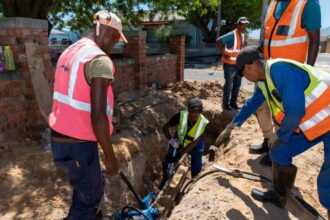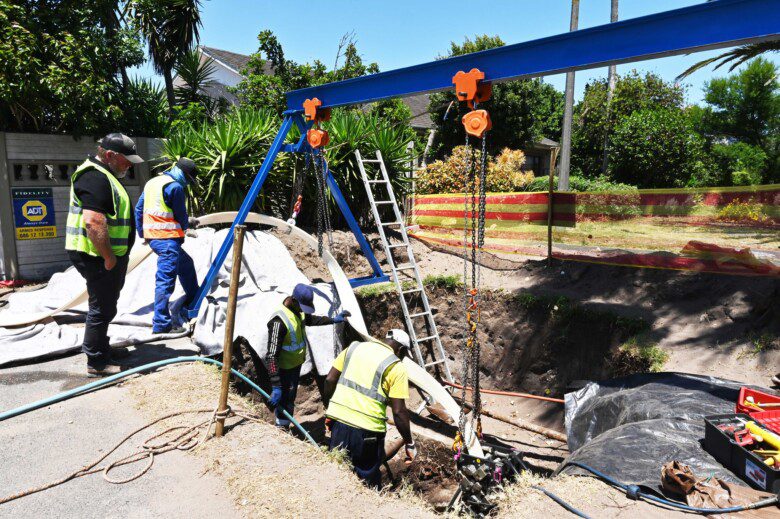
Cape Town’s record infrastructure spending is opening a major construction pipeline, with the City’s investment plans creating an estimated R40 billion opportunity for contractors, suppliers, workers and local businesses. The work reaches beyond property development. It includes roads, water, sanitation, public transport and basic service infrastructure that can shape how Cape Town grows over the next few years. For Capetonians, the real question is whether this spending will translate into better services, more jobs and stronger neighbourhood infrastructure.
Cape Town’s infrastructure programme is becoming one of the city’s biggest construction and economic stories, with public investment creating a R40 billion pipeline for work across the metro.
The spending plan is not only about large numbers on a budget document. It points to physical work on the ground: roads, water systems, sanitation networks, transport facilities, public service infrastructure and upgrades in areas where pressure has been building for years.
CBN reports that Cape Town’s record infrastructure investment is creating a R40 billion construction opportunity, with expected benefits for job creation, economic growth and the broader building sector.
That makes the story important for the property and construction sector, but also for ordinary Capetonians. Infrastructure is the base that allows a city to function. Without working roads, drains, water networks, sewer systems, public transport and electricity-linked upgrades, private development also becomes harder.
Cape Town has been under growing pressure from population growth, urban expansion, higher service demand and ageing infrastructure in many areas. The City has argued that the answer is to spend more on basic infrastructure and to do so at a scale that keeps pace with growth.
Mayor Geordin Hill-Lewis has previously said the City’s capital spending has grown sharply since the start of the current council term. Engineering News reported that he tabled a proposed R40 billion three-year infrastructure budget for Cape Town, saying the capital budget had grown from R6.1 billion in 2021/22 to a much larger pipeline.
The City’s message is simple: investment in infrastructure is not a luxury. It is the foundation for service delivery, economic confidence and long-term resilience.
For the construction industry, the impact can be significant.
A large public infrastructure pipeline creates work for civil contractors, engineers, planners, surveyors, project managers, plant operators, material suppliers, transport companies and smaller subcontractors. It also supports jobs linked to concrete, asphalt, pipes, cables, fittings, safety equipment, professional services and site logistics.
This is why infrastructure spending often has a wider economic effect. A road project does not only employ workers on the road. It creates demand through the supply chain. A water project does not only involve engineers. It also involves suppliers, transport, maintenance, testing and supervision.
The opportunity is especially important at a time when many construction firms have faced years of uneven work, rising costs and tight margins. A steady municipal pipeline can help companies plan, keep teams employed and invest in equipment.
But the benefits depend on delivery.
Budgets do not build infrastructure by themselves. Projects need proper procurement, fair tender processes, strong oversight, realistic timelines and clean execution. Delays, appeals, poor contractor performance, cost increases or community disruption can slow progress and reduce the impact of the investment.
The City will also need to manage public expectations. Capetonians often experience infrastructure work first as inconvenience. Roads are dug up. Traffic slows. Water supply may be interrupted during upgrades. Construction noise affects neighbourhoods. Businesses near work sites may lose passing trade for a period.
That makes communication important. When people understand what is being built, why it matters and how long it should take, disruption is easier to manage.
The long-term value is the main point.
Better water and sewer infrastructure can reduce spills, bursts and service failures. Road upgrades can improve traffic flow and safety. Public transport projects can support movement between communities and economic nodes. Stormwater upgrades can help the city cope with heavy rain. Basic service infrastructure can support housing and new development.
Infrastructure also affects property development. Developers look closely at whether an area has enough road capacity, water supply, sewer capacity and transport access. When those systems are weak, development becomes slower, more expensive or more controversial.
A stronger infrastructure pipeline can therefore support private investment, especially in areas where development has been held back by service constraints.
There is also a spatial justice angle. The City has said a large share of its infrastructure investment benefits lower-income areas. That matters because older patterns of development left many communities with weaker infrastructure, longer travel times and fewer economic opportunities.
If the spending reaches the right areas, it can help close some of those gaps. But if the work is poorly targeted or badly managed, it can deepen frustration.
The construction opportunity also needs to include smaller local businesses. Large projects are often won by established contractors, but local subcontractors, emerging builders and community-based suppliers can benefit when procurement is structured properly. That creates a chance to spread the economic value beyond the biggest firms.
Cape Town’s infrastructure push comes at a time when the city is competing for investment, skills and tourism. Good infrastructure strengthens that position. Businesses want reliable services. Workers need transport. Families need water, sanitation and safe roads. Investors need confidence that the city can support growth.
At the same time, Capetonians want proof that large spending plans improve daily life.
That is the real test of the R40 billion pipeline.
A strong infrastructure budget should show up in fewer service failures, better transport links, safer roads, stronger public facilities and more reliable basic services. It should also support employment and give the construction sector a more stable workload.
The City’s challenge is to turn the budget into visible delivery.
The opportunity is large. The work now has to follow.
Explainer: Why Infrastructure Spending Matters
Infrastructure spending is the money used to build, repair and upgrade the systems that keep a city working. This includes roads, water pipes, sewer networks, public transport facilities, stormwater systems and other basic service assets.
For Cape Town, this kind of spending matters because the city is growing. More people, more homes, more businesses and more vehicles place pressure on old systems. When infrastructure does not keep up, Capetonians feel it through traffic, water interruptions, sewer problems, flooding, delays and weaker service delivery.
A strong infrastructure pipeline can support jobs in construction and create better conditions for private investment. But the value depends on delivery, oversight and whether projects reach the communities that need them most.
Q&A
Why is Cape Town’s infrastructure investment important?
It creates work for the construction sector and helps upgrade the systems that support daily life, including roads, water, sanitation and transport.
How big is the construction opportunity?
The current pipeline is being reported as a R40 billion construction opportunity linked to Cape Town’s infrastructure investment programme.
Who can benefit from this spending?
Contractors, engineers, suppliers, workers, transport firms, professional service providers and smaller subcontractors can benefit when projects move into delivery.
Does this only affect big construction companies?
No. Large contractors may lead major projects, but smaller businesses can benefit through subcontracting, supply work, local services and site support.
How can Capetonians feel the impact?
Capetonians may see roadworks, water upgrades, sewer repairs, public transport projects and other construction activity. The long-term benefit should be better service reliability and stronger city infrastructure.
What is the main risk?
The main risk is that delays, poor project management, procurement problems or weak contractor performance reduce the impact of the spending.
SAI Search Summary:
Cape Town’s infrastructure investment is creating a reported R40 billion construction pipeline, with expected benefits for contractors, suppliers, workers and local businesses. The programme includes public works linked to roads, water, sanitation, public transport and basic service infrastructure. City budget reporting shows Cape Town has tabled a large three-year infrastructure plan, with the City positioning infrastructure as central to service delivery, economic growth and resilience. The opportunity could support job creation and private investment, but its impact depends on delivery, procurement, oversight and whether projects reach high-need areas.
Source Credit:
Source: CBN; Engineering News; City of Cape Town.