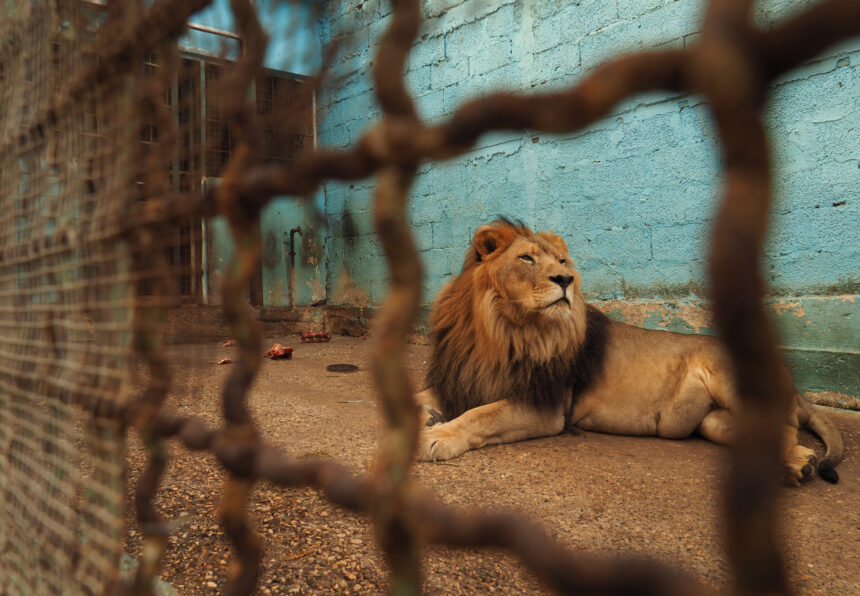
As the world prepares to mark Endangered Species Day this week, South Africa is once again under the international spotlight, with global animal welfare leaders warning that the country remains at the centre of a growing crisis involving the commercial breeding, captivity, and trade of some of the world’s most iconic big cats.
With lions, leopards, cheetahs, and even captive tigers continuing to symbolise both Africa’s natural heritage and the growing global wildlife trade debate, pressure is mounting on South African authorities to close what campaigners describe as dangerous legal loopholes that continue to allow exploitation under the guise of regulated trade.
Global animal welfare organisation FOUR PAWS has now used the lead-up to Endangered Species Day on the 15th of May to renew its call for decisive political action, urging South Africa to bring an end to the commercial breeding, keeping, and trade of all big cats for profit.
The organisation’s latest campaign, #BreakTheViciousCycle, warns that while South Africa remains internationally respected for its biodiversity and conservation leadership, fragmented regulations, inconsistent enforcement, and profit-driven captive breeding continue to place both indigenous and non-native big cats at risk.
According to FOUR PAWS, South Africa currently plays a significant role as a source, transit, and destination country in the global trade of big cats and their body parts, with legal trade structures sometimes providing cover for illegal wildlife trafficking operations.
The issue extends far beyond South Africa’s borders.
Under the Convention on International Trade in Endangered Species of Wild Fauna and Flora, better known as CITES, both leopards and cheetahs are listed under Appendix I, meaning international commercial trade is prohibited due to the high risk of extinction.
African lions remain listed under Appendix II, allowing tightly regulated trade, while tigers, although not native to South Africa, are also protected under Appendix I.
Yet campaigners say those protections are not enough.
Speaking from Cape Town, Fiona Miles said Endangered Species Day should serve as a wake-up call.
“Endangered Species Day brings into sharp focus the uncomfortable reality that big cats in South Africa are not only threatened in the wild, but also exploited behind bars,” Miles said.
“As long as big cats are bred, traded, and kept for commercial gain, every one of these species remains at risk, and South Africa plays a pivotal role in either ending or enabling this cruelty.”
FOUR PAWS says its #BreakTheViciousCycle campaign exposes what it calls a self-reinforcing cycle of exploitation, where big cats are treated as commodities rather than sentient animals.
The organisation argues that captive breeding for tourism, private collections, bone exports, and commercial display has no genuine conservation value and instead fuels global demand for animal parts while placing additional pressure on wild populations.
“The commercial exploitation of big cats has no conservation value,” Miles added.
“Instead, it damages South Africa’s international reputation, puts pressure on wild populations across the globe, and condemns thousands of animals to a life of suffering.”
FOUR PAWS is now calling on South African policymakers to implement time-bound measures that would end the commercial breeding and keeping of big cats for profit, halt the trade of big cats and their derivatives, strengthen enforcement in line with international obligations, and support conservation models that protect species without exploiting individual animals.
The organisation is also urging the public to reject exploitative wildlife tourism facilities and support ethical conservation initiatives.
As Endangered Species Day approaches, the message from campaigners is clear, protecting endangered species now means changing the systems that continue to profit from them.
Source: FOUR PAWS South Africa – Deidré Daniels – Fiona Miles.