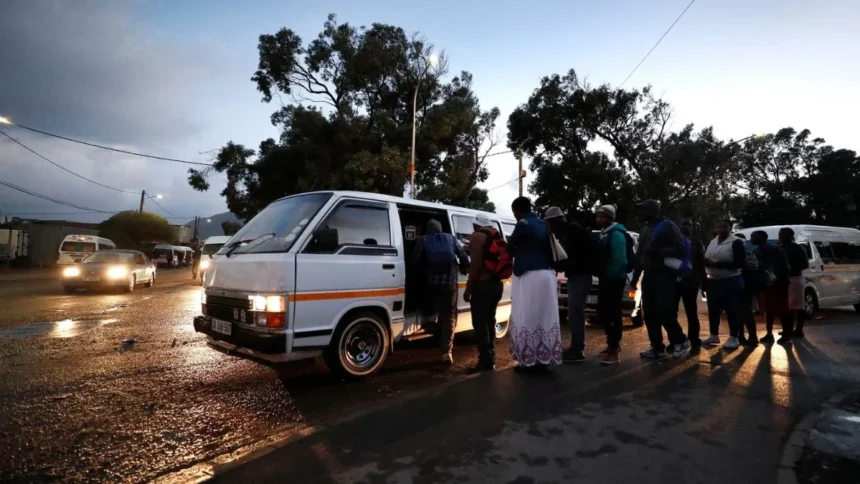
For thousands of Capetonians who rely on taxis every day, the journey to work, school, or the local clinic may soon cost more as soaring fuel prices push the province’s public transport sector closer to another fare increase.
For many working-class families across Cape Town, public transport is not a convenience, it is a daily lifeline.
From the early morning rush at Mowbray, Bellville, and Nyanga taxi ranks to late evening trips home from factories, offices, schools, and hospitals, thousands of commuters depend on the minibus taxi industry to keep life moving.
But that daily routine is now facing fresh financial pressure.
Sharp fuel price increases introduced earlier this month have sent shockwaves through South Africa’s taxi sector, with operators across the Western Cape warning that another fare adjustment may soon become unavoidable.
On the sixth of May, petrol increased by R3.27 per litre, while diesel rose by an even steeper R5.27 per litre, creating immediate concern for transport operators already battling tight margins, rising maintenance costs, insurance premiums, vehicle finance repayments, tyre replacements, and growing competition from other transport providers.
At taxi ranks across Cape Town, the mood among drivers and commuters has shifted from concern to uncertainty.
One taxi driver operating from Mowbray, who asked not to be identified, said operators are already feeling the pressure.
“Taxi fares will increase, but we cannot confirm when or by how much,” he said.
“There are many factors involved, including routes, passenger volumes, and what other transport providers do. But fuel is not the only expense. There is maintenance, tyres, repairs, and many other costs. At the end of the day, there is very little left.”
The South African National Taxi Council has now formally written to both the provincial government and Parliament, warning that the latest increases could place severe pressure on both operators and the communities they serve.
SANTACO Western Cape chairperson Besuthu Ndungane said the issue extends far beyond transport economics.
“This crisis is not only about transport costs,” Ndungane said.
“It affects the driver who must provide for a family, the owner trying to keep a vehicle on the road, the commuter trying to reach work, school, or healthcare, and the communities that depend on reliable public transport every day.”
Western Cape Mobility Department spokesperson Muneera Allie confirmed that discussions between government and industry stakeholders are currently under way.
“The department acknowledges that fuel price increases place added pressure on both taxi operators and commuters, as they do on all residents,” Allie said.
For Cape Town’s commuters, the next few weeks may determine whether the simple act of getting to work becomes yet another growing financial burden.
Source: GroundUp – Zezethu Mtlomelo.