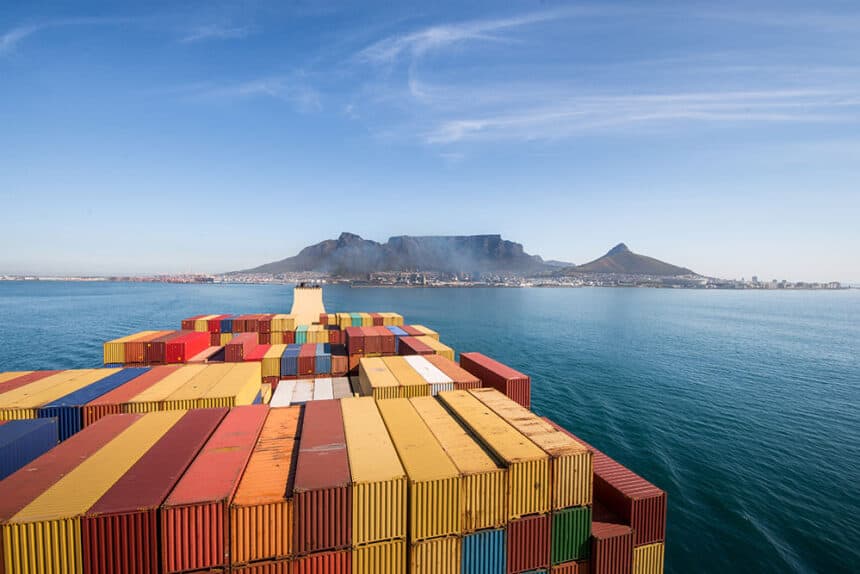
A surge in global shipping disruptions is now arriving on Cape Town’s doorstep, turning what once seemed like a distant geopolitical issue into a direct challenge for local businesses, exporters and consumers. As vessels are rerouted away from conflict zones in the Middle East, the Cape route has become a critical alternative, placing new pressure on port operations and supply chains in the Western Cape.
Shipping companies have begun diverting vessels around the Cape of Good Hope, bypassing key routes affected by ongoing instability in the Middle East. While this has increased maritime traffic passing the Western Cape, it has not translated into efficiency gains for local operations.
Instead, the sudden surge in vessel movement has added strain to Cape Town’s port infrastructure, contributing to longer turnaround times and congestion at key terminals. Cargo movements have become less predictable, with delays now affecting both imports and exports.
The impact is already being felt by businesses across the Western Cape. Exporters, particularly in agriculture, are facing uncertainty around shipments, with some goods placed on hold or delayed as logistics routes shift. In certain cases, containers that were already packed and prepared for export have had to be unpacked, adding unexpected costs and operational setbacks.
Industry bodies have warned that the effects will extend beyond the port itself. Supply chains are highly interconnected, and disruptions at one point can quickly ripple through the system. Higher transport and fuel costs are expected to move through the value chain, potentially leading to increased prices for goods on store shelves.
Supply chain specialist Thato Moloi has highlighted the broader risk, noting that fuel prices are often the fastest channel through which global disruptions are felt locally. As transport costs rise, these increases are typically passed on through distribution networks and eventually to consumers.
There are also growing concerns about inflationary pressure. With oil prices already trending higher, analysts warn that sustained disruption to global shipping routes could delay expected interest rate adjustments and add further strain to an already pressured economic environment.
For Western Cape businesses, the timing is particularly challenging. Many are already navigating rising input costs, and the added burden of logistical uncertainty is forcing companies to rethink supply strategies and contingency planning.
While the situation continues to evolve, the increased reliance on the Cape route highlights the region’s growing importance in global trade, even as it exposes vulnerabilities in local infrastructure and operational capacity.
For now, the effects are being felt at multiple levels, from exporters managing delayed shipments to consumers who may soon see the impact reflected in pricing and product availability. The story serves as a clear reminder that global events are no longer distant from the Western Cape economy, but are actively shaping conditions on the ground.
Source: CBN – Adrian Ephraim.