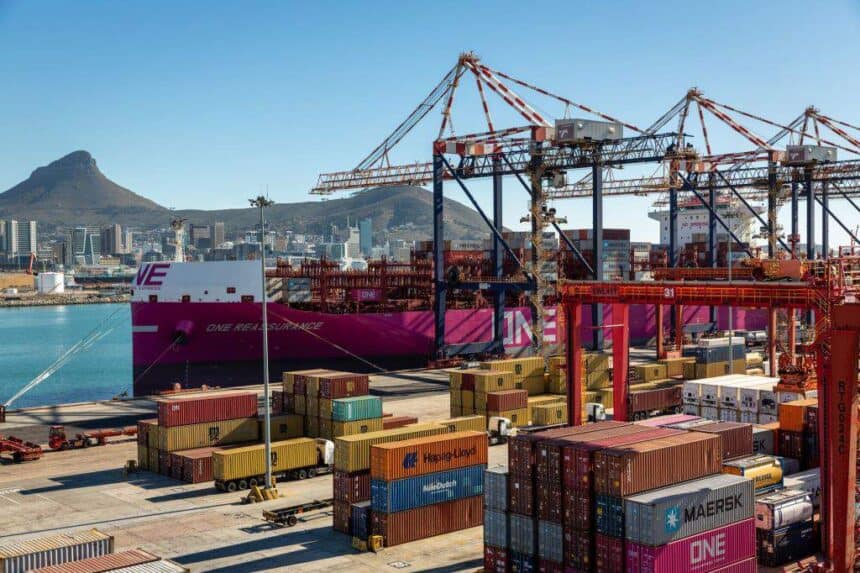
Cape Town’s port operations are set to become more expensive as Transnet Port Terminals introduces a fuel neutrality charge, a move that is already raising concern across the logistics sector.
The new charge, which comes into effect on 1 May, is linked to rising diesel prices that have placed increasing pressure on cargo handling operations. Transnet says the measure is intended as a cost-recovery mechanism, designed to maintain efficiency and reliability across its terminals while managing the impact of volatile fuel costs.
According to Transnet Port Terminals, the charge will be calculated based on coastal diesel index thresholds and will be reviewed in line with adjustments announced by the Department of Mineral Resources and Energy. The company has also indicated that contingency plans are in place across its national network to ensure that fuel availability does not disrupt operations.
While the introduction of the charge is framed as a necessary operational adjustment, it has drawn criticism from industry stakeholders. The Road Freight Association has questioned the concept of a “neutrality” charge, arguing that any additional cost introduced into the logistics chain will ultimately be passed on to customers.
Industry representatives have also raised concerns about how the charge will be applied in practice, particularly in the early stages of implementation. There are fears that unclear communication could result in confusion over who is responsible for payment, with the risk that costs could initially be directed toward transport operators before being correctly allocated.
Analysts point out that in complex logistics systems, costs rarely remain isolated. Even if the initial burden falls on shipping lines or container operators, the financial impact is typically transferred through multiple layers of the supply chain. Businesses may absorb part of the increase, but in many cases, higher costs are eventually reflected in the price of goods paid by consumers.
With global supply chain disruptions continuing to influence fuel prices, the introduction of the fuel neutrality charge highlights the broader vulnerability of logistics networks to external cost pressures and raises questions about how these increases will be managed in the months ahead,.
Source: IOL – Yogashen Pillay.