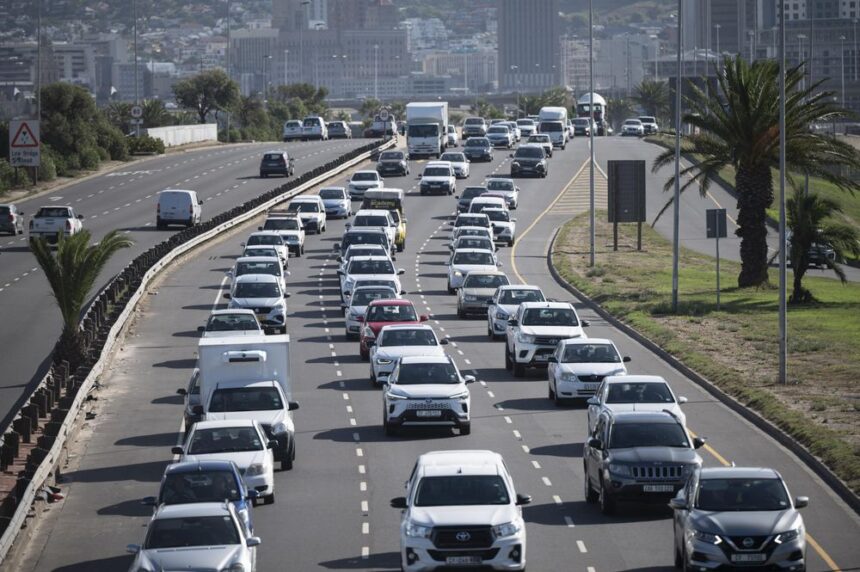
The City of Cape Town has confirmed that it is not introducing a congestion charge, seeking to address growing concern over a potential new cost for motorists.
The clarification comes after reports suggested that the City could consider implementing a congestion tax to manage traffic volumes and generate revenue for public transport. Mayoral Committee Member for Urban Mobility, Rob Quintas, has stated that no such measure forms part of the current draft budget.
According to the City, the confusion stems from its Travel Demand Management Strategy, a long-term policy framework that explores a range of theoretical options used in international cities. While congestion charging is mentioned within that framework, officials stress that it is not an active proposal and would only be considered under very specific conditions.
One of the key requirements outlined by the City is that public transport would first need to be reliable, accessible and widely used before any form of congestion charge could be realistically implemented. At present, that level of system maturity has not yet been achieved.
Quintas also noted that there is currently no national legislation in place that would allow municipalities to introduce a congestion charge, further reinforcing that such a measure is not imminent.
Despite this, the broader discussion around transport funding continues to raise questions. Some stakeholders have expressed concern that future policy direction could place additional financial pressure on residents, particularly in a context where many commuters still rely heavily on private vehicles due to limitations in the public transport system.
The City maintains that its immediate focus remains on practical improvements, including expanding transport infrastructure, enhancing integration between services, and encouraging alternative travel behaviours such as remote working and non-motorised transport options.
Public participation on the City’s draft budget remains open until the end of April, providing residents with an opportunity to engage with proposed spending priorities and policy direction,.
Source: IOL – Theolin Tembo.