Cape Town: A locally designed luxury floating residence has been launched at the V&A Marina, introducing a South African-built accommodation and investment concept that combines naval architecture, apartment-style comfort and marina living. Developed by Cape Town-based KND Naval Design, EvFloat 1 is intended to operate inside approved harbour and marina environments rather than as an open-water yacht, and will serve as the first show residence for a planned rollout involving full ownership, fractional ownership and managed rental opportunities across South Africa and selected African destinations.
South African Floating Residence Makes Cape Town Debut
Cape Town’s marine-design sector has launched a new locally developed product aimed at the growing market for luxury waterfront accommodation, marina development and tourism investment.
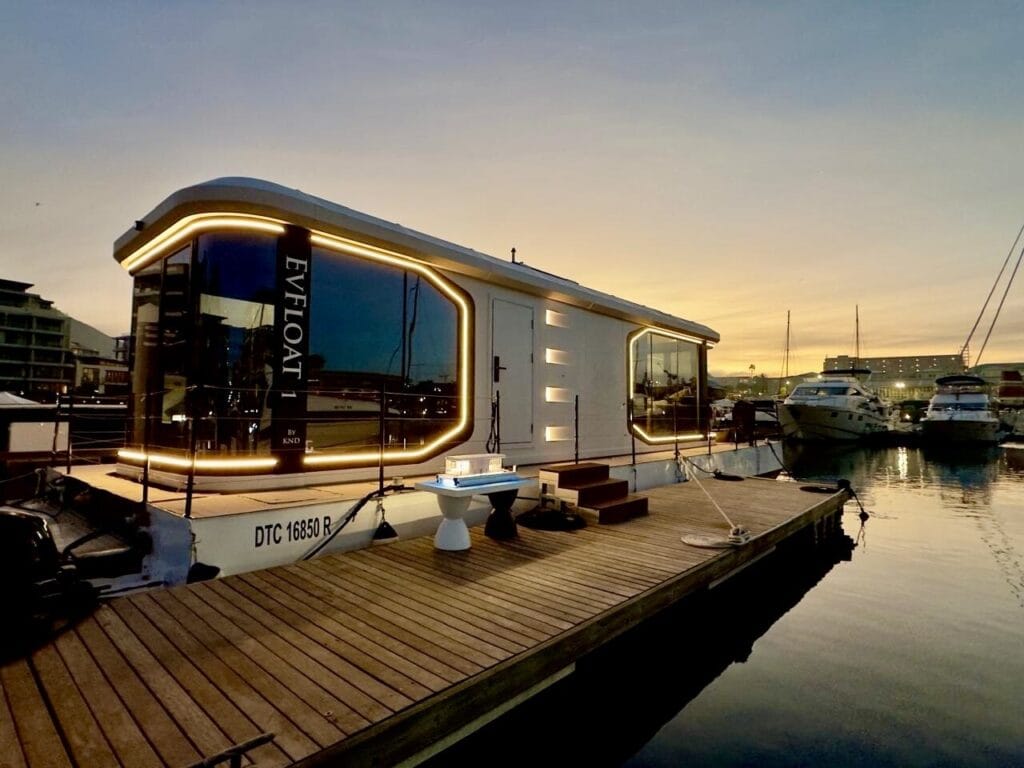
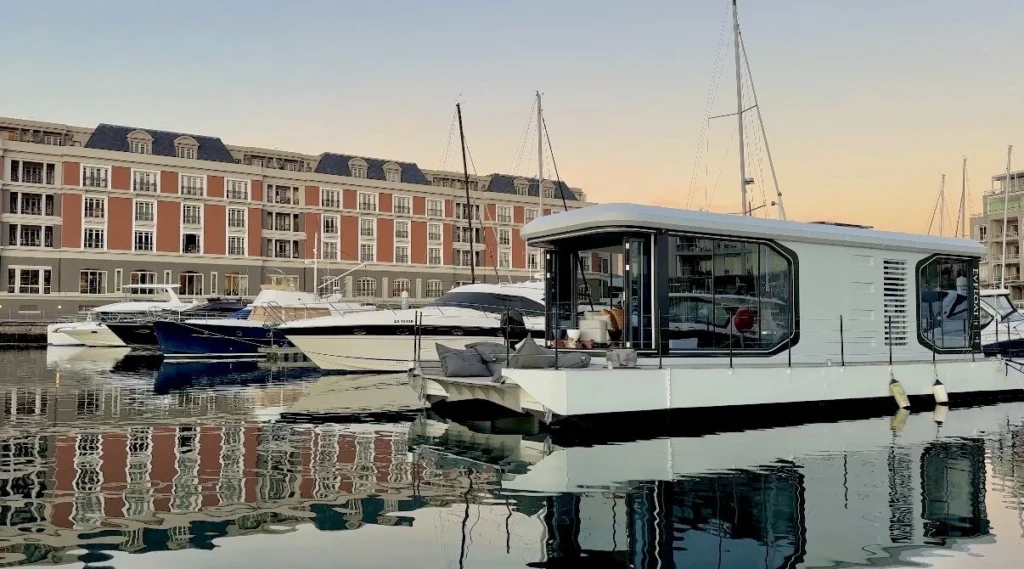
EvFloat 1 was officially introduced at the V&A Marina as a floating residence designed to provide the comfort and privacy of a premium apartment while remaining directly connected to the water.
The project was conceived, engineered and fabricated in South Africa by KND Naval Design, a Cape Town naval architecture company founded in 1984. The firm has traditionally worked across specialist boat design, patrol craft and other marine platforms, but EvFloat represents a move into floating accommodation and lifestyle infrastructure.
KND describes the unit as a luxury marina residence rather than a conventional houseboat, yacht or floating hotel. The distinction is important because EvFloat is not intended to travel between destinations or operate in open seas. It has instead been developed for controlled use within approved marina, harbour, resort and waterfront environments.
The first unit will act as a show residence and proof of concept, allowing potential owners, marina operators, tourism businesses and investors to assess the design before further units are produced.
Designed For Marina Living, Not Ocean Cruising
EvFloat combines apartment-style living areas with the engineering required to support a permanently floating structure.
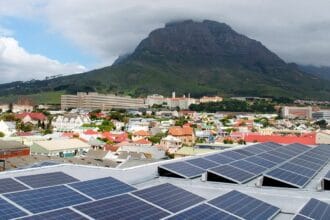
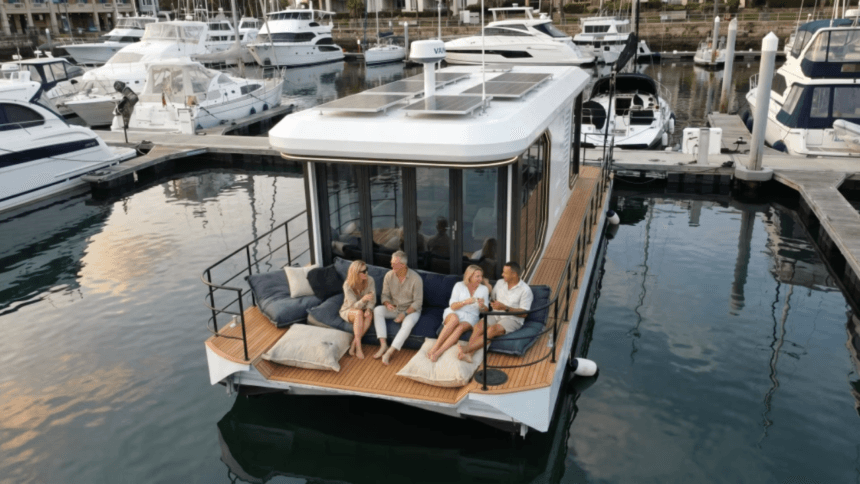
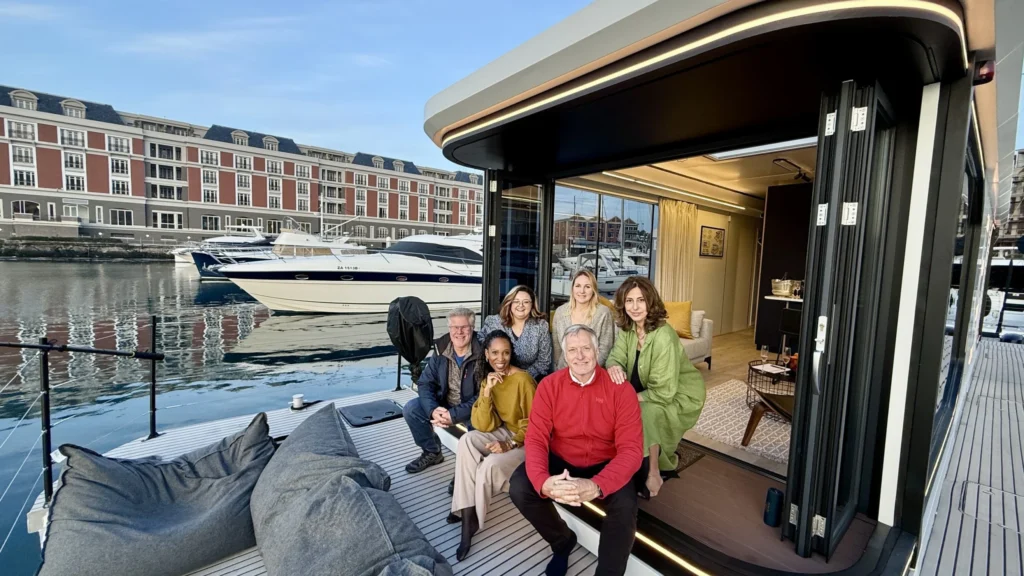
The unit includes spacious exterior decks, large glass panels, contemporary interiors, lounge and galley areas, sleeping accommodation and uninterrupted views across the surrounding water. Its roof has also been designed to accommodate solar-energy systems as part of future operating configurations.
Unlike a yacht, the residence does not need to sacrifice interior volume for high-speed performance, engine rooms or long-distance navigation. The available space can therefore be used more like a compact waterfront apartment.
That does not mean the marine requirements disappear. A floating residence must still be designed to remain stable, manage weight correctly, withstand the conditions found inside a marina and support water, power, waste and safety systems.
KND said the concept is backed by professional naval architecture, engineering, safety planning and long-term maintenance considerations. These requirements separate the project from informal floating homes or leisure houseboats that may not be intended for commercial hospitality operations.
The structure must also operate within the rules of the marina or harbour in which it is placed. Mooring permission, utility connections, safety compliance, waste handling, emergency access and insurance would all need to be addressed before units could be introduced at additional sites.
More Than A New Form Of Accommodation
The developers are positioning EvFloat as a product that can serve several markets rather than only private residential use.
KND plans to offer full ownership for buyers seeking exclusive use of a unit, fractional ownership for groups sharing the cost and access, and managed rental models aimed at tourism and lifestyle investors.
A managed unit could be operated as premium visitor accommodation within a marina or waterfront development. This would allow guests to experience life at water level without owning, operating or maintaining a yacht.
The model could also appeal to resorts, private estates, tourism operators and marina developers looking for accommodation that does not require a conventional building site immediately beside the water.
Cape Town Etc reported that the concept was initially driven by the desire to create premium waterfront living without relying on scarce and expensive land. This approach could prove attractive in destinations where coastal property is limited, environmentally sensitive or priced beyond the reach of new hospitality developments.
However, floating accommodation does not remove all development constraints. Each site would still require regulatory approval, safe access, suitable water depth, reliable mooring infrastructure and services capable of supporting guests.
The long-term commercial success of EvFloat will therefore depend not only on the design itself but also on partnerships with marinas, tourism authorities, developers and local regulators.
Units Designed To Be Transported And Assembled
One of the project’s main commercial features is its proposed scalability.
KND said the units can be transported and assembled at their intended locations. That could allow much of the fabrication and quality control to remain within South Africa before sections are shipped to approved marina sites.
A transportable design could reduce the need to establish a complete specialist construction facility at every destination. It may also allow KND and its manufacturing partners to retain control over the engineering standards and key components used in each unit.
The company believes this could make EvFloat suitable for marinas, resorts, private estates, tourism projects and investment groups in different parts of the continent.
KND’s stated plan is to establish additional units in South Africa before expanding into selected African locations.
The company has not yet announced the number of units planned, the first confirmed expansion sites or the expected selling and rental prices. Those details will become important as EvFloat moves from a show residence into a commercial development model.
Earlier marine-industry reporting indicated that several orders and enquiries had already been received while the first unit was still under development, suggesting interest in the concept before its official launch.
Cape Town’s Boatbuilding Skills On Display
The importance of EvFloat extends beyond the luxury-accommodation market.
The unit was designed and fabricated locally, drawing on Cape Town’s established base of naval architects, aluminium fabricators, boatbuilders, marine engineers, electricians, interior specialists and equipment suppliers.
South Africa has built a significant international reputation in the production of sailing and power catamarans, workboats and specialist marine craft. Many Cape Town yards manufacture vessels for foreign owners and export markets rather than only for local customers.
EvFloat applies those skills to a different product category. Instead of building a vessel primarily for transport, fishing, patrol or recreation, the project uses marine engineering to create accommodation infrastructure.
This could open opportunities for companies that already supply the boatbuilding sector to work on floating hotels, marina apartments, medical facilities, offices or other water-based structures.
It also shows how maritime expertise can move between industries. The same knowledge used to calculate stability, structural strength, weight distribution and environmental loads on a vessel can be adapted to a residence that remains permanently moored.
For Cape Town, the project provides another example of local engineering being turned into a product that could be manufactured for international markets.
Links To Cape Town’s Expanding Ocean Economy
The launch comes as Cape Town increases its focus on the ocean economy, marine manufacturing and waterfront infrastructure.
The V&A Waterfront is developing a R230 million superyacht marina at Quay 7, which is expected to strengthen the city’s ability to accommodate larger luxury vessels. The facility is also intended to serve as a commissioning area for Cape Town boatbuilders during periods when it is not being used by visiting superyachts.
The investment reflects Cape Town’s position as both a tourism destination and a marine manufacturing centre.
Luxury yachts visiting the city generate work for local maintenance firms, marine suppliers, hospitality businesses and specialist technical services. Boatbuilding creates skilled manufacturing jobs and export income, while marina developments attract investment linked to property, tourism and leisure.
BlueCape, a non-profit company supported by the City of Cape Town and industry partners, also works to develop the city’s ocean economy by supporting boatbuilding, marine manufacturing, cruise tourism and related sectors.
EvFloat fits within that wider strategy because it combines local design and production with hospitality, tourism and marina development.
The concept may also create opportunities beyond Cape Town if units are built locally and exported to other coastal or inland-water destinations.
Regulatory Questions Will Shape Expansion
While the first unit demonstrates that the concept can be built and launched, expanding the model will require careful attention to regulation.
Floating residences occupy a space between marine craft, accommodation businesses and property-style investments. Different authorities may therefore become involved depending on where and how a unit is operated.
Marina operators will need to approve mooring arrangements and confirm that the structure is suitable for local conditions. Harbour authorities may impose navigation, access and safety requirements, while tourism and municipal bodies could regulate commercial accommodation, waste management and emergency services.
Ownership models may also require careful legal design.
Full ownership of a floating unit differs from ownership of land or a sectional-title apartment. Fractional ownership arrangements would need to explain how access, maintenance, insurance, management fees and resale rights are divided between participants.
Managed rental investors would also need clarity about occupancy, revenue sharing, operational expenses and the responsibilities of the company managing the unit.
KND has presented these models as part of its future offering, but the contracts and regulatory structures will be as important as the engineering if the project is to attract serious investors.
The company will also need to ensure that marketing language makes the nature of the product clear. Buyers must understand whether they are purchasing a vessel, a movable floating structure, an accommodation investment or rights within a managed operating scheme.
Sustainability Claims Need Measurable Detail
EvFloat’s solar-ready roof and compact floating design support its positioning as a modern accommodation concept, but environmental performance will depend on the final operating systems used in each location.
Solar panels could reduce the amount of electricity drawn from shore-based supplies, particularly for lighting and smaller appliances. However, heating, cooling, water systems and other high-demand equipment may still require marina power.
Wastewater and refuse must be managed without polluting the harbour. Water consumption, cleaning products and maintenance materials will also affect the environmental footprint of each unit.
Floating structures can reduce the need for conventional foundations and land construction, but they must still be manufactured from resource-intensive materials and maintained against corrosion and marine exposure.
Future projects should therefore disclose measurable information on energy use, water systems, waste treatment, material durability and maintenance requirements.
That evidence would allow tourism operators and investors to assess whether EvFloat offers a genuine environmental advantage over land-based accommodation rather than only a different setting.
First Unit Will Test The Market
EvFloat 1 now carries the responsibility of proving that the concept works beyond its visual appeal.
The show residence will allow the developers to test how guests use the spaces, how the structure performs under marina conditions and what maintenance is required over time.
It will also show whether there is sufficient demand from private buyers, tourism operators and investors to support multiple units.
A successful trial could lead to clusters of floating residences within selected marinas or resort developments. An unsuccessful operating model could expose challenges around regulation, maintenance, occupancy or cost.
The first unit therefore serves two roles. It is a finished luxury residence, but it is also a commercial test of whether South African marine design can create a new accommodation category.
KND has made its ambitions clear: establish EvFloat in South Africa, refine the model and then expand into selected markets across Africa.
Whether that vision is realised will depend on the performance of EvFloat 1 and the company’s ability to secure suitable sites, regulatory approval and investment partners.
For Cape Town’s marine sector, the launch has already demonstrated something significant. Local naval architecture and boatbuilding skills are being used not only to build vessels but also to rethink how people could live, stay and invest on the water.
Q&A
What is EvFloat 1?
EvFloat 1 is a South African-designed luxury floating residence intended for use inside approved marinas and harbour environments.
Who developed it?
The unit was developed by Cape Town-based KND Naval Design and fabricated in South Africa with support from local marine-industry partners.
Is EvFloat a yacht?
No. It is not designed for open-water cruising or long-distance travel. It is intended to remain within controlled marina or harbour settings.
Is it a houseboat?
KND describes it as a luxury marina residence rather than a conventional houseboat. The unit combines apartment-style accommodation with professional marine engineering.
Where was the first unit launched?
EvFloat 1 was launched at the V&A Marina in Cape Town.
What does the interior include?
Reported features include lounge and galley spaces, sleeping accommodation, large windows, exterior decks and a solar-ready roof.
Can people buy an EvFloat?
KND plans to offer full ownership, fractional ownership and managed rental investment models. Detailed pricing has not yet been publicly announced.
Will more units be built?
The company plans to expand the concept across South Africa before considering selected destinations elsewhere in Africa.
Why is it classified under Technology & Innovation?
The main news value lies in its local naval architecture, marine engineering, transportable construction model and potential use across the ocean economy rather than conventional property development.
What approvals would future units need?
Requirements could include marina consent, harbour or maritime approval, safety compliance, utility connections, insurance and municipal or tourism approval for commercial accommodation.
SAI Search Summary
EvFloat 1 has been launched at Cape Town’s V&A Marina as a locally designed luxury floating residence combining naval architecture, apartment-style accommodation and marina-based hospitality. Developed by KND Naval Design and fabricated in South Africa, the unit is intended for approved harbour and marina environments rather than open-water cruising. KND plans to offer full ownership, fractional ownership and managed rental models before expanding the concept across South Africa and selected African markets.
Sources: Cape Town Etc, Staff Reporter; KND Naval Design, official company statement and project update; Cape Chamber of Commerce and Industry, Staff Reporter; International Boat Industry, Bobby Jordan; V&A Waterfront, official superyacht marina project information.