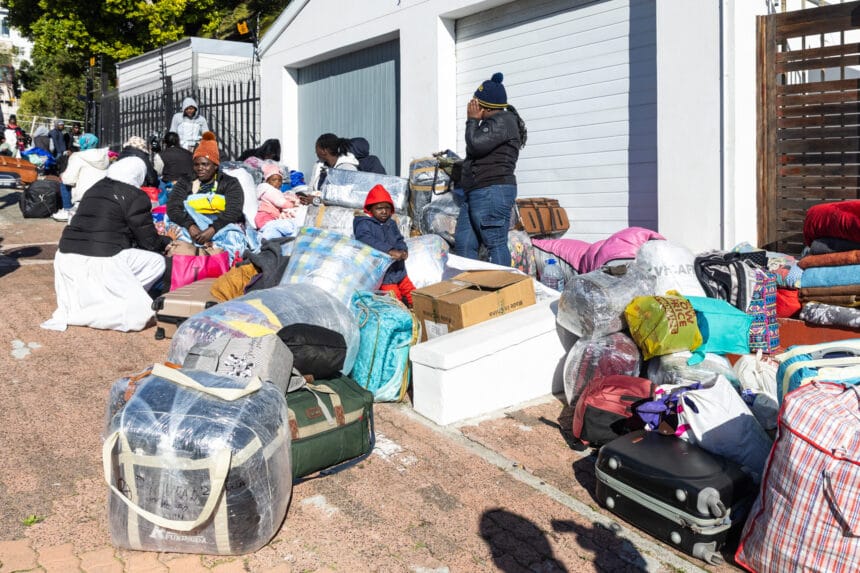
Zonnebloem: Hundreds of Zimbabwean nationals have gathered outside their country’s Cape Town consulate, sleeping rough and pleading for help to return home as fear of anti-immigrant violence spreads through communities where many have lived and worked for years. Their presence outside the diplomatic office has turned a consular request into a visible humanitarian crisis, with people seeking transport, travel documents and certainty while no complete public timetable for their departure has been confirmed.
Families And Workers Seek A Way Home
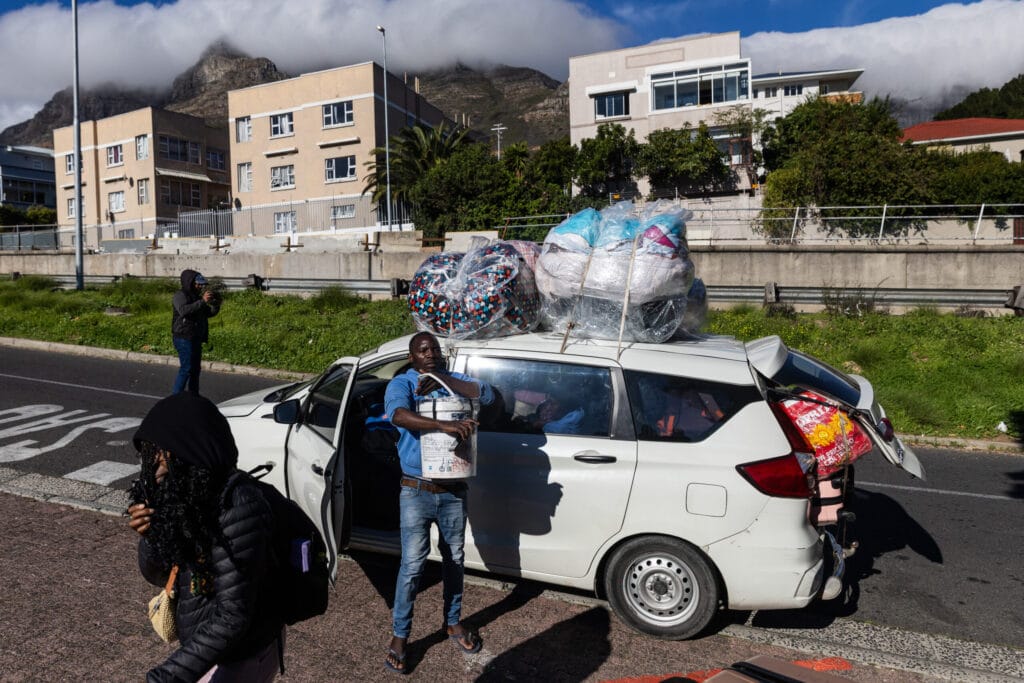
The group gathered outside the Zimbabwean consulate says returning to ordinary life in Cape Town has become increasingly difficult as anti-immigrant campaigns, threats and reports of violence continue to unsettle foreign nationals.
Some have reportedly left homes, jobs and informal businesses because they no longer feel safe. Others are unsure whether the threats directed at foreign nationals will intensify as anti-immigrant groups continue organising demonstrations and demanding that undocumented people leave South Africa.
The people outside the consulate are not all in the same legal position. Some may hold valid passports, work permits, asylum documents or other forms of legal status, while others may require assistance replacing documents or regularising their departure.
What unites them is the request for organised help to return to Zimbabwe.
Zimbabwean national Spray Vandai has called for urgent assistance, saying more than 300 foreign nationals were seeking refuge and help amid worsening fear.
The group is asking its government to provide clear information about transport arrangements, documentation and the practical process required to cross the border legally.
Cape Town Consulate Becomes A Place Of Refuge
Zimbabwe’s Cape Town consulate operates from Kuyper Street in Zonnebloem after relocating to permanent offices earlier this year.
The mission serves Zimbabwean nationals living across the Western Cape, Eastern Cape and Northern Cape and handles services including travel documents, birth records and repatriation assistance.
Its role has now expanded beyond routine administration as distressed nationals gather outside seeking immediate help.
A consulate can issue or facilitate temporary travel documents and communicate with authorities in the country of origin. However, moving large numbers of people across an international border also requires transport, passenger lists, immigration checks and coordination with South African authorities.
Where people lack valid travel documents, the process may involve identity verification before they can depart.
Those practical requirements can take time, even when people say they are frightened and want to leave immediately.
Confirmed Situation At A Glance
| Issue | Current Position |
| Location | Zimbabwean consulate, Zonnebloem, Cape Town |
| People involved | Hundreds of Zimbabwean nationals |
| Main request | Assistance to return to Zimbabwe |
| Reported concerns | Fear of anti-immigrant violence, displacement and uncertainty |
| Support needed | Transport, travel documents and official coordination |
| Departure timetable | No full public schedule confirmed |
| Responsible authorities | Zimbabwean consular officials, with South African border and immigration coordination required |
Fear Has Spread Beyond Direct Victims
Not everyone seeking repatriation has necessarily experienced a physical attack.
Fear itself has become a powerful cause of displacement.
When threats circulate through communities, social media and informal networks, foreign nationals may leave before violence reaches their street or workplace. Families can decide that sleeping outside a government office is safer than remaining in an area where they believe they could be targeted.
That makes the situation difficult to measure.
Official crime statistics record assaults, murders and property damage, but they do not fully capture the number of people who quietly abandon homes, stop reporting for work or send children away because they feel unsafe.
The Zimbabweans gathered in Cape Town form part of a wider movement of foreign nationals seeking voluntary repatriation from different parts of South Africa.
Governments including Malawi and Mozambique have already helped groups return home after anti-immigrant violence and threats displaced people in the Western Cape and KwaZulu-Natal.
Zimbabwean authorities have also assisted hundreds of citizens returning from South Africa during June.
Western Cape Violence Changed The Situation

The current repatriation demands follow a wave of anti-immigrant action across parts of the Western Cape.
Hundreds of foreign nationals fled homes in Kleinmond, Gansbaai and surrounding areas after groups moved through communities demanding that immigrants leave.
Some people hid in mountains, dunes and other exposed areas before authorities and humanitarian groups intervened.
Mozambican authorities reported that citizens had been killed during attacks, while families from several countries sought temporary shelter or transport home.
Two buses carrying approximately 150 Malawian nationals left the Western Cape earlier this month as part of an organised voluntary repatriation process.
The departure demonstrated that large-scale movement is possible, but also showed the level of coordination required between consular officials, immigration authorities, municipalities and transport providers.
For Zimbabweans waiting in Cape Town, those earlier departures may have strengthened expectations that their government should arrange similar assistance.
Immigration Status Does Not Remove The Duty To Protect
Public debate around immigration often focuses on whether foreign nationals have valid documents.
That question matters for immigration administration, but it does not justify threats, intimidation or violence.
Documented and undocumented people remain protected by South African criminal law. No private group has the authority to remove someone from a home, close a business, seize property or force a person across a border.
Immigration enforcement is the responsibility of the Department of Home Affairs, the Border Management Authority and other authorised state structures.
Police have repeatedly warned that grievances about immigration cannot justify attacks on foreign nationals.
For people who choose to leave voluntarily, the process must still take place safely and lawfully. They need access to their belongings, documents and transport without being exposed to further intimidation.
What Repatriation Requires
Voluntary repatriation is not the same as deportation.
A person who asks to return home is seeking an organised and voluntary departure. Deportation follows an immigration process initiated by South African authorities after a person is found to be in the country unlawfully.
For organised voluntary return, authorities may need to:
verify each traveller’s identity;
issue temporary travel documents where passports are missing;
confirm whether children are travelling with parents or guardians;
prepare passenger lists;
arrange buses or other transport;
coordinate passage through South African and Zimbabwean border posts;
and ensure people have somewhere safe to go after arrival.
These steps become more complex when families have lost documents, children were born in South Africa or people have outstanding immigration matters.
The situation outside the consulate therefore cannot be resolved only by opening the office doors. It requires a structured plan and clear communication with the people waiting outside.
City Faces Immediate Humanitarian Questions
Although immigration and repatriation are primarily national and consular responsibilities, the physical gathering is taking place within Cape Town.
That creates immediate questions about sanitation, shelter, public health and safety around the site.
If people remain outside for several days, access to toilets, drinking water, food and protection from winter weather becomes increasingly important.
The City may also need to manage pedestrian movement and ensure the gathering does not create unsafe conditions for those camping there or for people using the surrounding streets.
Any law-enforcement response must recognise that these are people seeking assistance, not a crowd that should automatically be treated as a public-order threat.
Where children, elderly people or people with medical conditions are present, humanitarian support becomes even more urgent.
Consular Communication Will Be Critical
The greatest immediate need is reliable information.
People outside the consulate need to know whether a repatriation programme has been approved, what documents they require, whether transport will be provided and when departures could begin.
Without clear updates, rumours can spread quickly. False claims about free buses, deportation dates or government deadlines can cause more people to arrive, abandon accommodation or make unsafe travel decisions.
Zimbabwean diplomatic authorities previously warned citizens against acting on unverified messages claiming that free transport was available.
The same caution remains necessary now.
Only confirmed information from the Zimbabwean embassy, Cape Town consulate, South African immigration authorities or recognised humanitarian organisations should guide people planning to leave.
Waiting For A Confirmed Plan
The people gathered outside the consulate have made their request visible.
The next step must come from the authorities responsible for turning that request into a safe and lawful process.
That means confirming how many people want to leave, identifying those who need documents and establishing whether buses or other transport can be arranged.
It also means ensuring that anyone who returns does so voluntarily and understands the conditions awaiting them in Zimbabwe.
No complete public departure schedule had been confirmed at the time of publication.
Cape Town News will update this report when the Zimbabwean consulate, South African authorities or humanitarian organisations announce transport arrangements or provide a formal response to the group.
Q&A
Why are Zimbabweans gathering outside the Cape Town consulate?
They are asking their government for help returning to Zimbabwe amid fear of anti-immigrant violence, displacement and uncertainty in South Africa.
Where is the Zimbabwean consulate in Cape Town?
The consulate operates from Kuyper Street in Zonnebloem.
How many people are involved?
Reports describe hundreds of Zimbabwean nationals seeking assistance. One appeal referred to more than 300 foreign nationals needing refuge and repatriation help.
Has transport been arranged?
No complete public timetable or confirmed transport plan had been announced at the time of publication.
What assistance do they need?
People may require buses, identity verification, passports or temporary travel documents and coordination at border posts.
Is voluntary repatriation the same as deportation?
No. Voluntary repatriation involves people choosing to return home, while deportation is a legal immigration process initiated by South African authorities.
Can private groups force foreign nationals to leave South Africa?
No. Immigration enforcement is the responsibility of authorised state institutions. Threats, assaults and forced removals remain unlawful.
SAI Search Summary
Hundreds of Zimbabwean nationals have gathered outside their country’s consulate in Zonnebloem, Cape Town, asking for assistance to return home. Many say anti-immigrant threats, displacement and uncertainty have made them fear remaining in their communities. The group needs transport, travel documents and coordination between Zimbabwean consular officials and South African immigration authorities. No complete public departure schedule had been confirmed. The gathering follows anti-immigrant violence in parts of the Western Cape and organised voluntary repatriation programmes involving citizens of Malawi, Mozambique and other African countries.
Source: CapeTown ETC – Staff Reporter; GroundUp – Staff Reporter; Business Daily News Zimbabwe – Staff Reporter; Zimbabwean Consulate in Cape Town – Consular Notice; Overstrand Municipality – Municipal Communications; Malawi Ministry of Foreign Affairs and International Cooperation – Official Statement.