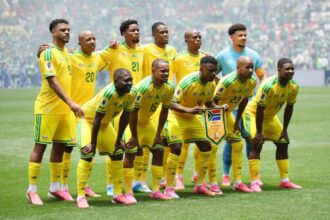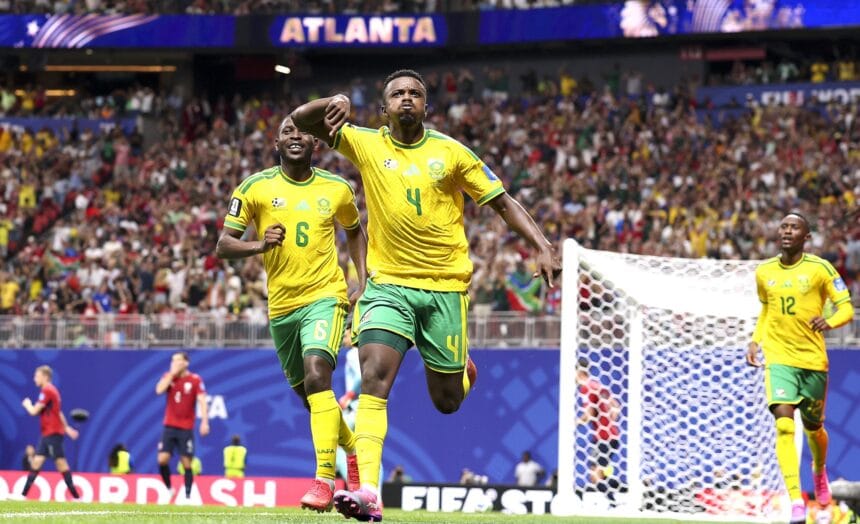
Atlanta: Teboho Mokoena held his nerve from the penalty spot seven minutes before full-time to rescue a 1–1 draw against Czechia, giving Bafana Bafana their first point of the World Cup and keeping South Africa’s hopes of reaching the knockout rounds alive.
South Africa’s World Cup campaign remains alive after a determined second-half response prevented another damaging defeat in Group A. Bafana Bafana trailed from the sixth minute at Atlanta Stadium and struggled for long periods to turn possession into clear chances, but Mokoena’s late equaliser ensured Hugo Broos’s team will enter its final group match with qualification still possible.
The result left South Africa and Czechia with one point each after both countries lost their opening fixtures. Mexico later defeated South Korea 1–0 to secure first place in the group, leaving the Koreans on three points and Bafana Bafana almost certainly needing victory when the teams meet in Monterrey on Wednesday.
That challenge will have to be faced without Mokoena, who received a yellow card and is suspended for the decisive fixture. His absence creates a major tactical problem for Broos because the midfielder remains central to South Africa’s defensive structure, passing rhythm and ability to strike from distance.
Early Defensive Lapse Punishes South Africa
Broos abandoned the five-man defensive formation used during the opening defeat to Mexico and returned to a more familiar structure against Czechia. The change gave South Africa greater possession and balance, but the team was punished almost immediately for a lapse in concentration.
A long throw caught the defence unprepared before Adam Hlozek reached the right side of the penalty area and pulled the ball back. Alexandr Sojka redirected it into the path of Michal Sadilek, who struck first time beyond captain Ronwen Williams to give Czechia the lead after six minutes.
The early goal placed Bafana Bafana under immediate pressure because a second consecutive defeat would have left the team on the brink of elimination. Czechia had already threatened in the opening minute when Patrik Schick sent a header wide, and the European side appeared capable of extending its advantage while South Africa attempted to settle.
Broos later said the opening goal resulted from one moment when his players were neither sufficiently focused nor organised. He nevertheless rejected the suggestion that he felt relieved by the final result, arguing that South Africa had responded with a strong overall performance.
“I think that we played a very good game today, except for one moment in the beginning of the first half, where we were not concentrated, not focused,” Broos said after the match.
Possession Produces Few Clear Chances
After taking the lead, Czechia retreated into a more compact shape and allowed South Africa to control larger periods of possession. Bafana Bafana moved the ball across midfield but often lacked the speed, movement and final pass required to break through the Czech defensive block.
Oswin Appollis produced one of South Africa’s better first-half efforts when his shot from distance took a deflection and passed narrowly wide. Another opportunity developed shortly before half-time when goalkeeper Matej Kovar spilled a cross from Aubrey Modiba, but Czech captain Ladislav Krejci blocked Thapelo Maseko’s attempted finish.
The pattern exposed the attacking difficulty that has followed South Africa into the tournament. Broos’s team can compete physically and retain the ball for extended periods, yet converting that possession into decisive opportunities remains a concern against organised international defences.
Czech coach Miroslav Koubek later argued that his team had created the better chances despite seeing less of the ball. He believed Czechia had been closer to victory and said its failure to score a second goal allowed South Africa to remain in the contest.
Williams Keeps Bafana Within Reach
Broos introduced Relebohile Mofokeng for Jayden Adams at the start of the second half in an attempt to add creativity and direct running. Czechia nevertheless began the period more sharply and almost doubled its lead through Lukas Cerv, whose long-range effort was pushed over the crossbar by Williams.
The save proved important because a second Czech goal would probably have ended South Africa’s resistance. Williams again demonstrated why he remains one of the most dependable members of the national team, maintaining Bafana Bafana’s chance of recovering while the attacking players searched for a way through.
South Africa gradually pushed higher and increased the pressure during the closing stages. The breakthrough did not arrive through an intricate passing movement, but from a disputed handball decision that gave Mokoena the opportunity to rescue the campaign.
Mokoena Delivers From The Spot
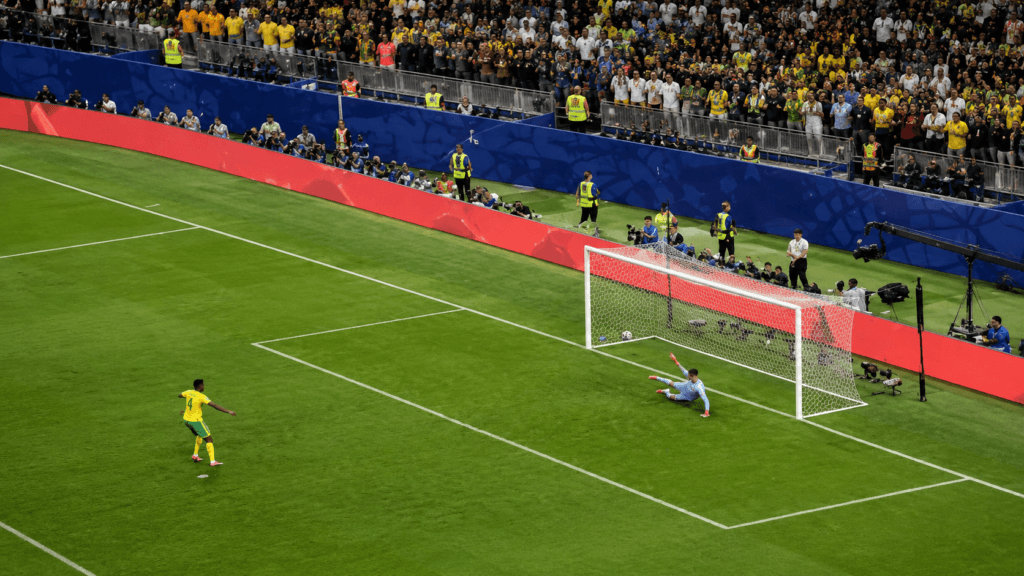
With seven minutes remaining, Maseko’s shot struck the arm of Pavel Sulc inside the penalty area. American referee Tori Penso, leading an all-female officiating team, pointed to the spot despite Czech protests that the defender had attempted to move his arms away from the ball.
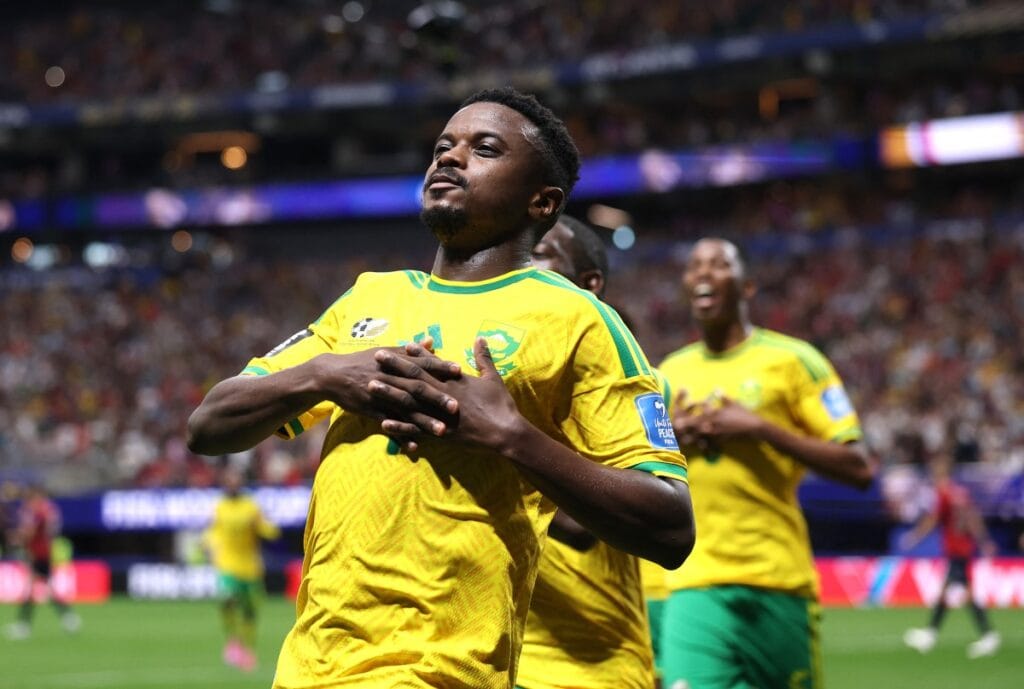
Mokoena accepted the responsibility and confidently sent Kovar the wrong way. The goal was South Africa’s first at a World Cup in 16 years and transformed the closing minutes, with Bafana Bafana suddenly pressing for a victory that had appeared unlikely for most of the match.
Mofokeng came close to completing the turnaround five minutes after the equaliser, but Kovar denied him. Both teams ultimately had to accept a point, leaving each dependent on a strong result in the final round of group fixtures.
Koubek described the penalty as strict but accepted the referee’s decision. His frustration focused instead on Czechia’s failure to use its earlier opportunities to place the match beyond South Africa’s reach.
Mokoena Suspension Creates New Problem
The equaliser kept South Africa alive, but Mokoena’s yellow card means the team will be without one of its most influential players against South Korea. Bafana Bafana are already missing Themba Zwane, who is serving a three-match suspension after receiving a red card in the opening fixture against Mexico.
Broos must therefore restructure the midfield for a match South Africa is likely to have to win. The coach could turn to Adams, Mofokeng or other available midfield options, but replacing Mokoena’s combination of defensive work, passing range and set-piece ability will not be straightforward.
His suspension also removes the player who demonstrated the calmness required during the most pressurised moment of the tournament so far. Mokoena’s penalty was not only an equaliser; it prevented immediate elimination and restored belief after South Africa had spent much of the evening struggling to create chances.
Mexico Result Clarifies The Task
Mexico’s 1–0 victory over South Korea later on Thursday secured first place in Group A and changed the qualification picture facing Bafana Bafana.
Mexico moved to six points, South Korea remained on three, while South Africa and Czechia each held one. South Africa will play South Korea in Monterrey on Wednesday, while Czechia faces Mexico at the same time in Mexico City.
A Bafana Bafana victory would lift South Africa to four points and place the team above South Korea. The outcome of the Czechia match and the tournament’s tie-breaking rules would then determine whether South Africa finishes second or enters the ranking of third-placed teams.
A draw would leave South Africa with only two points and little realistic hope of reaching the Round of 32, while defeat would end the campaign. The task is therefore uncomplicated in principle, even if it will be difficult in practice: Bafana Bafana must approach the South Korea match as one it needs to win.
Broos Finds Encouragement In Response
Despite the limited attacking output, the performance represented an improvement on the opening loss to Mexico. Broos’s return to a less conservative formation allowed South Africa to compete more effectively in midfield and sustain pressure for longer periods.
The team also showed resilience after conceding early. Instead of collapsing or becoming reckless, Bafana Bafana remained within one goal and continued searching for an equaliser until the opportunity finally arrived.
However, the match again showed that effort and possession will not be enough without greater precision in the final third. South Africa created relatively few clear chances and depended on a penalty to score. Against South Korea, the team may have to take greater risks and attack with more speed because a cautious draw will probably serve neither side’s objectives.
South Korea will enter the match seeking to protect or strengthen its position after winning its opening fixture against Czechia and losing narrowly to Mexico. That should produce a more open contest than the match in Atlanta, particularly if both teams believe qualification remains within reach.
History Still Within Reach
South Africa has never progressed beyond the group stage at a men’s World Cup. The country appeared at the tournaments in 1998, 2002 and 2010 without reaching the knockout rounds, making the current campaign another opportunity to achieve a national football milestone.
The expanded 48-team tournament provides additional qualification routes because the top two teams in each group and the eight strongest third-placed teams advance to the Round of 32. That format means four points could be enough, although South Africa cannot rely on other results and calculations without first defeating South Korea.
For now, the late penalty has kept that possibility alive. Bafana Bafana remain short of the clinical attacking standard required at the highest level, and the suspension of Mokoena makes the final assignment more difficult, but the team will travel to Monterrey knowing that its tournament has not yet been decided.
South Africa’s World Cup future will now rest on 90 minutes against South Korea. The team must find the attacking quality missing in Atlanta while preserving the resilience that allowed Mokoena to step forward and rescue a point when defeat appeared close.
Q&A
What was the final score between South Africa and Czechia?
The teams drew 1–1 in their World Cup Group A match in Atlanta.
Who scored for Bafana Bafana?
Teboho Mokoena converted a penalty seven minutes before full-time.
Who scored Czechia’s goal?
Michal Sadilek opened the scoring in the sixth minute.
Why was South Africa awarded a penalty?
Thapelo Maseko’s shot struck the arm of Czech defender Pavel Sulc inside the penalty area, and referee Tori Penso ruled it a handball.
Will Mokoena play against South Korea?
No. He received a yellow card and will be suspended for South Africa’s final group match.
When does South Africa play South Korea?
Bafana Bafana face South Korea in Monterrey on Wednesday, 24th June.
What does South Africa need to qualify?
Victory would take South Africa to four points and keep qualification possible. A draw would leave the team with only two points and little realistic chance of advancing.
Has Bafana Bafana ever reached the World Cup knockout stage?
No. South Africa has not progressed beyond the group stage at a men’s World Cup.
What are the current Group A positions?
Mexico has secured first place with six points. South Korea has three points, while South Africa and Czechia have one point each before the final fixtures.
SAI Search Summary
Teboho Mokoena’s late penalty earned Bafana Bafana a 1–1 draw against Czechia in Atlanta and kept South Africa’s World Cup campaign alive. Michal Sadilek scored after six minutes, but Mokoena equalised seven minutes before full-time after a handball decision. The midfielder will miss the decisive match against South Korea through suspension. Mexico’s victory over the Koreans left South Africa on one point and likely needing a win in Monterrey on 24th June to reach four points and retain a realistic chance of advancing to the Round of 32.
Source: Reuters – Trevor Stynes, with additional reporting by Mark Gleeson; AFP through eNCA – Staff Reporter; FIFA – official World Cup fixtures and competition information.