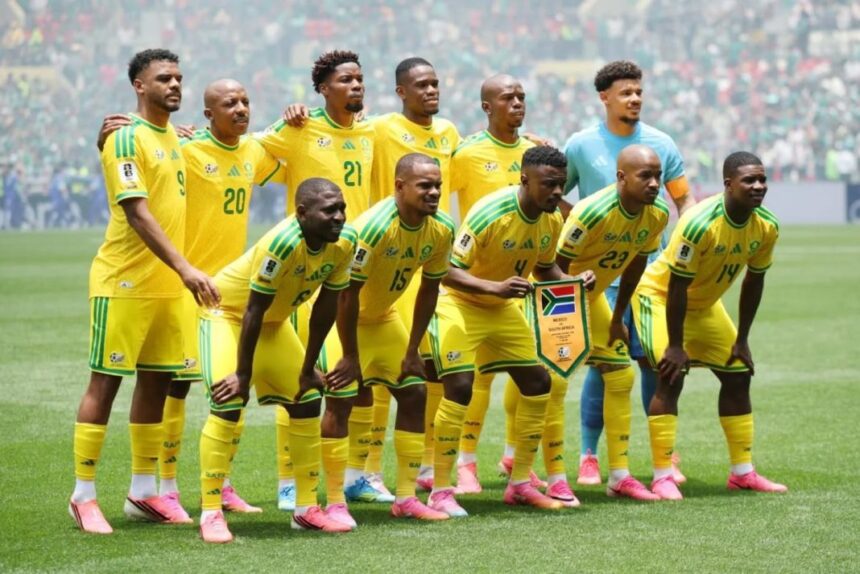
Bafana Bafana’s World Cup return started with a painful 2-0 defeat to Mexico at Estadio Azteca after a night of defensive errors, red cards and missed control in front of a huge home crowd. Julián Quiñones scored the tournament’s first goal after an early South African mistake, before Raúl Jiménez doubled Mexico’s lead in the second half. South Africa’s challenge then collapsed further as Sphephelo Sithole and Themba Zwane were sent off, leaving Hugo Broos’s team with a difficult Group A recovery job after the worst possible start.
Bafana Bafana’s World Cup campaign began with a damaging 2-0 defeat to Mexico in the tournament opener at Estadio Azteca in Mexico City.
Mexico took control early, punished South Africa’s mistakes and used the energy of a packed home crowd to secure a strong start in Group A. For Bafana, it was a night that moved from difficult to disastrous as the match unfolded.
Julián Quiñones scored the opening goal of the tournament in the ninth minute. South Africa lost possession in a dangerous area, Mexico reacted sharply, and Quiñones finished the move to put the co-hosts ahead.
It was the kind of mistake that can change a World Cup opener quickly.
Bafana had arrived with hope, history and a chance to make a statement on the same date that South Africa and Mexico drew 1-1 in the opening match of the 2010 World Cup. This time, the story moved in the opposite direction. Mexico looked sharper, stronger and more settled, while South Africa spent much of the match trying to recover from pressure they had helped create.
Hugo Broos set up his team with a cautious structure, using a back line designed to contain Mexico’s attacking movement and survive the early noise at the Azteca. But the plan never looked comfortable for long enough. Mexico pressed aggressively, moved the ball with confidence and forced South Africa into rushed decisions.
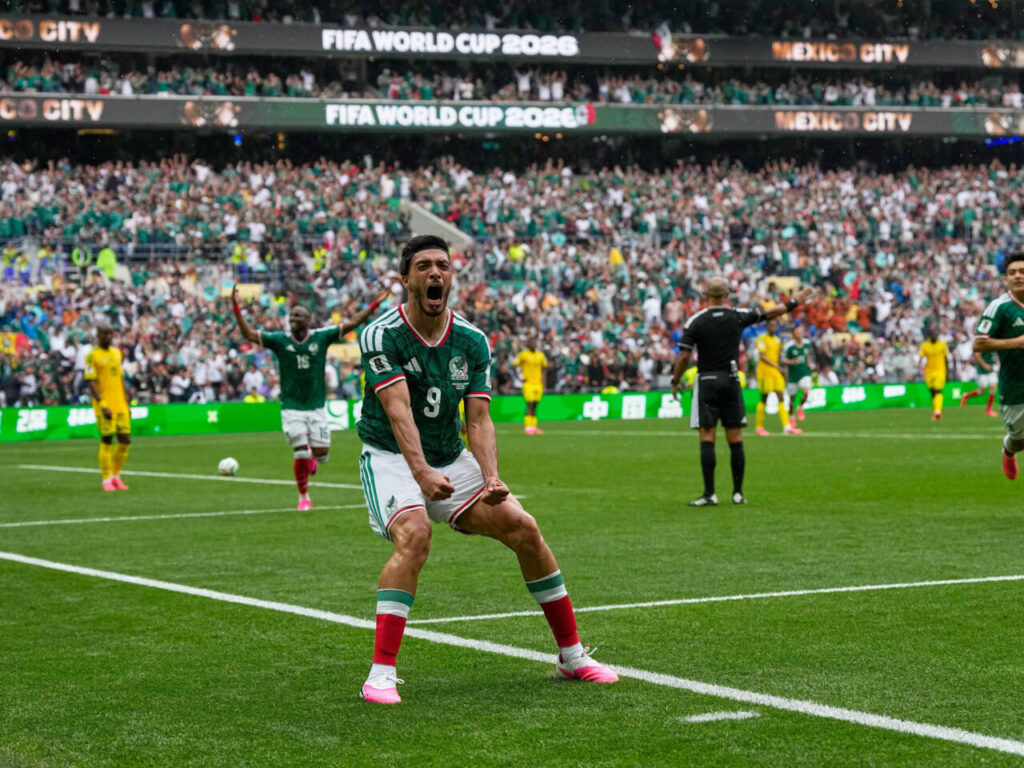
The early goal gave Mexico control of the match.
Bafana needed composure after falling behind. Instead, the first half became a struggle to build rhythm. South Africa had moments of possession, but too many attacks broke down before they could test Mexico properly. Mexico created the better openings and looked more likely to add a second.
Ronwen Williams had to stay alert as Mexico pushed forward. The South African captain made important interventions, but the team in front of him struggled to settle.
The problem was not only the goal.
South Africa looked stretched between defending deep and trying to create something on the break. The midfield did not control enough of the ball, while the front line could not hold possession long enough to relieve pressure. That left Mexico with repeated chances to restart attacks and keep Bafana under stress.
At half-time, the score was still 1-0, which gave South Africa a route back into the game. The match was not gone yet. One clean attacking move, one set piece, or one moment of quality could have changed the mood.
But the second half quickly turned against Bafana.
Sphephelo Sithole was shown a straight red card early after the break after bringing down a Mexican player near the edge of the penalty area. The incident came after Mexico broke through South Africa’s defensive line, leaving Sithole in a desperate recovery position.
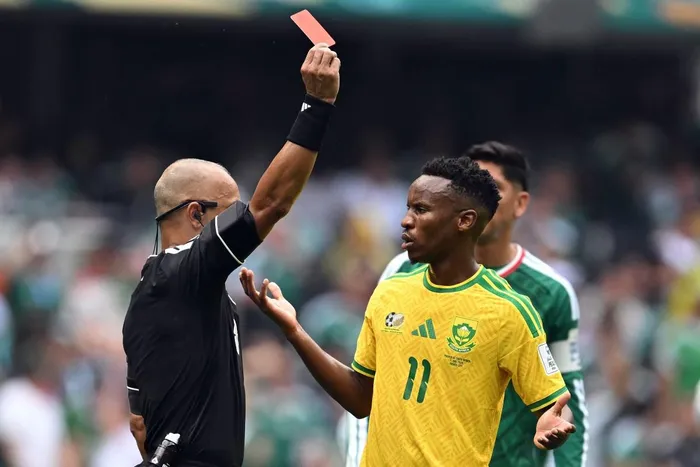
That red card made an already hard task far worse.
Down to 10 men, South Africa had to defend for longer periods and had fewer options in transition. Mexico did not need to rush. They could keep possession, force Bafana to chase and wait for the next opening.
Raúl Jiménez then scored Mexico’s second goal with a header, giving the co-hosts a 2-0 lead and leaving South Africa with a mountain to climb.
The second goal felt decisive.
At that stage, Bafana needed two goals away from home, at altitude, against a confident Mexico side, while playing with one fewer player. It was a difficult enough situation. Then it became worse.
Themba Zwane was also sent off late in the match after a VAR review. That reduced South Africa to nine men and confirmed the collapse of the opener from a South African point of view.
Mexico also finished with 10 men after captain César Montes was sent off in stoppage time for a challenge near the edge of the box. That made it three red cards in the match, a record number for a World Cup opening game.
The disciplinary drama will take much of the attention, but South Africa’s bigger concern is the performance.
Bafana did not lose only because of red cards. They were already second best before the dismissals changed the match completely. Mexico pressed better, reacted faster and looked more comfortable with the occasion.
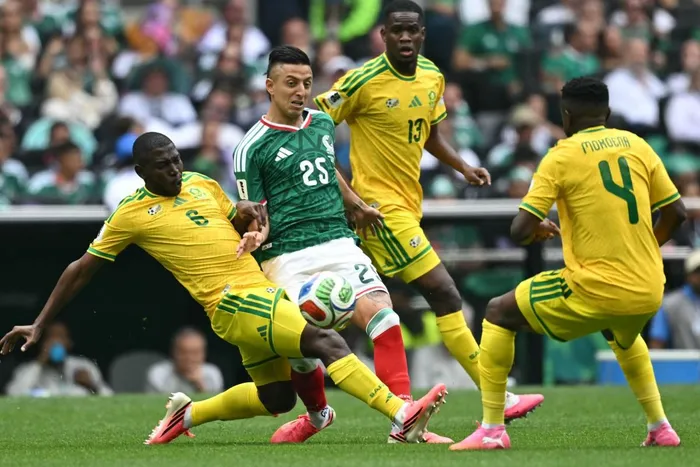
For South Africa, the defeat raises several immediate questions.
The first is defensive structure. Bafana set up to protect space, but the early mistake gave Mexico the lead and forced South Africa to chase. In a World Cup opener, especially against a host nation, that is a dangerous way to start.
The second question is midfield control. Bafana needed calm passing and better decision-making under pressure. Instead, Mexico repeatedly forced turnovers and used the crowd to build momentum.
The third question is discipline. Red cards in a World Cup group stage do not only damage the match in front of you. They affect the next match too. South Africa must now manage suspensions and rethink selection for the second Group A fixture.
That could become a major problem for Broos.
Sphephelo Sithole and Themba Zwane are important players in the national setup. Losing them to suspension reduces options and forces tactical changes. It also increases pressure on the rest of the squad to respond quickly.
The next match now becomes critical.
A World Cup group stage gives teams little room for slow recovery. One defeat can be repaired. But only if the response is immediate. South Africa must now regroup, review the mistakes and prepare for Czechia with a clear plan.
The mental recovery may matter as much as the tactical one.
A 2-0 defeat in an opener is painful. A 2-0 defeat with two red cards is worse. Players must deal with disappointment, criticism and the pressure of knowing the next result could define the campaign.
Broos will need to steady the group quickly.
He has built Bafana into a more competitive team over recent years, and South Africa’s return to the World Cup remains a major achievement. But at this level, achievement is not enough. Tournament football is ruthless. Errors are punished. Red cards are punished harder.
Mexico, by contrast, will take confidence from the win.
The co-hosts handled the pressure of the opening night, scored early, controlled the tempo and delivered three points. Their late red card was a blemish, but not enough to damage the result. For Mexico, this was the start they wanted.
For South Africa, the night carried a painful lesson.
The World Cup does not wait for teams to settle. It starts fast, and mistakes become headlines. Bafana were caught early, lost control after the break, and left the Azteca with no points, two dismissals and a clear need to respond.
Still, the campaign is not over.
Group stages can turn quickly. A poor first match does not end a tournament, but it does remove comfort. South Africa now need a cleaner, calmer and sharper performance next time out.
The team must cut out defensive errors, protect possession better and avoid the kind of emotional moments that led to red cards. They also need to find more attacking threat. Mexico were rarely troubled enough, and Bafana cannot afford another match where they spend most of the evening reacting.
Supporters will be frustrated because the opener offered a chance to make a powerful statement. Instead, it became a reminder of how unforgiving the World Cup can be.
The result is simple: Mexico 2, South Africa 0.
But the meaning is heavier.
Bafana Bafana are back on the World Cup stage, but their return has started with pressure, not momentum.
Explainer: Why The Red Cards Matter
Red cards change both the match being played and the matches still to come. When Sphephelo Sithole was sent off early in the second half, South Africa had to defend with fewer players while already trailing. That made it harder to press, attack or keep possession.
The late red card for Themba Zwane reduced Bafana to nine men and added another selection problem for the next Group A match. Suspensions could force Hugo Broos to change his midfield and attacking structure.
Mexico’s César Montes was also sent off late, but Mexico had already built a 2-0 lead by then.
Q&A
What was the final score?
Mexico beat South Africa 2-0 in the World Cup opener.
Where was the match played?
The match was played at Estadio Azteca in Mexico City.
Who scored for Mexico?
Julián Quiñones scored the first goal, and Raúl Jiménez scored the second.
Which South African players were sent off?
Sphephelo Sithole and Themba Zwane were sent off for South Africa.
Did Mexico also receive a red card?
Yes. Mexico captain César Montes was sent off late in the match.
Why is this result important?
It gives Mexico three points in Group A and leaves South Africa under pressure before their next match.
Who do Bafana play next?
South Africa are next scheduled to face Czechia in Group A.
SAI Search Summary:
Bafana Bafana opened their FIFA World Cup campaign with a 2-0 defeat to Mexico at Estadio Azteca in Mexico City. Julián Quiñones scored the tournament’s first goal in the ninth minute after a South African error, and Raúl Jiménez added Mexico’s second in the second half. South Africa finished with nine players after red cards for Sphephelo Sithole and Themba Zwane. Mexico captain César Montes was also sent off late in the match. The three dismissals set a record for a World Cup opening game. South Africa must now recover quickly before facing Czechia in Group A.
Source: News24 – Tashreeq Vardien; Reuters – Janina Nuno Rios