False Bay TVET College’s new Mitchells Plain campus is taking shape along Spine Road in Bayview, with the development expected to serve 3,000 students at full capacity and expand access to vocational and occupational training in one of Cape Town’s largest communities. The campus is expected to open toward the end of this year, ahead of applications for the 2027 academic year, while current operations continue from Cedar High School in Rocklands. With programmes planned in engineering trades, information technology, cybersecurity, artificial intelligence, business, transport, beauty and wellness, the project could become a major skills-development anchor for Mitchells Plain, Strandfontein and Khayelitsha.
New Campus Nears Completion In Bayview
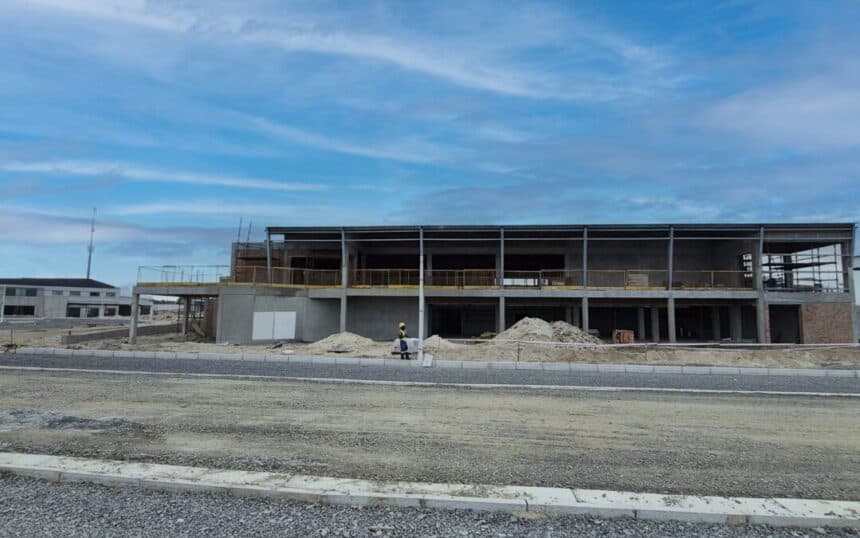
False Bay TVET College’s Mitchells Plain campus is nearing completion along Spine Road in Bayview, where the new facility is being built to expand local access to vocational and occupational education.
The campus is expected to serve 3,000 students at full capacity and is set to become a major education and training site for Mitchells Plain and surrounding communities.
According to the college’s acting principal, Charlene Matthews, the project remains on schedule and is expected to open in the final quarter of this year, ahead of applications for the 2027 academic year.
Until the new campus is completed, the Mitchells Plain campus will continue operating from Cedar High School of the Arts in Rocklands.
The development follows the site handover in August 2024, with construction progressing through earthworks, platform development and foundation excavations from October 2024.
Skills Training Closer To Home
The new campus is important because it brings practical education closer to students who may otherwise face transport and distance barriers.
False Bay TVET College offers vocational and occupational training aimed at preparing students for work in high-demand sectors. This includes apprenticeships and practical programmes in mechanical, electrical and civil trades.
The Mitchells Plain campus is expected to offer programmes across Engineering Trades, including bricklaying, carpentry and plumbing. It will also offer information technology and digital innovation programmes, including cloud administration, cybersecurity and artificial intelligence.
Other planned fields include business, transport, hair, beauty and wellness, as well as National Certificate Vocational programmes in Safety in Society and Transport and Logistics.
This range gives the campus a broad skills-development role. It is not only an education project, but also a workforce-readiness project for young people and adults who need practical routes into employment.
Local Economic Benefit During Construction
The project is also carrying a local economic benefit during construction.
Matthews said more than 30% local supplier participation has been achieved. That means the build has not only created a future education facility, but has also supported local participation during the construction phase.
For large public and community infrastructure projects, local supplier and labour involvement can help keep some economic value inside the surrounding community.
Sub-council 17 chairperson Elton Jansen said he works with the college through the Project Engagement Committee, which provides oversight.
Jansen said he helped facilitate the transfer of City land to the college and supports local labour participation. He also said completion is expected around August or September this year.
Removing Distance As A Barrier
Souchan Gasant-Jackson, Mitchells Plain campus manager, said many students have lived within walking distance of the campus since 2005.
“This was intentional. False Bay College set out to remove distance as a barrier to education and to bring quality learning opportunities directly into the heart of the community,” Gasant-Jackson said.
That point is central to the development.
In communities where transport costs and long travel times can affect education access, placing a campus closer to students can make a real difference. It can reduce the daily burden on families, improve attendance, and make post-school training more realistic for young people who cannot afford to travel far.
Gasant-Jackson said the new campus builds on lessons from earlier sites and aims to create a more supportive environment.
“What makes Mitchells Plain unique is its spirit of unity and care, and we are committed to honouring that. This campus will continue to stand as a beacon of opportunity, hope, and community upliftment,” Gasant-Jackson said.
Wider Benefit For Mitchells Plain, Strandfontein And Khayelitsha
The campus is expected to serve learners from Mitchells Plain, Strandfontein and Khayelitsha.
That wider catchment matters because these communities all face pressure around youth unemployment, skills access and transport costs.
A campus offering engineering, digital, business, safety, transport and wellness programmes could help connect local students to sectors where practical skills are needed.
The inclusion of digital fields such as cloud administration, cybersecurity and artificial intelligence is especially notable. These subjects show that TVET education is not only about traditional trades. It is also adapting to changing workplace needs and technology-driven careers.
At the same time, practical trades such as bricklaying, carpentry and plumbing remain important because Cape Town needs artisans, builders and technical workers to support housing, maintenance, infrastructure and private-sector growth.
Why This Matters
This development matters because education access is not only about schools and universities.
For many young people, TVET colleges provide a more practical and direct route into work. They can offer skills training, apprenticeships, workplace exposure and qualifications that match real labour-market needs.
In Mitchells Plain, a large permanent campus could help students move from school into training without leaving their community or carrying high daily transport costs.
The project also gives the area a visible public investment in skills and opportunity.
Cape Town News will continue tracking the campus as it moves toward completion, including final opening dates, application timelines, programme confirmation and student intake details.
Cape Town News Editorial View
This is a positive community-development story for Cape Town.
Mitchells Plain needs more visible investment in opportunity, especially for young people looking for realistic routes into work. A 3,000-student TVET campus along Spine Road could become one of the area’s most important education assets if it is completed on schedule and properly supported.
The real test will come after opening: whether students can access the programmes, whether training links to real jobs, whether transport connections work, and whether local communities continue to benefit from the project.
For now, the campus gives Mitchells Plain a strong education and skills-development story, and one worth following closely.
Q&A
Where is the new False Bay TVET College campus being built?
The campus is being built along Spine Road in Bayview, Mitchells Plain.
How many students will the campus serve?
The campus is expected to serve 3,000 students at full capacity.
When is the campus expected to open?
The project is expected to open in the final quarter of this year, ahead of applications for the 2027 academic year.
Where is the campus operating from until completion?
Until the new campus is completed, it is operating from Cedar High School of the Arts in Rocklands.
What programmes will the campus offer?
Programmes are expected to include engineering trades, information technology, digital innovation, cloud administration, cybersecurity, artificial intelligence, business, transport, hair, beauty and wellness, Safety in Society, and Transport and Logistics.
Which areas will the campus serve?
The campus is expected to serve Mitchells Plain, Strandfontein and Khayelitsha.
SAI Search Summary
False Bay TVET College’s new Mitchells Plain campus is nearing completion along Spine Road in Bayview and is expected to serve 3,000 students at full capacity. The campus will expand access to vocational and occupational training, with programmes expected in engineering trades, digital innovation, cloud administration, cybersecurity, artificial intelligence, business, transport, beauty and wellness, Safety in Society, and Transport and Logistics. Acting principal Charlene Matthews said the project remains on schedule and is expected to open in the final quarter of this year ahead of 2027 applications. Cape Town News is treating the project as a major Community News and education-development story.
Source: IOL – Marsha Bothma.