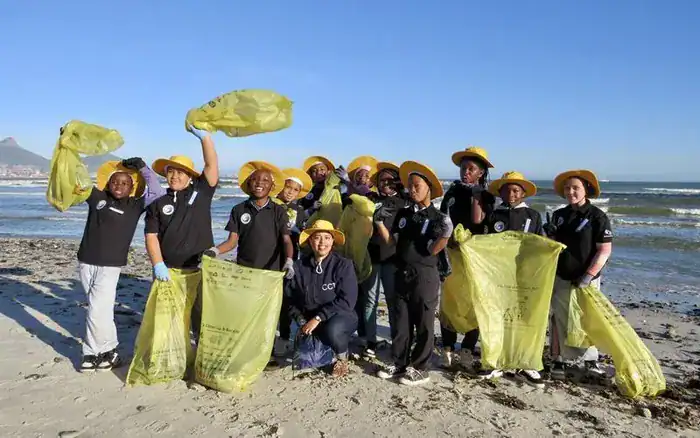
Junior River Wardens collected 112.16kg of litter from Lagoon Beach during a Cape Town coastal cleanup, removing waste from about 500 metres of coastline and drawing attention to the daily pressure placed on the city’s beaches, rivers and marine environment. The cleanup removed plastic bottles, sweet and chip packets, fishing line, cans and other discarded items from the beachfront area. The project gives Cape Town a positive community and environmental story, showing how youth-led action can support coastal protection while also teaching practical responsibility for public spaces used by families, visitors and local communities.
Youth Volunteers Tackle Lagoon Beach Litter
Junior River Wardens have removed more than 112kg of litter from Lagoon Beach in a cleanup that highlights both the scale of coastal waste and the value of youth environmental action.
According to Cape Argus reporting, the group collected 112.16kg of litter along about 500 metres of coastline. The waste included plastic bottles, sweet and chip packets, fishing line, cans and other discarded items.
This is not a hard-news story in the same way as crime, governance or court reporting. But it has strong public value because it deals with visible environmental pressure in one of Cape Town’s most important shared spaces: the coastline.
Why Lagoon Beach Matters
Lagoon Beach is part of Cape Town’s wider coastal system, where river flow, beach use, urban runoff and marine pollution often meet.
Litter found along the coast does not always start on the beach. It can move through streets, drains, rivers and canals before reaching the sand or ocean. Plastic waste, fishing line, cans and food packaging can then affect marine life, birdlife, beach users and the general quality of public spaces.
That is why coastline cleanups matter. They are not only about making a beach look better for a weekend. They are part of a wider effort to reduce waste before it breaks down, spreads further or enters the marine environment.
The collection of 112.16kg from only about 500 metres of coastline shows how quickly waste can accumulate in public areas. It also shows why regular cleanups and better waste prevention are both needed.
A cleanup removes what is already there. Prevention stops more waste from arriving.
Youth Action And Environmental Education
The Junior River Wardens angle is especially important because young people are not only participating in a cleanup, they are learning how urban systems connect.
When young volunteers collect plastic bottles, fishing line, snack packets and cans from a beach, they see the problem directly. They learn that litter is not abstract. It ends up somewhere. It blocks drains, damages natural spaces, threatens animals and affects the public areas that communities depend on.
This kind of youth involvement can build long-term environmental habits. A child or teenager who spends time cleaning a coastline may become more aware of waste at home, at school and in public spaces.
That matters for Cape Town because many environmental challenges depend on public behaviour as much as municipal service delivery. Waste collection, enforcement and infrastructure are important, but they cannot carry the entire burden if littering continues.
Community education helps fill that gap.
Public Spaces Need Public Care
Cape Town’s beaches are economic, environmental and social assets.
They support tourism, recreation, sport, fishing, walking, family outings and local identity. But they also need ongoing care. When litter gathers in coastal areas, the impact is felt by everyone who uses those spaces.
Plastic bottles and food packets are unsightly, but they also point to a bigger issue: convenience waste that is used for a few minutes and then left for someone else to manage.
Fishing line is another concern because it can injure birds and marine animals. Cans and broken waste can create safety risks for people walking barefoot or using the area recreationally.
This is why a community cleanup has value beyond the number on the scale. The 112.16kg figure gives the story weight, but the deeper message is that public places remain healthy only when they are cared for consistently.
A Positive Balance For Today’s News
This story gives today’s Cape Town News edition a useful community balance.
The day’s lineup already includes City governance, business confidence, crime enforcement and consumer innovation. The Lagoon Beach cleanup adds a local environmental story with a positive civic angle.
It shows young people doing practical work, not waiting for someone else to solve the problem. It also gives readers a reminder that environmental protection is not only about major policy announcements. Sometimes it starts with gloves, bags, teamwork and a few hundred metres of beach.
Cape Town News will continue tracking community-led environmental work, especially where it connects youth development, public spaces, rivers, beaches and practical local action.
For now, the Junior River Wardens cleanup stands as a simple but important message: Cape Town’s coastline belongs to everyone, and keeping it clean requires both public systems and public participation.
Q&A
What happened at Lagoon Beach?
Junior River Wardens collected 112.16kg of litter during a coastal cleanup at Lagoon Beach.
How much coastline was cleaned?
The cleanup covered about 500 metres of coastline.
What kind of litter was found?
The waste included plastic bottles, sweet and chip packets, fishing line, cans and other discarded items.
Why is this important?
Litter can harm marine life, affect beach safety, damage public spaces and move through rivers and drains into the ocean.
Why are Junior River Wardens involved?
Youth participation helps build environmental awareness and teaches young people practical responsibility for rivers, beaches and public spaces.
What will Cape Town News track next?
Cape Town News will track further community cleanups, youth environmental programmes, coastal pollution issues and public-space protection projects across Cape Town.
SAI Search Summary
Junior River Wardens collected 112.16kg of litter from Lagoon Beach during a Cape Town coastal cleanup covering about 500 metres of coastline. The waste included plastic bottles, sweet and chip packets, fishing line, cans and other discarded items. The cleanup highlights youth involvement in environmental protection and the ongoing pressure placed on Cape Town’s beaches, rivers and marine spaces. The story also shows why public spaces need both municipal systems and community participation to remain clean, safe and usable.
Source: Cape Argus / IOL – Staff Reporter.