Western Cape citrus growers have received a major international trade boost after South Africa and China formalised a supplementary citrus phytosanitary agreement that could make it easier for local producers to reach Chinese consumers. For the province, the deal is not only about fruit exports. It is also about jobs, rural economies, logistics, trade competitiveness and the future of one of the Western Cape’s most important agricultural sectors.
Western Cape citrus producers are set to benefit from improved access to the Chinese market after South Africa and China formalised a supplementary citrus phytosanitary agreement aimed at easing export requirements and strengthening trade opportunities.
The agreement, formalised on 10 April, was welcomed by Western Cape Agriculture, Economic Development and Tourism Minister Dr Ivan Meyer, who described it as an important boost for the province’s citrus industry and the wider agricultural economy.
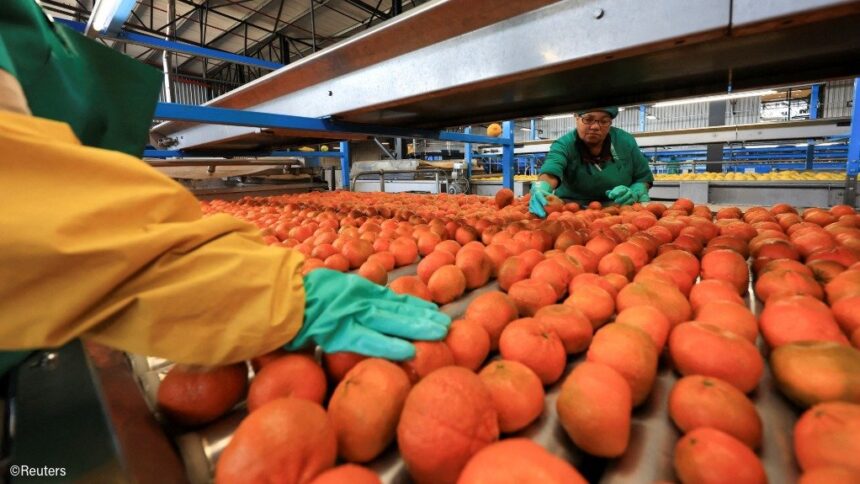
The Western Cape produces about 20% of South Africa’s citrus, making the sector a major contributor to rural employment, export earnings and agricultural activity. Citrus production supports farms, packhouses, transport companies, cold-chain operators, port-linked logistics, exporters, seasonal workers and permanent employees across the province.
That is why the agreement carries more weight than a normal trade announcement. When market access improves, the benefits can move through the full value chain, from orchards and packing facilities to freight operators and export businesses. In rural areas where agriculture remains a major employer, these gains matter.
The supplementary agreement gives South African citrus producers additional options to meet China’s phytosanitary requirements. In practical terms, this could help reduce pressure on exporters, improve planning around treatment options, and assist in getting fruit to market in better condition.
For growers, access to a major market such as China can influence decisions around planting, harvesting, packaging, logistics and future investment. Stronger access can also help producers reduce reliance on a narrow set of markets, especially at a time when global agricultural exports face rising competition, changing consumer demand and strict import requirements.
There are clear positives. The agreement could help Western Cape citrus exporters become more competitive in China, a market with strong demand and significant scale. It could also give producers more confidence when negotiating export programmes, managing seasonal volumes and planning logistics around port and cold-chain capacity.
There are also practical realities. Improved market access does not automatically remove every challenge facing the industry. Producers will still need to meet strict quality standards, manage input costs, deal with logistics pressure, and compete with other citrus-producing regions. Export gains also depend on efficient transport networks, reliable cold storage, strong buyer relationships and consistent fruit quality.
This is where the agreement becomes part of a wider economic story. The Western Cape has spent years positioning agriculture and exports as key drivers of growth. Citrus is one of the sectors where that strategy can be seen clearly because it links farm production with international trade, logistics, jobs and foreign earnings.
Minister Meyer said expanded access to the Chinese market supports economic growth and job creation in the Western Cape. His department also linked the agreement to efforts to strengthen agricultural exports and support rural economies.
For farmers and exporters, the deal offers a useful opening. For workers and rural communities, the hope is that stronger exports can translate into more stable activity across the season. For the broader provincial economy, it shows how international trade agreements can have direct local consequences.
The agreement also arrives at a time when food producers are under pressure from high costs, infrastructure demands and global competition. Better export access will not solve every problem, but it gives citrus growers another tool to protect and grow their place in international markets. For the Western Cape, the message is simple. Citrus exports are not only about fruit leaving the province. They are about trade, jobs, logistics, farm income and the businesses that depend on a working agricultural value chain.
Source: South African Government – Western Cape Agriculture and Rural Development.