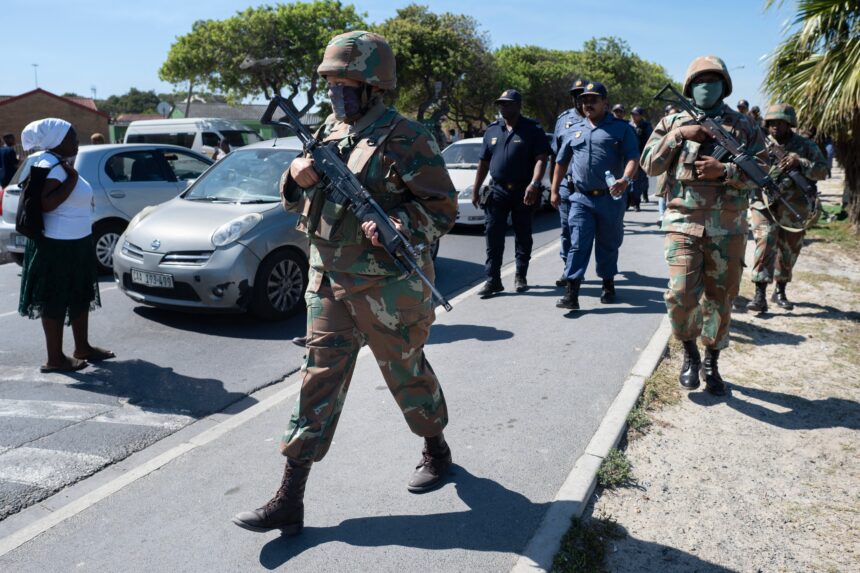
President Cyril Ramaphosa has defended the SANDF’s Operation Prosper as a necessary and successful intervention against gang violence and organised crime, but the reality on the Cape Flats tells a far more difficult story. While government points to arrests, roadblocks and firearm seizures as signs of progress, shootings continue across Cape Town communities, leaving many residents questioning whether the army is truly turning the tide or simply driving through streets where fear remains unchanged.
President Cyril Ramaphosa told Parliament that the deployment of the South African National Defence Force to support police operations was the correct decision, with what he described as positive results beginning to emerge.
Responding to oral questions in the National Assembly, Ramaphosa said Operation Prosper had made progress in stabilising priority hotspots and disrupting crime in several provinces, including the Western Cape, Eastern Cape, Gauteng, North West and Free State.
The deployment, announced during his State of the Nation Address earlier this year, was aimed at tackling gang violence in the Western Cape and Eastern Cape, while also targeting illegal mining operations in other provinces.
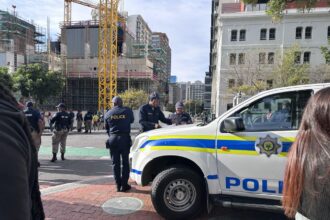
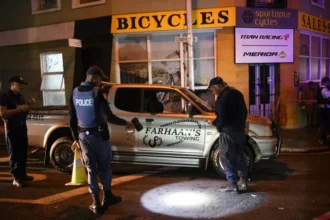
Ramaphosa told MPs that more than 1,000 arrests had been made under the operation, including 550 in the Western Cape and 238 in the Eastern Cape. He also said more than 38,000 coordinated actions had taken place, including roadblocks and targeted tracing operations.
According to the President, the operation also led to the seizure of 18 firearms, 792 rounds of ammunition and 186 explosives. He said there had been a strong focus on dismantling drug networks and illegal mining syndicates, while arrests had also been linked to serious violent crimes.
But while those figures may sound impressive on paper, they are now being tested against the lived reality of communities still hearing gunfire.
DA chief whip George Michalakis challenged Ramaphosa directly, arguing that the situation had worsened since soldiers were deployed to the Cape Flats. He also questioned the cost of Operation Prosper, which he placed at R823 million.
His most pointed question went to the emotional heart of the matter: could government look mothers who had lost children to gang violence in the eye and say the operation was working?
Ramaphosa responded by saying he would offer condolences and sympathies to those mothers, while also telling them that government was doing more to bring down gang violence. He rejected what he called attempts to politicise the matter, arguing that all parties should want the police and the SANDF to succeed.
He also said the solution had to go beyond soldiers on the ground. According to Ramaphosa, reducing gang violence required a government-wide and society-wide response, including stronger intelligence services and an integrated crime prevention strategy.
That broader admission is important. It suggests that while the SANDF may be helping with visible operations, government itself recognises that soldiers alone cannot dismantle the deeper social and criminal networks driving gang violence.
The contradiction becomes sharper when recent reports from Cape Town are considered.
Despite the President’s confidence in Operation Prosper, shootings have continued across several communities, including Atlantis, Retreat, Steenberg, Mitchells Plain, Parkwood, Lotus River, Kuils River and Grassy Park. These are not isolated places on a map. They are neighbourhoods where families live, children walk to school and residents go to work under the shadow of gang activity.
That reality weakens the claim that the deployment is already delivering visible safety for ordinary Capetonians.
The SANDF has also refused to disclose how many soldiers have been deployed to the Western Cape, saying the number is security-sensitive. While that may be understandable from an operational perspective, it also limits public scrutiny over the scale of the intervention, especially when hundreds of millions of rand are involved.
Western Cape police spokesperson Brigadier Novela Potelwa said integrated operations would intensify over time and would be guided by crime pattern analysis. She said intelligence-driven operations would target hotspots linked to shootings, murders and attempted murders, while communities were urged to share information about firearms, drugs, extortion and gang-related crime.
Police also said more work still needed to be done to stabilise affected areas, with firearms, ammunition and drugs remaining key drivers of violence.
That statement is a quiet but important acknowledgement. Operation Prosper may be active, but the areas it is meant to stabilise are not yet stable.
Community voices have been even more direct.
Hanover Park activist Yaseen Johaar previously described the deployment as a waste of taxpayers’ money, arguing that the cost of bringing in soldiers, medical staff and support structures did not translate into meaningful change on the ground.
Heideveld community worker Vanessa Nelson said she had initially supported calls for military deployment, but later felt that soldiers appeared to be driving through areas without a clear plan to confront gangsterism and drug dens.
Those views reflect a growing frustration across gang-affected communities. Many residents did not expect the army to solve every social problem overnight, but they did expect a visible shift in safety, control and confidence.
So far, many say that shift has not arrived.
The central question is no longer whether soldiers are present. The question is whether their presence is changing anything meaningful for the people living with gang violence every day.
Government may point to arrests and seizures. Opposition parties may point to continued shootings and cost. Communities may point to fear that has not gone away.
All three matter.
But for Cape Town residents trapped between political claims and street-level violence, the test is simple. If Operation Prosper is succeeding, they should feel safer. If shootings continue unabated, then the President’s claim of success becomes harder to defend.
For now, Operation Prosper remains under pressure, not only from Parliament, but from the streets of the Cape Flats themselves.
Source: IOL – IOL – Robin-Lee Francke and Mayibongwe Maqhina.