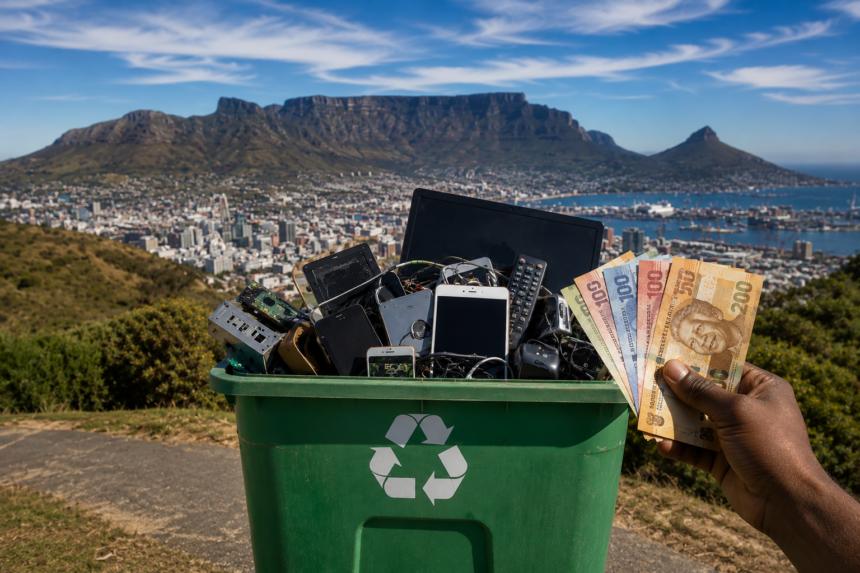
Old phones, broken televisions, damaged laptops and unused cables sitting in cupboards across South Africa may soon become part of a growing recycling economy as government and industry push to turn electronic waste into financial opportunity while reducing environmental damage.
South Africa’s growing electronic waste problem is now moving into the spotlight after the Department of Forestry, Fisheries and the Environment launched a new pilot programme that will pay residents for discarded electronic devices.
The initiative, officially launched in Mthatha on Wednesday, forms part of a wider effort to increase awareness around electronic waste recycling while encouraging South Africans to properly dispose of unused technology products that often end up in landfills, illegal dumping sites or storage cupboards for years.
Under the pilot project, participants can earn R4.50 per kilogram of electronic waste handed in at designated collection points.
The department says community members are encouraged to recycle old electronic products including mobile phones, computers, chargers, cables, small appliances and other unwanted electronic equipment.
The programme arrives as experts warn that South Africa is rapidly becoming one of the continent’s largest electronic waste producers, while formal recycling systems continue struggling to keep pace with growing volumes of discarded technology.
According to Sandile Ndlovu, assistant researcher at the Interdisciplinary Centre for Digital Futures at the University of the Free State, only between 7% and 12% of South Africa’s electronic waste currently enters formal recycling channels.
That figure remains particularly concerning given South Africa is now considered the second-largest producer of e-waste in Africa behind Egypt.
Ndlovu says a major problem remains public awareness, with many South Africans still unaware of both the financial value and environmental risks associated with improperly discarded electronic devices.
A recent study cited by Ndlovu found that around 60% of Generation Z and millennial consumers do not fully understand what electronic waste is, while nearly half remain unaware of the long-term environmental and health risks associated with improper disposal.
Industry experts say modern electronic devices often contain recoverable materials including gold, silver, copper and aluminium, turning discarded electronics into a potentially valuable secondary raw material market.
Common Household E-Waste Items
| Device Type | Common Examples | Potential Recyclable Materials |
| Mobile Devices | Smartphones, tablets | Gold, copper, lithium |
| Computer Equipment | Laptops, desktops, keyboards | Aluminium, copper, rare metals |
| Home Electronics | TVs, radios, decoders | Copper, steel, plastics |
| Power Accessories | Chargers, cables, adapters | Copper, plastics |
| Appliances | Microwaves, kettles, fans | Steel, aluminium, wiring |
Researchers also warn that technology manufacturers increasingly designing products with shorter upgrade cycles is contributing to rising e-waste levels globally.
In many cases devices remain physically functional but become obsolete because software support ends or newer operating systems are no longer compatible with older hardware.
This growing “replace instead of repair” culture is now creating both environmental concerns and economic opportunities within the recycling sector.
Several South African retailers and recycling organisations have already experimented with incentive-based programmes.
In 2023, the E-Waste Recycling Authority partnered with Makro in a campaign allowing participants to earn up to R2,400 in shopping vouchers through electronic waste recycling initiatives.
Massmart says its retailer-led recycling initiatives have already processed more than 1,550 tonnes of electronic waste through formal collection programmes.
Why E-Waste Recycling Matters
| Environmental Risk | Potential Impact |
| Toxic Chemicals | Soil and groundwater contamination |
| Battery Waste | Fire hazards and chemical leakage |
| Informal Burning | Air pollution and toxic smoke |
| Illegal Dumping | Long-term environmental damage |
| Lost Recoverable Metals | Economic waste and resource loss |
Experts believe the growing e-waste sector may eventually create opportunities not only for recycling companies but also for refurbishment businesses, repair industries and secondary technology markets.
Some universities and environmental researchers are now also proposing dedicated electronic recycling collection points on campuses and within communities to improve recycling participation rates.
As South Africa’s digital economy continues expanding, the challenge now facing both government and industry is whether the country can build an effective recycling ecosystem before the growing mountain of discarded technology becomes a far larger environmental and economic problem.
Source: MyBroadband – Myles Illidge.