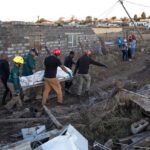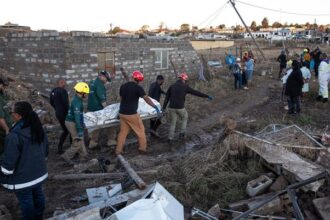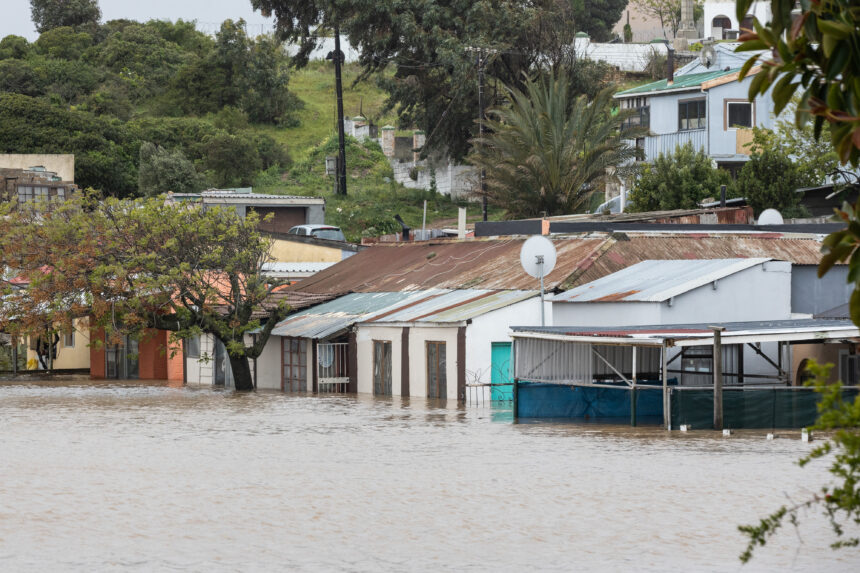
For many flood-hit families across the Western Cape, the worst part of the storm may not have been the rising water, the uprooted trees, or the nights spent without electricity. It may be what comes next, insurance forms, assessor visits, contractor quotes, rejected claims, hidden structural damage, and the financial reality of rebuilding in one of the most expensive property markets in South Africa. As Cape Town and surrounding districts begin drying out, the province’s insurance industry is now seeing what could become one of the busiest storm-claims periods in recent memory.
Across the Western Cape, the floodwaters may be slowly retreating, but the financial damage is only now beginning to surface.
From Cape Town’s northern suburbs to informal settlements across the metro, from commercial warehouses in industrial zones to wine farms in the Cape Winelands, property owners are now moving into what insurers describe as the second phase of the disaster, documenting losses, submitting claims, and discovering what their policies will, and will not, cover.
According to Moneyweb, insurers have already confirmed a noticeable increase in storm-related claims following days of torrential rainfall, gale-force winds, falling trees, roof failures, and severe flood damage.
Moneyweb reported:
“Torrential rain and gale-force winds that battered the Western Cape are triggering a surge in insurance claims.”
The report also warned that some of the most complex claims may not involve floodwater at all, but liability disputes involving uprooted trees, damaged vehicles, collapsed boundary walls, and questions over who is financially responsible when storm damage crosses property lines.
That warning is now being echoed by insurers operating directly inside the province.
In a separate report by IOL’s Weekend Argus, insurance executives confirmed that the recent storm system has triggered a sharp rise in claims involving structural and property damage.
Discovery Insure Chief Commercial Officer, Precious Nduli, said:
“We have seen an increase in weather-related claims following the recent storms in the Western Cape.”
The scale of damage is already beginning to show inside local government.
According to preliminary information released by the City of Cape Town, storm damage has already been confirmed at at least fifty city facilities.
Using rough repair estimates of around five hundred thousand rand per facility, the City’s early estimate of municipal damage already stands at approximately twenty-five million rand.
And that figure does not yet include private homes, apartment complexes, businesses, schools, farms, shopping centres, or transport infrastructure.
Commercial property owners are also being warned that visible floodwater may only tell part of the story.
In a separate warning carried by IOL Business, commercial recovery specialists say trapped moisture inside walls, floors, shelving, electrical systems, stockrooms, and machinery could create secondary damage days or even weeks after floodwaters disappear.
Solenco Commercial Sales Manager Wynand Deyzel warned:
“Trapped moisture in walls, floors, shelving, stockrooms and equipment can create problems days or weeks after floodwaters have receded.”
For homeowners, the financial risks may be even greater.
A recent SABC News report warned that as many as eighty percent of South African homeowners may currently be underinsured, meaning rebuilding costs may no longer match the insured value of their properties.
That could leave many Western Cape families facing large out-of-pocket repair bills, even if their claims are approved.
Meanwhile, the broader disaster picture continues to worsen.
Provincial authorities now confirm that more than 103,350 people have been affected across the Western Cape, while the official death toll stands at ten, with thousands still displaced and recovery operations continuing across the Cape Winelands, Overberg, and Garden Route.
For many residents, the floodwaters may be receding, but the true cost of the storm is only now becoming clear. Source: Moneyweb – Liesl Peyper; IOL – Tracy-Lynn Ruiters; IOL Business – Se-Anne Rall; SABC News – Staff Reporting.