What began as a series of weather alerts, flood warnings, and gale-force wind advisories has now become one of the most devastating storm disasters to hit the Western Cape in recent memory. Across flooded townships, damaged farming communities, cut-off roads, and overcrowded emergency shelters, the full human cost is still unfolding. And tonight, the numbers continue to climb.
South Africa’s severe weather crisis has now claimed eighteen lives, marking a grim national milestone as disaster management teams, humanitarian organisations, and municipal recovery crews continue emergency operations across some of the country’s hardest-hit regions.
According to the latest update published by Eyewitness News on Sunday, relief teams remain active on the ground as officials continue assessing damage, restoring access to isolated communities, and supporting thousands of displaced residents in the aftermath of two powerful cold fronts that swept across multiple provinces.
While the storm system has affected several parts of South Africa, the Western Cape continues to carry the heaviest burden.
New figures compiled by provincial and municipal disaster management officials show that at least 103,350 residents across the Western Cape have now been directly affected by the disaster.
The scale of the damage is staggering.
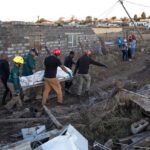
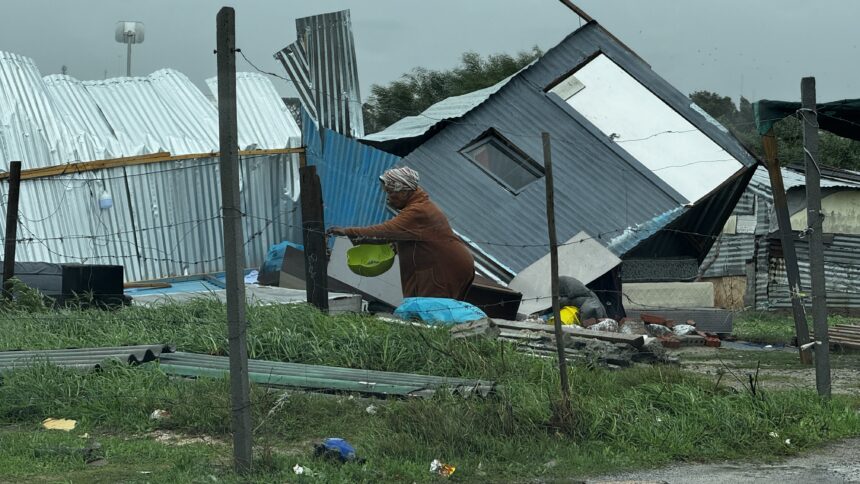
Authorities say 31,709 dwellings have been impacted, ranging from formal homes to informal structures, while at least 67 informal settlements across the province have reported flood damage, wind destruction, structural collapse, or forced evacuations.
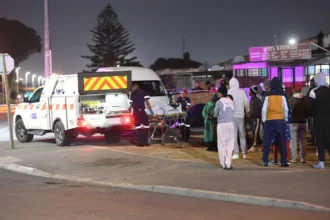
Cape Town’s Disaster Risk Management spokesperson Charlotte Powell says emergency teams have remained on high alert throughout the week as rescue, evacuation, and humanitarian support efforts continue across the metro.
Powell confirmed that some of the hardest-hit areas include Khayelitsha, Gugulethu, Philippi, Nyanga, Langa, Mfuleni, and sections of the Cape Flats where heavy rainfall, blocked drainage systems, and rising water levels left families stranded and community infrastructure under severe pressure.
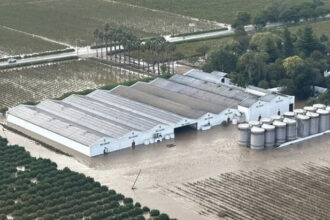
Beyond the metro, the Cape Winelands, Overberg, Breede Valley, Drakenstein, and several rural farming communities also continue to assess widespread damage to homes, roads, agricultural infrastructure, and municipal services.
Western Cape Local Government MEC Anton Bredell says the province remains in active recovery mode, with engineers, social development teams, disaster specialists, and municipal officials still working to reach isolated communities where access remains compromised.
The humanitarian impact continues to grow.
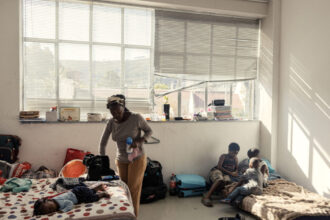
Emergency shelters remain operational.
Food parcels, blankets, hygiene supplies, and temporary housing support continue to be distributed as families begin the difficult process of rebuilding.
Community groups, faith-based organisations, local businesses, and national relief agencies have also joined recovery efforts, with donation drives now expanding across the province.
Gift of the Givers, one of South Africa’s largest humanitarian organisations, remains actively involved in flood relief support, while municipal teams continue to monitor vulnerable river systems, damaged road networks, and unstable infrastructure.
Although skies across the Western Cape have finally begun to clear, officials warn that the danger is far from over.
Standing water, weakened structures, damaged electrical systems, contaminated flood zones, and unstable road surfaces continue to pose serious risks to residents returning home.
And while the weather may be improving, for thousands of Capetonians, the real recovery is only just beginning.
Source: Eyewitness News – Staff Reporter. Source: Independent Online – Robin-Lee Francke.