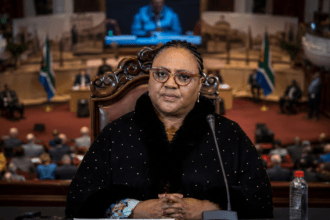
Cape Town: The Western Cape High Court has ordered a daughter to return ownership of her pensioner father’s home after finding that she took transfer of the property but failed to pay the R650,000 purchase price required under their written sale agreement. Acting Judge Siviwe Yake rejected the daughter’s claim that the stated price represented her undertaking to care for her father, dismissed allegations that he lacked mental capacity because of dementia, and said the Older Persons Act was designed to protect elderly people against property dispossession, family pressure and financial abuse.
Property Transfer Ends In High Court Battle
A family property arrangement has ended in a decisive Western Cape High Court ruling after a pensioner successfully challenged the transfer of his home to his daughter.
The dispute arose from a written sale agreement under which the father agreed to sell the property to his daughter for R650,000. The agreement recorded that transfer would take place only after payment of the purchase price and reserved the father’s right to cancel the transaction if the daughter breached its terms.
Despite those provisions, the property was transferred into the daughter’s name more than three years after the agreement was concluded, while the purchase price remained unpaid. The father later approached the High Court seeking cancellation of the sale and restoration of ownership.
The daughter resisted the application, arguing that the transaction should not be understood as a conventional sale requiring cash payment. She maintained that her father intended to transfer the home to her because she would continue caring for him and because he feared that his sons might take advantage of him.
Acting Judge Siviwe Yake rejected that interpretation, finding that it conflicted with the clear terms of the written agreement and with earlier correspondence from the daughter’s own attorney.
Written Agreement Required Payment
The court placed substantial weight on the wording of the sale agreement, which identified the R650,000 amount as the purchase price and linked transfer to payment.
The agreement also protected the father by allowing him to cancel if the daughter failed to fulfil her obligations. Those terms became central to the dispute because the daughter had already obtained registered ownership while denying that she was required to pay the amount recorded in the contract.
According to the reported judgment, the daughter argued that the R650,000 figure stood in place of her promise to care for her father. The court found that this explanation could not be reconciled with correspondence in which her attorney had expressly recorded that the father intended to sell the property to her while reserving a lifelong usufruct for himself.
A usufruct gives a person the right to use and enjoy property owned by someone else, often for the remainder of that person’s life. In this case, the arrangement would have allowed the pensioner to continue benefiting from the home even after ownership passed to his daughter.
The attorney’s correspondence supported the father’s case that the arrangement was a genuine sale and not merely a gift or care agreement dressed in the form of a property transaction.
The court found that the daughter’s failure to pay constituted a breach serious enough to justify cancellation. Once the sale was cancelled, she could no longer lawfully retain ownership.
Dementia Claim Rejected
The daughter also challenged her father’s ability to conduct the litigation by claiming that he had dementia and lacked the necessary understanding of the proceedings.
She relied on concerns raised after she approached a doctor about behavioural changes. The doctor referred the pensioner for further assessment, and a provisional note recorded a possible decline associated with dementia.
However, the pensioner did not attend the follow-up appointment, and the provisional concern did not amount to a confirmed diagnosis.
His legal representatives disputed the claim that he lacked mental capacity and produced a report from a specialist psychiatrist who assessed him in April last year.
The specialist found no history of mental illness, confirmed that the pensioner’s cognition remained intact and found no clinical signs of Alzheimer’s disease. The report concluded that he remained capable of managing his own affairs.
The court accepted that evidence and rejected the suggestion that the pensioner could not understand the consequences of the application or instruct his lawyers.
The finding was important because allegations of incapacity can have serious legal consequences. A person who lacks the ability to understand and manage their affairs may require formal assistance or representation, but a family member cannot simply rely on suspicion or unconfirmed medical concerns to displace that person’s legal autonomy.
Peripheral Family Disputes Did Not Change The Case
The daughter also raised several wider family disputes during the proceedings, including conflict over her same-sex relationship and the return of one of her siblings to the property.
The court found that those matters had no bearing on the central legal question: whether she had complied with the sale agreement and acquired the right to retain ownership.
Acting Judge Yake said the litigation concerned the daughter’s obligation to pay the agreed purchase price, not the broader breakdown in family relationships.
The court’s approach kept the case focused on the contract, the transfer and the failure to pay. Personal disagreements, however painful, could not change the legal effect of the written terms.
The judgment also recorded that the daughter had been unwilling to pursue mediation under Rule 41A of the Uniform Rules of Court.
Rule 41A requires parties to consider whether a civil dispute could be resolved through mediation before proceeding fully through litigation. It does not force parties to settle, but it encourages them to explore a less adversarial route where appropriate.
Acting Judge Yake noted that family disputes are often better resolved outside court because litigation can deepen conflict and permanently damage relationships. In this case, however, mediation did not take place and the court was required to decide the ownership dispute.
Court Rejects Daughter’s Care Argument
The daughter presented her refusal to return the property as an attempt to protect her father and ensure his safety.
The court was not persuaded.
Acting Judge Yake found that the daughter’s position amounted to retaining property that did not lawfully belong to her while presenting that conduct as care and concern.
The judge said it was regrettable that she had drawn her elderly father into litigation despite knowing his advanced age. Her stated concern for his welfare did not excuse the failure to comply with the written sale agreement or justify keeping the property after the transaction was cancelled.
The ruling drew a clear distinction between genuine care and control over an older person’s assets.
Family members may provide accommodation, support, transport, medical assistance or daily care, but those contributions do not automatically give them ownership of an elderly relative’s property. Any transfer must comply with the terms agreed by the parties and with the legal requirements governing property transactions.
Where a written sale records a purchase price, a party cannot later replace that obligation with an informal understanding unless the contract was properly varied or the evidence supports a different legal arrangement.
Older Persons Act Central To Judgment
Acting Judge Yake linked the dispute to the protections contained in the Older Persons Act, which is intended to safeguard elderly people against abuse, neglect, exploitation and unlawful interference with their property.
The judge said the legislation was enacted precisely to address situations involving property dispossession, family pressure and financial abuse.
Financial abuse of older people can take many forms. It may involve unauthorised withdrawals, pressure to sign documents, misuse of bank cards, changes to wills, manipulation of powers of attorney or transfers of property that do not reflect the older person’s true wishes.
In family settings, the abuse can be difficult to identify because financial arrangements are often informal and mixed with care, emotional dependence and longstanding personal conflict.
A relative may genuinely provide support while also exercising growing control over an elderly person’s finances. The legal difficulty is separating legitimate assistance from conduct that deprives the older person of ownership, income or decision-making power.
The High Court’s ruling sends a clear message that expressions of concern cannot be used to justify retaining property where the underlying legal requirements have not been met.
Why Written Family Agreements Matter
The case also highlights the importance of clear documentation when property is transferred between relatives.
Families often rely on trust and verbal promises, especially where a parent wants to assist a child or secure future care. However, property transfers involve substantial legal consequences and should not be treated as informal domestic arrangements.
A written agreement should clearly record whether the transaction is a sale, donation, inheritance arrangement or transfer in exchange for care. It should explain when payment is due, whether the seller will retain a right to live in the property and what will happen if either party fails to perform.
Where a lifelong right of occupation or usufruct is intended, that right should be properly recorded and registered where necessary.
Independent legal advice can also help prevent later disputes. A parent and child may believe they share the same understanding, only to discover years later that they interpreted the arrangement differently.
In this case, the written sale agreement and the attorney’s earlier correspondence gave the court objective evidence against which to test the daughter’s later explanation.
Mental Capacity Requires Proper Evidence
The judgment further illustrates the care courts must take when a party’s mental capacity is challenged.
Older age does not by itself mean that a person cannot manage property, instruct lawyers or make decisions. Memory problems, physical frailty or family concern also do not automatically establish legal incapacity.
Courts require credible medical evidence directed at the person’s ability to understand the nature and consequences of the decision or proceeding in question.
A provisional suspicion of dementia carries less weight than a specialist assessment confirming intact cognition and no clinical signs of Alzheimer’s disease.
The High Court accepted the psychiatrist’s report as evidence that the pensioner remained capable of managing his affairs.
That finding protected his right to make decisions about his property and to approach the court in his own name.
Ownership Restored To Father
The High Court ultimately found that the daughter breached the sale agreement by failing to pay the R650,000 purchase price and had no lawful basis to retain the property.
The transaction was cancelled and ownership was restored to the pensioner.
The reported decision does not suggest that every unpaid family property arrangement will produce the same result. Each case depends on the wording of the contract, the conduct of the parties and the evidence placed before the court.
However, the central principle is straightforward: once parties record a property sale in writing, the obligations in that agreement remain enforceable unless they are lawfully changed.
Care, family loyalty and personal concern cannot replace payment where the contract requires payment, nor can unconfirmed allegations of incapacity be used to defeat an elderly person’s property rights.
The ruling stands as both a contract decision and a warning about the vulnerability of older people when family care and property ownership become intertwined.
Q&A
What was the dispute about?
A pensioner sold his home to his daughter for R650,000, but she took transfer of the property without paying the agreed purchase price.
What did the sale agreement require?
The agreement stated that transfer would take place on payment of the purchase price and allowed the father to cancel if the daughter breached the contract.
What did the daughter argue?
She claimed the R650,000 amount represented her undertaking to care for her father rather than an obligation to make payment.
Why did the court reject that argument?
The claim conflicted with the written agreement and with correspondence from her attorney confirming that the father intended to sell the property while retaining a life usufruct.
Did the father have dementia?
The daughter raised concerns about dementia, but a specialist psychiatrist found that his cognition was intact and that there were no clinical signs of Alzheimer’s disease.
Why did the Older Persons Act matter?
The court said the Act protects elderly people against financial abuse, family pressure and property dispossession.
What happened to the property?
The High Court cancelled the sale and restored ownership to the pensioner.
What is a usufruct?
A usufruct is a legal right allowing a person to use and enjoy property owned by someone else, often for the remainder of that person’s life.
Why is the ruling important?
It shows that family care arrangements do not override written property contracts and that claims about an older person’s mental capacity require proper medical evidence.
SAI Search Summary
The Western Cape High Court ordered a daughter to return her pensioner father’s home after finding that she took transfer of the property without paying the R650,000 purchase price required under their written sale agreement. Acting Judge Siviwe Yake rejected the daughter’s argument that the amount represented an undertaking to care for her father and accepted specialist psychiatric evidence showing that he remained cognitively capable. The court said the Older Persons Act protects elderly people against property dispossession, family pressure and financial abuse.
Sources: IOL, Chevon Booysen; Western Cape High Court, Acting Judge Siviwe Yake as quoted in the reported judgment; South African Government, Older Persons Act.