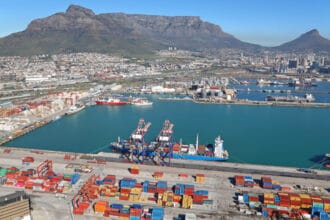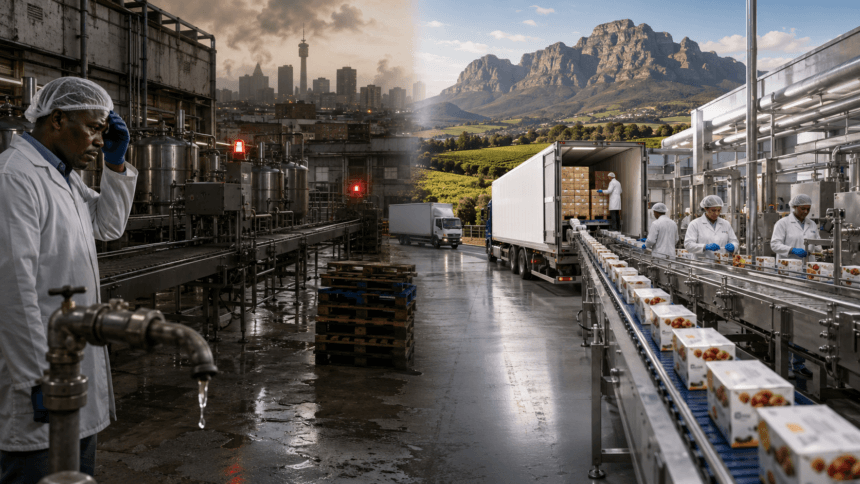
Cape Town: Johannesburg’s worsening water reliability has moved from a municipal service problem into a business and investment warning after food producer Libstar confirmed that interrupted or unavailable water affected 25 production shifts at its Dickon Hall Foods factory, contributing to manufacturing losses as production lines were transferred from Johannesburg to Montagu Foods in the Western Cape, although the company’s consolidation plan also formed part of a broader restructuring driven by labour problems, costs and an effort to simplify its operations.
The disruption provides one of the clearest recent examples of how failing municipal infrastructure can affect decisions about where South African companies manufacture. It also raises a difficult question for Cape Town and the Western Cape: can more reliable basic services become a lasting investment advantage, or will growing demand eventually place the province’s own water system under the same pressure?
Libstar has not described the transfer as a wholesale relocation to Cape Town, nor has it said that water shortages alone caused the restructuring. The group began integrating the remaining Dickon Hall Foods business into Montagu Foods as part of a multi-year programme to simplify its portfolio, reduce duplication and improve manufacturing efficiency.
However, its latest trading update confirms that water interruptions became a direct operating problem at the Johannesburg plant. The loss of production contributed to weak cost recovery at Dickon Hall Foods and placed additional pressure on Libstar’s profit margins during the first 21 weeks of this year.
The case shows that water security is no longer only a question of whether households can open their taps. For manufacturers, it determines whether machinery can run, products can be cleaned safely, food standards can be maintained and workers can complete a production shift.
Twenty-Five Shifts Affected By Water Interruptions
Libstar said 25 production shifts at Dickon Hall Foods were affected because water was interrupted or unavailable.
The group did not publish the exact number of production hours lost, the value of products that could not be manufactured or the financial loss attributable solely to the interruptions. It did, however, identify water shortages and labour challenges as factors that disrupted production and caused the operation to under-recover its manufacturing costs.
In practical terms, under-recovery means that the factory continued carrying expenses such as wages, leases, maintenance, utilities and equipment costs while producing less saleable output than planned. Those fixed expenses then had to be spread across fewer units, reducing profitability.
Libstar reported that group revenue for the first 21 weeks increased by only 0.9% from the corresponding period, with volume growth of 0.3% and price and product mix contributing a further 0.6%. Gross margins declined by between one and 1.5 percentage points, with weak cost recovery at Dickon Hall Foods and dry-condiment operations among the factors cited.
“Libstar continued to generate resilient cash flows during the current period despite weaker trading,” the group said.
It added that management had accelerated measures including pricing adjustments, tighter control of labour and manufacturing costs and focused remediation at underperforming operations.
The company expects its performance to improve during the second half as seasonal demand strengthens and the restructuring work progresses.
Why A Food Factory Cannot Simply Work Around Dry Taps
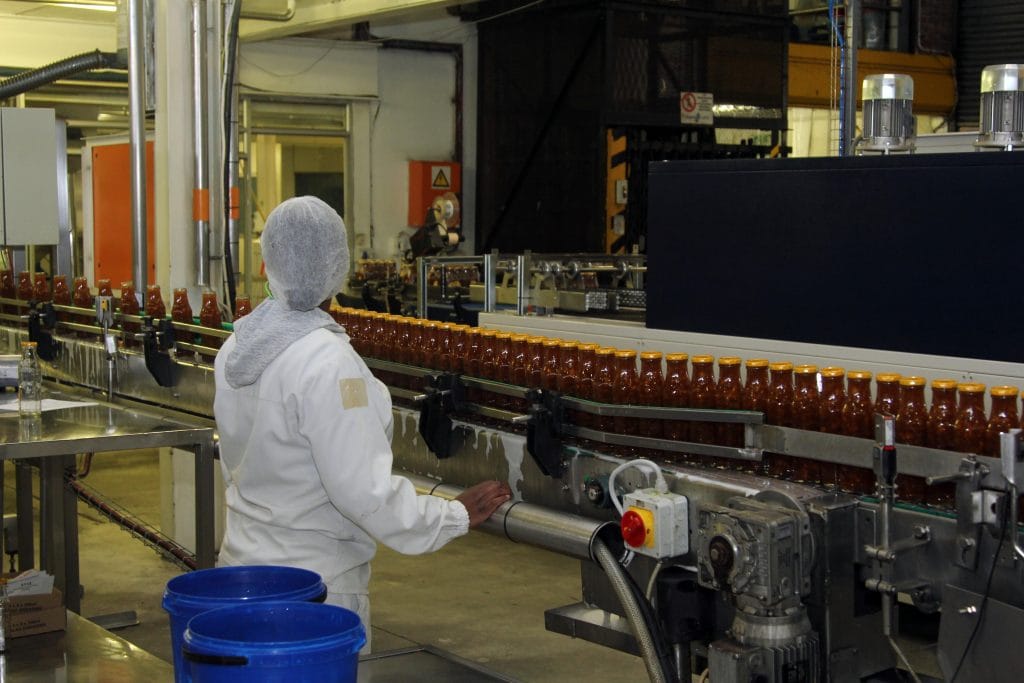
Water is a critical production input at Dickon Hall Foods rather than only a convenience for bathrooms and kitchens.
An earlier detailed account of the Southdale facility recorded daily water use of approximately 246,000 litres for cooking, cleaning and boiler operations. At the time, the plant operated 16 production lines and manufactured products including chutney, baking powder, noodles and other wet and dry food products.
Food manufacturing requires reliable water for ingredients, steam, washing, sanitation and equipment cleaning. A plant must comply with strict hygiene and food-safety standards, which means it cannot simply continue running normally when water pressure falls or the supply stops.
A temporary interruption can force a factory to suspend a line even where enough raw ingredients, packaging and staff are available. Production may remain halted after the municipal supply returns while reservoirs refill, pressure stabilises, equipment is cleaned and quality-control teams confirm that operations can safely resume.
The effects can extend beyond the factory. Delayed production may disrupt deliveries to retailers, leave transport fleets idle, create overtime costs and affect suppliers whose ingredients cannot be accepted or processed at the scheduled time.
Water tankers and storage tanks can provide short-term protection, but a plant consuming hundreds of thousands of litres a day requires far more than a few emergency containers. Installing sufficient storage, treatment and pumping capacity involves capital expenditure and creates another operating system that the company must maintain.
Production Lines Move To Montagu
Libstar transferred Dickon Hall Foods production lines into operation at Montagu Foods during May and June. Additional lines at a new site are expected to be commissioned by the end of July.
Montagu Foods operates in Montagu in the Western Cape, rather than in the Cape Town metropolitan area. The distinction is important because the transfer should not be described as a factory move to Cape Town.
The Western Cape connection remains economically significant. Manufacturing capacity previously associated with Libstar’s Johannesburg operation is being absorbed into a Western Cape facility, bringing production equipment, output and future investment into the province.
Libstar had already announced the consolidation before its latest account of the water disruptions. The group referred to the integration in earlier financial results as part of its strategic reset and portfolio simplification programme.
That chronology means it would be inaccurate to say Johannesburg’s water crisis single-handedly caused Libstar to leave. The group was responding to several pressures, including weak cost recovery, labour difficulties, duplicated production structures and the need to improve the performance of its wet-condiments business.
Water nevertheless became a material operational problem while the restructuring was under way. It affected actual production shifts and reinforced the risks attached to keeping water-intensive manufacturing in a city where supply interruptions have become frequent.
What Is Confirmed And What Is Not
| Verified finding | What it means |
| Twenty-five Dickon Hall Foods shifts were affected by interrupted or unavailable water | Water failures directly disrupted manufacturing |
| Libstar cited labour challenges and water shortages together | Water was not the only operational problem |
| Production lines moved to Montagu Foods in May and June | Manufacturing capacity is being consolidated in the Western Cape |
| Further line commissioning is expected by the end of July | The integration is still in progress |
| The consolidation formed part of an existing strategic reset | It was not announced as a sudden water-only relocation |
| The Johannesburg plant historically used about 246,000 litres daily | Reliable supply is essential to normal factory operation |
| Libstar has not disclosed job transfers or losses linked specifically to water | Employment effects must not be assumed |
The evidence supports a clear conclusion: Johannesburg’s unreliable water supply damaged production at a major food operation while Libstar was deciding how and where to consolidate capacity.
It does not support a claim that the entire group has left Gauteng, that every Dickon Hall job has moved to the Western Cape or that municipal water was the sole reason for the integration.
Johannesburg’s Water System Remains Under Pressure
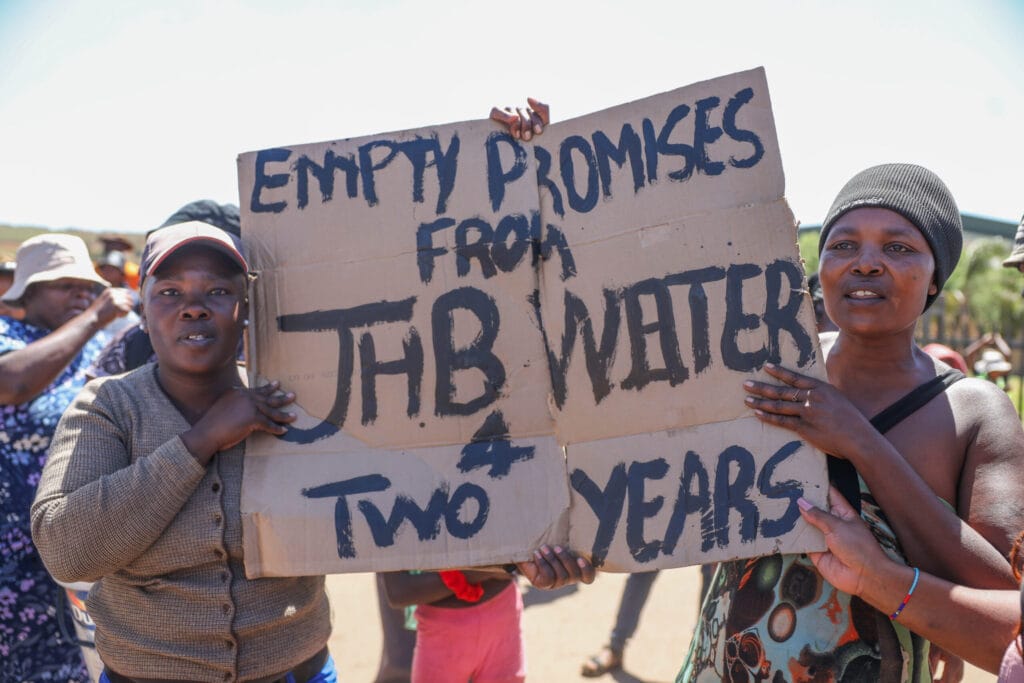
The Libstar disruption occurred against a wider water crisis affecting Johannesburg households and businesses.
Johannesburg’s supply chain depends heavily on Rand Water, which treats and pumps bulk water to the city. Johannesburg Water then stores and distributes that water through municipal reservoirs, towers and pipelines.
Problems can develop at several points in the system. Rand Water maintenance or pumping failures may reduce the volume entering Johannesburg, while leaks, power interruptions, low reservoir levels and ageing municipal infrastructure can prevent available water from reaching customers reliably.
The City of Johannesburg established an intergovernmental response involving municipal, provincial and national authorities as prolonged shortages affected several communities earlier this year. Officials have acknowledged that the network faces immediate supply constraints as well as longer-term infrastructure problems.
Johannesburg Water has rejected claims that the city has reached a formal Day Zero, saying the system remains operational but under severe pressure. Its position is that localised interruptions and pressure management do not mean the entire network has collapsed.
That official distinction is important, but it offers limited comfort to a manufacturer that cannot run a production shift. A city does not need to reach a complete system-wide failure before unreliable supply begins influencing business decisions.
From an investor’s perspective, the relevant question is whether a facility receives sufficient water at the required pressure, quality and time. A technically functioning citywide system can still fail that test at a specific industrial site.
Planned Maintenance Adds Further Risk
Rand Water began a major planned maintenance programme at its Palmiet and Zuikerbosch systems at the end of May, with work extending into July.
The utility said the programme includes electrical work, motor installations, valve replacements, thrust-bearing work and pipeline connections intended to improve pumping reliability, standby capacity and operational flexibility.
Some pumps must be temporarily shut down while the work takes place. Rand Water warned that the resulting reductions could affect municipalities, direct industrial customers, mines and other major users across Gauteng and neighbouring provinces.
The utility said it gave customers advance notice so that municipalities and industries could prepare contingency plans.
Planned maintenance is different from an unexpected failure. It is necessary to prevent larger breakdowns and should improve the system over time. However, it can expose the limited resilience of downstream municipal networks when reservoirs are already low, local pipes are leaking or demand exceeds available storage.
A well-maintained city distribution system should be able to absorb temporary reductions more effectively. Johannesburg’s slow recovery after bulk-supply disruptions has repeatedly shown that restoring incoming water does not immediately restore normal pressure to every suburb and industrial area.
High-lying locations and areas at the end of the distribution network often wait longer for supply to return.
Business Costs Continue After Production Stops
A factory does not stop paying expenses when its water stops.
Workers may still report for duty, transport contractors may arrive, raw materials may already be on site and customers may continue expecting deliveries. Equipment finance, insurance, rent, security and maintenance costs continue regardless of output.
The business may then need to purchase emergency water, install tanks or reschedule shifts. Catch-up production can require overtime and additional energy, while spoiled ingredients or partly completed products may need to be discarded.
For food companies, an interrupted wash or cooking cycle can create a compliance risk. Product cannot simply be released to retailers unless the manufacturer can prove that safety and quality standards were maintained.
These costs rarely appear as a separate line marked “municipal failure” in financial statements. They are absorbed into weaker margins, lost volumes, exceptional expenses or lower productivity.
Libstar’s disclosure is therefore valuable because it connects water interruptions directly to production performance rather than treating the issue only as a public-service complaint.
A Warning For Johannesburg’s Industrial Base
Johannesburg remains South Africa’s commercial centre, with a large consumer market, extensive logistics networks, established suppliers and access to skilled labour. One company’s restructuring does not mean industry is abandoning the city.
The Libstar case does, however, add to evidence that municipal service reliability has become a competitive factor between cities and provinces.
Manufacturers make long-term decisions about factories, machinery and distribution centres. Once a production line has been moved and commissioned elsewhere, reversing that decision can be expensive and operationally disruptive.
A city may therefore lose future investment gradually rather than through a dramatic announcement. Companies can direct new equipment to another plant, expand a different regional operation or decline to replace ageing machinery at a troubled site.
The resulting loss may only become visible years later through slower job creation, lower property investment and reduced demand for local suppliers.
Johannesburg’s danger is not simply that factories may close during a water outage. It is that boards making their next capital-allocation decision may conclude that another location offers lower municipal risk.
The Western Cape’s Opportunity
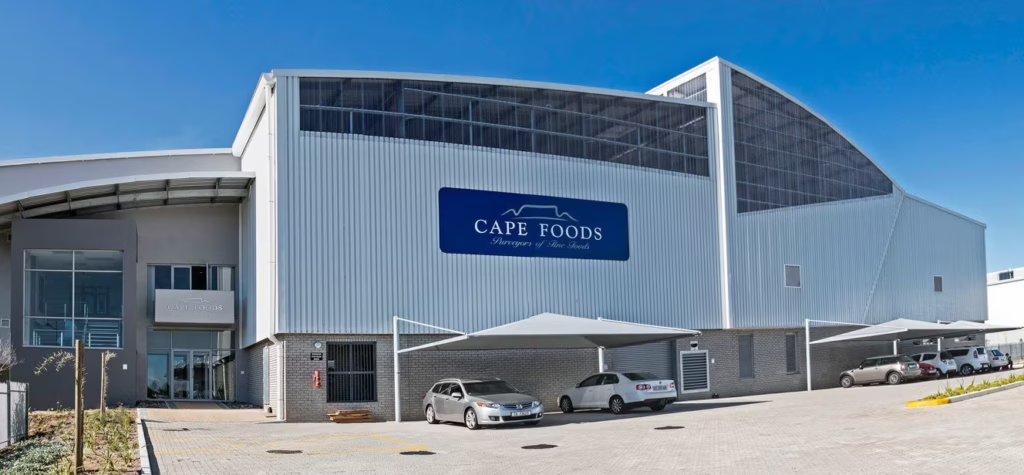
The transfer of production capacity to Montagu Foods gives the Western Cape an opportunity, but it should not be mistaken for proof that the province is immune to water stress.
Cape Town came close to Day Zero during the drought that peaked in 2018. That experience forced the City, businesses and households to reduce consumption sharply and accelerated planning for groundwater, water reuse and desalination.
The City is pursuing a programme intended to reduce its dependence on dams by adding diversified water sources. These include aquifer extraction, permanent water reuse and a proposed desalination facility at Paarden Eiland.
Cape Town has also looked to private-sector participation in major water and energy infrastructure projects.
The long-term economic argument is straightforward. Reliable water can strengthen the region’s case when manufacturers compare investment locations, but that advantage will survive only if new supply projects are delivered before demand overtakes capacity.
Population growth, new housing, tourism and industrial expansion all increase consumption. Attracting water-intensive businesses without expanding supply would eventually weaken the advantage that drew them.
Cape Town Must Avoid Complacency
Cape Town’s water-security reputation rests partly on the lessons of its own crisis. The City has developed demand-management systems, public consumption reporting and plans for alternative supply, but several major projects require years of engineering, environmental approval, procurement and construction.
The proposed Paarden Eiland desalination plant has entered an environmental assessment and public-participation process. Permanent water reuse is also central to the City’s strategy, with treated wastewater expected to be purified to drinking-water standards and blended into the broader supply system.
Both options carry costs and public concerns. Desalination uses significant energy and must manage concentrated brine, while direct or indirect potable reuse requires strong public confidence in treatment, monitoring and safety.
Delays would leave Cape Town more dependent on rainfall and the regional dam system for longer than intended.
The Libstar case should therefore be read as both an opportunity and a warning. The Western Cape may gain investment when other cities fail to provide reliable services, but it must continue building capacity if it wants to retain that investment.
Water Becomes The Next Infrastructure Battleground
South African businesses spent years adapting to unreliable electricity. Companies installed generators, batteries and solar systems, turning private power investment into a routine cost of doing business.
Water is harder to replace.
A company can generate electricity on its own property, but securing hundreds of thousands or millions of litres of safe water each day is more complicated. Boreholes depend on geology and licences, tanker supply is expensive, and on-site treatment and storage systems occupy space and require specialised management.
Food manufacturers face an additional burden because water quality must meet strict safety standards.
This makes water reliability a potential next battleground for investment. Municipalities that provide stable supply may attract capacity from regions where companies must repeatedly halt production or fund costly private alternatives.
The effect will not be limited to food. Hospitals, hotels, data centres, laundries, beverage producers, chemical plants, construction companies and many other employers depend on predictable water.
The municipalities that understand that link will treat water infrastructure as economic infrastructure rather than only a household service.
Questions Remain For Libstar
Libstar’s public disclosures explain the strategic direction but leave several questions unanswered.
The group has not disclosed how much revenue was lost during the 25 affected shifts, how much emergency water cost or whether customers experienced delayed deliveries. It has also not said whether water interruptions changed the timing or scale of the Montagu consolidation.
No detailed public account has been given of how many positions at Dickon Hall Foods are affected, whether employees were offered transfers or whether the Western Cape operation will create additional permanent jobs.
The company has also not identified the specific Johannesburg Water incidents that caused each interruption.
These are important questions because they would show the full economic cost of the municipal failures and whether employment moved alongside machinery.
CTNews has based this report on the company’s market disclosures, official water-system information and published statements. Any further response from Libstar, Johannesburg Water, the City of Johannesburg, the City of Cape Town or the Western Cape Government should be added as an update.
What The Case Means For Capetonians
The story matters to Cape Town because it offers a glimpse of how service delivery shapes economic geography.
Factories do not always relocate through one headline-making decision. Production lines are transferred, investment is redirected and expansion occurs where management believes it can operate with fewer interruptions.
Western Cape communities may benefit through capital investment, supplier demand and employment. At the same time, industrial expansion can place additional pressure on housing, roads, electricity and water.
The province must therefore connect investment promotion to infrastructure planning. Winning business from another city is not a lasting success if local systems later fail under the added demand.
For Libstar, the immediate task is to complete the integration and restore margins. For Johannesburg, the case is evidence that its water problems are reaching factory floors. For the Western Cape, it is proof that reliable services can attract production, but also a warning that reliability must be protected.
Q&A
Did Libstar move its entire business from Johannesburg to Cape Town?
No. Libstar is integrating the remaining Dickon Hall Foods business into Montagu Foods in Montagu, Western Cape. The group continues to operate other businesses in different parts of South Africa.
Is Montagu part of Cape Town?
No. Montagu is a town in the Western Cape, outside the Cape Town metropolitan area.
Did water shortages cause the consolidation?
Water shortages disrupted production and contributed to weak manufacturing-cost recovery, but they were not the only cause. Libstar had already begun a broader restructuring involving labour, cost control, portfolio simplification and operational efficiency.
How many production shifts were affected?
Twenty-five shifts were affected by interrupted or unavailable water.
How much water did Dickon Hall Foods use?
An earlier account of the factory reported daily use of about 246,000 litres for cooking, cleaning and boiler operations.
When were production lines transferred?
Libstar said lines were transferred into operation at Montagu Foods during May and June. Additional line commissioning is expected to be completed by the end of July.
Has Libstar disclosed the value of the lost production?
No. The company has not publicly separated the financial cost of the water interruptions from other operating pressures.
Were jobs moved to the Western Cape?
Libstar has not published a detailed breakdown of job transfers, job losses or new positions linked specifically to the integration.
Is Johannesburg at Day Zero?
Johannesburg Water says the city has not reached a formal Day Zero. It acknowledges that the system is under pressure and that some areas experience prolonged or repeated interruptions.
Why does Cape Town have an advantage?
Cape Town’s recent record of comparatively more stable services, together with its plans for new water sources, may lower infrastructure risk for investors. That advantage depends on the City completing new supply projects as demand grows.
Could Cape Town face its own water problems?
Yes. Cape Town remains vulnerable to drought, population growth and project delays. The City is developing groundwater, reuse and desalination sources to reduce its dependence on rainfall-fed dams.
Why is water so important to manufacturers?
Factories use water in production, cleaning, cooling, steam generation and sanitation. Food plants cannot legally or safely operate without sufficient water of the required quality.
SAI Search Summary
Libstar says interrupted or unavailable water affected 25 production shifts at Dickon Hall Foods in Johannesburg, contributing to weak manufacturing-cost recovery alongside labour and cost pressures. The company transferred production lines to Montagu Foods in the Western Cape during May and June, with further commissioning expected by the end of July. The integration formed part of a broader restructuring and was not caused solely by water shortages. The case shows how unreliable municipal services can influence manufacturing investment, while highlighting the need for Cape Town and the Western Cape to complete water-reuse, groundwater and desalination projects as industrial demand grows.
Source: Libstar Holdings – company trading update and corporate disclosures; Business Day – Nompilo Zulu; Engineering News – Simone Liedtke; Rand Water – official maintenance statement; Johannesburg Water and City of Johannesburg – official water-system statements; City of Cape Town – Water Strategy, water-reuse programme and Paarden Eiland desalination process; Bloomberg – reporting on Cape Town water-security investment.