Cape Town: The Western Cape is expanding its use of specially assessed Smart Trucks that can carry more freight in fewer journeys, with the provincial government arguing that the system could reduce heavy-vehicle traffic, fuel use, emissions and road damage while improving safety on major freight corridors, although operators will only qualify after their vehicles, fleets and proposed routes pass strict performance, bridge and road-wear assessments.
The initiative forms part of the Western Cape Mobility Department’s wider Freight Focus programme, which brings together road-freight regulation, truck compliance, driver wellness, secure stopping facilities, logistics data and efforts to improve the movement of goods between farms, factories, ports and markets.
Unlike ordinary heavy vehicles, Smart Trucks are approved under a Performance-Based Standards system. The model does not judge a truck only by conventional limits governing its length, configuration or gross weight. It assesses how the complete vehicle performs under demanding conditions, including braking, stability, turning, road wear and the ability to travel safely on a specified route.
The Western Cape introduced its provincial PBS policy last year and invited eligible heavy-vehicle and logistics operators to begin applying for permits from 1st November. The province says the approach can improve freight efficiency without weakening road-safety controls, because each proposed combination must pass a series of technical and operational checks before it is allowed onto an approved corridor.
More Freight With Fewer Truck Journeys
The central argument behind Smart Trucks is that a carefully designed heavy vehicle can carry a larger payload than a conventional combination while completing the same freight task with fewer journeys.
For businesses moving agricultural produce, manufactured goods, timber, minerals, construction material or retail stock, fewer trips can reduce fuel use, driver hours and operating costs. For other road users, the potential benefit lies in reducing the total number of heavy vehicles needed to move a fixed volume of goods.
This does not mean that every larger truck automatically qualifies as a Smart Truck. The system is based on measured performance rather than unrestricted increases in weight or size. A vehicle must demonstrate that it can turn, brake, remain stable and distribute its load without creating unacceptable risks for bridges, roads or surrounding traffic.
The Western Cape Mobility Department says the model allows designers and operators to develop combinations that are better matched to particular freight tasks and routes. A vehicle intended for a wide national highway, for example, may not be suitable for a narrow mountain pass, an urban street network or a route containing bridges with limited capacity.
Each application must therefore be considered in relation to the roads on which the operator wants to travel.
National Programme Produced Fewer Trips
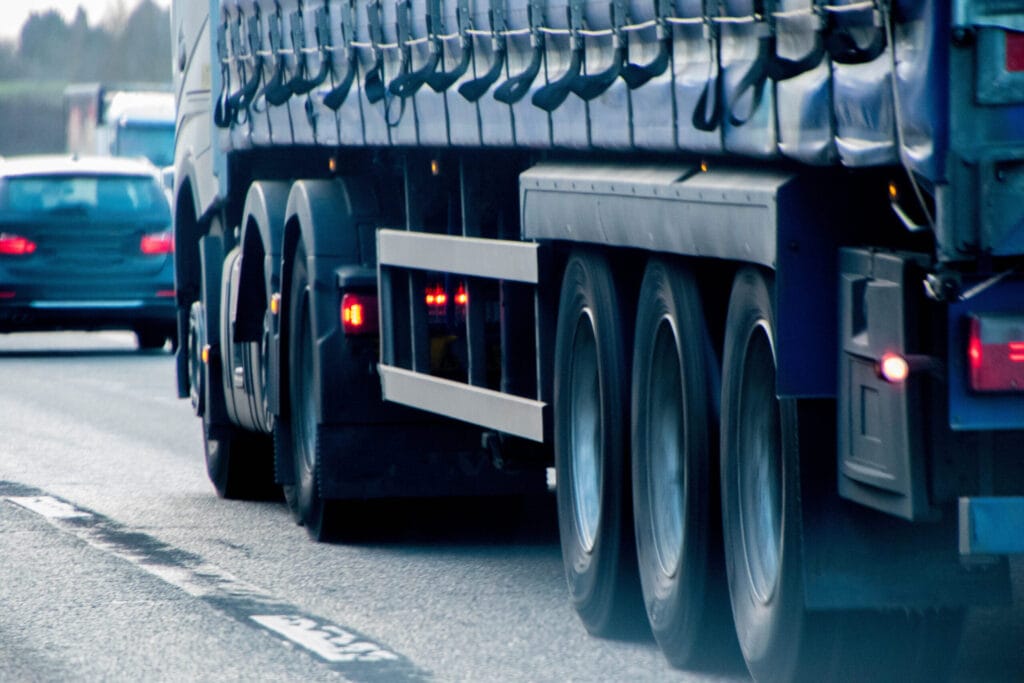
The department has cited research from the Council for Scientific and Industrial Research showing substantial efficiency gains from Smart Trucks already operating elsewhere in South Africa.
According to the provincial summary of the research, participating PBS fleets completed 31% fewer trips than would have been needed using conventional trucks. This represented 834,911 avoided journeys over the period measured.
The research also recorded annual fuel savings valued at approximately R877.4 million and a reduction of about 107,234 tonnes of carbon dioxide emissions a year. The department says improved load distribution reduced estimated road-wear costs by roughly R26,500 per vehicle annually.
These figures are drawn from the broader South African Smart Truck programme. They should not be presented as results already achieved solely inside the Western Cape.
The province has historically had limited PBS activity because it lacked a dedicated policy framework. Its new system is intended to provide a formal route through which qualifying operators can apply for approval while giving authorities greater oversight of where and how the vehicles operate.
The eventual Western Cape impact will depend on the number of approved vehicles, the freight sectors that adopt them and the routes opened to Smart Truck operations.
Safety Standards Remain Central
Larger payloads can raise understandable concerns among motorists who already share the N1, N2, N7 and other arterial routes with heavily loaded trucks.
The Mobility Department argues that Smart Trucks should not be confused with overloaded or poorly maintained conventional vehicles. Overloading occurs when a vehicle exceeds the legal or approved limits governing its operation. A PBS vehicle carries a load permitted under a specific approval after demonstrating that it meets the required safety and infrastructure standards.
The national research cited by the department found that PBS vehicles recorded 1.82 crashes per million kilometres, compared with 3.01 crashes per million kilometres for conventional heavy vehicles. This amounts to a crash-rate reduction of about 40%.
The department attributes the difference to improved vehicle design, fleet management, maintenance and driver controls.
However, the figure does not mean Smart Trucks are risk-free. Their safe operation still depends on mechanical condition, responsible loading, qualified drivers, fatigue management, speed compliance and enforcement of the routes for which permits are issued.
A technically advanced vehicle can still become dangerous when it is poorly maintained or operated irresponsibly.
Operators Must Meet Fleet Requirements
All Smart Trucks operating under the South African PBS system must form part of a fleet accredited through the Road Transport Management System.
RTMS is a voluntary self-regulation programme through which participating operators commit to standards covering vehicle maintenance, driver behaviour, overload prevention, daily safety inspections, legal compliance, fatigue management and road-safety performance.
The requirement means that approval is not based only on the truck itself. Authorities also examine the operating environment around the vehicle, including the company responsible for maintaining it and managing its drivers.
Operators seeking a Western Cape permit must first obtain concept approval and complete the necessary safety, bridge and road-wear assessments. Their applications then go through the Smart Truck Review Panel before provincial approval can be considered.
The technical work must be carried out by suitably accredited PBS assessors. Route suitability remains a critical part of the process because a vehicle that performs safely on one corridor may not be approved for another.
The system creates different operating levels with varying route permissions and payload capacity. Lower-level vehicles may qualify for broader road access, while more specialised combinations carrying substantially heavier loads face tighter route restrictions.
The most extreme combinations are generally intended for controlled, private or remote environments rather than ordinary public roads.
Minister Links Policy To Economic Growth
Western Cape Mobility Minister Isaac Sileku has described Smart Trucks as part of the province’s effort to modernise freight transport while supporting economic growth and employment.
“This initiative is central to the Western Cape Government’s commitment to modernising and driving economic growth and jobs,” Sileku said when the permit process was announced.
The province depends heavily on road freight to move agricultural exports, manufactured products, retail goods and port-bound cargo. Disruption on major routes can quickly affect supermarkets, production lines, farming operations and export schedules.
Freight efficiency therefore carries a wider economic impact. Lower transport costs can improve the competitiveness of Western Cape producers, particularly businesses located far from the Port of Cape Town or major distribution centres.
At the same time, the province must balance that economic need against the effect of heavy vehicles on road maintenance, traffic congestion and public safety.
The Smart Truck policy is intended to address that balance through controlled productivity increases rather than allowing operators to move larger loads without additional oversight.
Fewer Trips Do Not Mean Unrestricted Access
The possibility of moving more goods in fewer journeys may be attractive to operators, but approval does not give Smart Trucks unrestricted access to every Western Cape road.
Each vehicle must be matched to a defined freight task and suitable route. Authorities can restrict a combination to roads capable of accommodating its dimensions, axle loads, turning characteristics and bridge impact.
This is particularly important in the Western Cape, where freight routes include national highways, mountain passes, farming roads, urban corridors and approaches to industrial areas and ports.
A vehicle that operates efficiently between large logistics hubs may be unsuitable for streets with tight corners, low clearances, steep gradients or vulnerable road surfaces.
Permit conditions will therefore matter as much as vehicle design. Effective enforcement will be needed to ensure that operators remain on approved routes and comply with loading, maintenance and driver requirements.
The province’s freight-tracking capabilities may assist with this work by providing live and historical views of truck movements. The Western Cape Freight Demand Model also gives planners information about where freight travels, what commodities are being moved and where pressure on the road network is likely to increase.
Data Will Guide Freight Planning
The Western Cape Mobility Department describes its Freight Demand Model as South Africa’s only provincial freight model.
The system allows planners to examine truck movements, commodity flows and the relationship between roads, railways, ports and economic activity. This information can support decisions about route investment, overloading enforcement, truck facilities and areas where freight should be shifted from road to rail.
Smart Truck permits can also be assessed against this wider picture. Authorities need to understand not only whether an individual vehicle performs safely, but whether larger combinations will add pressure to congested corridors, intersections or port approaches.
Live and historical tracking data can help identify freight bottlenecks, monitor route use and improve enforcement against overloading or unauthorised operation.
It may also assist with planning road maintenance. Heavy freight traffic causes wear over time, and accurate movement data can help authorities identify where strengthening, rehabilitation or additional safety measures will be required.
Truck Stops Form Part Of The Plan
The province’s freight programme extends beyond the vehicles themselves.
Long-distance truck drivers require secure places to stop, rest, eat, use bathrooms and inspect their vehicles. When suitable facilities are unavailable, drivers may park on road shoulders, in unsafe informal areas or at facilities without adequate security and sanitation.
Fatigue remains a major road-safety risk in long-haul transport. A more efficient truck cannot deliver its safety benefits when its driver is exhausted or unable to take proper rest breaks.
The Western Cape Mobility Department has developed a Truck Stop Improvement Framework and Assessment Checklist to guide municipalities and private developers when considering new facilities or upgrades.
The framework assesses factors such as secure overnight parking, lighting, ablution facilities, food, fuel, driver rest areas and access to health and wellness support.
The department says municipalities across the province have agreed to use the checklist when considering truck-stop development.
These facilities are closely connected to the Smart Truck programme because safer vehicles still require a responsible operating system around them. Driver wellness, fatigue management and secure rest areas are part of that system.
Road And Rail Must Work Together
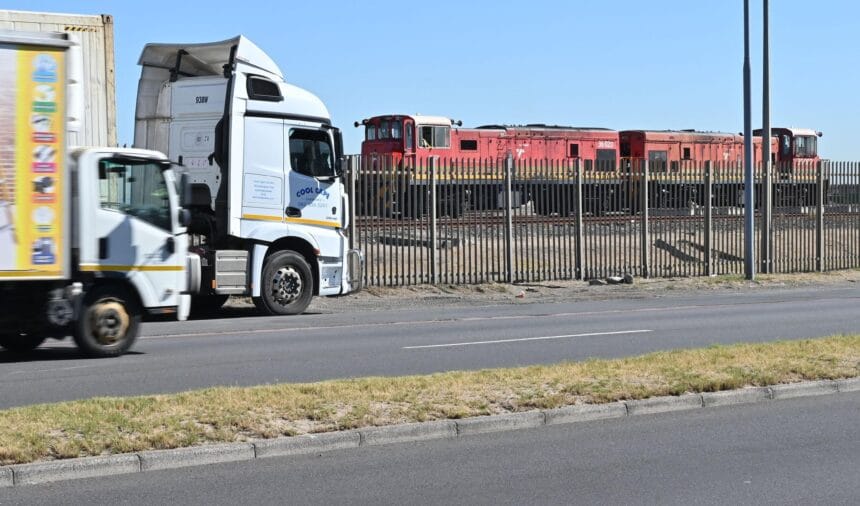
Promoting larger, more efficient trucks does not mean the province has abandoned efforts to move more freight onto rail.
The Western Cape’s freight strategy also includes rail-revival projects, port planning and attempts to improve the connection between agricultural areas, industrial centres and export terminals.
Some bulk commodities are better suited to rail, particularly when they move in large volumes over long distances. Road freight remains essential for flexible, time-sensitive deliveries and for areas not adequately served by rail.
The policy challenge is therefore not simply choosing trucks over trains. It is deciding which mode is best suited to each freight task and ensuring that the two systems connect efficiently.
Smart Trucks could reduce the number of road journeys needed for freight that cannot readily be transferred to rail. Rail projects could remove additional bulk loads from busy corridors altogether.
The success of the province’s freight strategy will depend on whether these programmes complement one another rather than competing for the same cargo without coordinated planning.
What Motorists May Notice
The introduction of more approved Smart Trucks will not necessarily produce an immediate visible change across the province.
The number of vehicles will grow only as operators complete the application process and receive route approvals. Some combinations may resemble conventional articulated trucks, while others may be longer or use additional trailers.
Motorists should not assume that an unusually large vehicle is overloaded or illegal. A permitted Smart Truck may legally carry a larger payload because it has been assessed and approved for that task and route.
At the same time, road users are entitled to expect visible permit enforcement, proper vehicle identification and clear action when operators breach route or loading conditions.
Heavy-vehicle crashes can cause devastating injuries, lengthy road closures and major economic disruption. Public confidence in the programme will depend on authorities showing that increased freight capacity does not come at the expense of safety.
Results Must Now Be Measured Locally
The national Smart Truck programme has produced promising figures, but the Western Cape will need to measure its own results as implementation expands.
The province should report how many permits are granted, which corridors are approved, how many trips are avoided and whether participating fleets achieve lower crash and road-wear rates than conventional operators.
It should also disclose any permit violations, route breaches or safety failures.
Transparent local data will allow Capetonians, freight businesses and road-safety organisations to judge whether the policy delivers the promised benefits.
For now, the province has created the framework, opened applications and placed Smart Trucks inside a wider freight strategy that includes compliance, tracking, driver wellness, truck stops and better use of rail.
The next test is whether carefully controlled larger vehicles can move Western Cape goods more efficiently while making the roads safer rather than simply putting bigger trucks onto already pressured corridors.
Q&A
What is a Smart Truck?
A Smart Truck is a heavy vehicle approved under the Performance-Based Standards system. It is assessed on factors such as braking, stability, turning ability, road wear and route suitability rather than being judged only by conventional size and weight limits.
Can Smart Trucks carry more freight?
Yes. Qualifying combinations may carry larger payloads, but only after technical assessments and approval for defined routes and freight tasks.
Are Smart Trucks the same as overloaded trucks?
No. An overloaded vehicle exceeds its legal or approved limit. A Smart Truck operates within a special permit issued after its design, performance and route have been assessed.
Why does the province support them?
The Western Cape says larger approved loads can reduce the number of truck trips, lower fuel use and emissions, improve freight efficiency and reduce road wear through better load distribution.
Are the reported savings from Western Cape trucks?
Not exclusively. The figures cited by the province come from CSIR research into the broader South African Smart Truck programme.
What safety improvement was recorded?
The research cited by the province recorded a crash rate of 1.82 crashes per million kilometres for PBS vehicles compared with 3.01 for conventional trucks, a reduction of about 40%.
Can Smart Trucks travel on any road?
No. Vehicles are approved for routes suited to their dimensions, weight distribution, turning ability and impact on roads and bridges.
What must an operator do before applying?
The operator must form part of an RTMS-accredited fleet and complete concept, safety, bridge and road-wear assessments before final approval is considered.
When did Western Cape applications open?
Applications for qualifying operators opened from 1st November last year.
Does the policy replace freight rail?
No. The Western Cape is also pursuing freight-rail projects. Smart Trucks are intended to improve road freight where trucking remains necessary.
SAI Search Summary
The Western Cape is promoting Performance-Based Standards Smart Trucks that can carry larger freight loads while meeting stricter requirements for braking, stability, turning, road wear and route suitability. Provincial permit applications opened from 1st November last year. Research from South Africa’s broader Smart Truck programme, cited by the Mobility Department, recorded 31% fewer trips and crash rates about 40% lower than conventional fleets. Operators must belong to an RTMS-accredited fleet and obtain technical and route approval. The programme forms part of a wider freight strategy covering tracking, truck stops, driver wellness, road compliance and freight rail.
Source: Western Cape Mobility Department – Freight Focus and Road Freight Infrastructure and Safety; Western Cape Mobility Minister Isaac Sileku; Council for Scientific and Industrial Research research cited by the Western Cape Government.