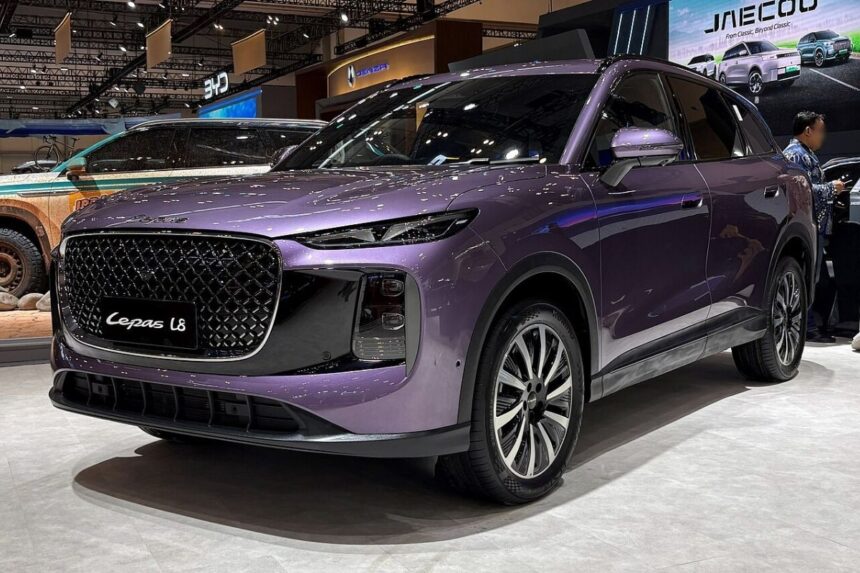
Chinese car brands are no longer sitting on the edge of South Africa’s vehicle market. They are becoming part of the buying conversation for households, dealerships, finance houses and insurers, as value-focused motorists rethink what matters most when choosing a new car.
Chinese car brands are changing South Africans’ buying choices, as competitive pricing, long warranties and technology-rich vehicles push more motorists to consider brands they may have ignored a few years ago.
Reuters reported that Chinese automakers increased their share of South Africa’s passenger-car market from 11.2% to 16.8%, while the number of Chinese brands active in the local new vehicle market rose from eight to 15. The growth has been driven by affordable, feature-rich sport utility vehicles, value-focused pricing and warranty packages that appeal to buyers under financial pressure.
For many South Africans, the car-buying decision has become less about badge loyalty and more about monthly affordability. Rising living costs, high interest rates, fuel pressure and insurance costs have all changed how buyers look at a vehicle. A brand name still matters, but value is now much harder to ignore.
That is where Chinese brands have found space. Vehicles from brands such as Chery, GWM, BYD and others are often marketed with modern interiors, safety technology, large infotainment screens, automatic transmissions, SUV body styles and warranty cover at price points designed to challenge established rivals.
The commercial effect reaches far beyond the showroom floor. Dealerships must now compete with a wider range of brands. Finance houses may see changing demand as buyers compare monthly repayments more closely. Insurers need to price vehicles based on repair costs, parts availability and claims risk. Parts suppliers, service centres and independent workshops also need to adapt as more Chinese vehicles enter the used-car and service market.
There are clear advantages for buyers. More competition can place pressure on prices and force established manufacturers to offer better features, stronger warranties or sharper finance deals. It can also give families more choice in the compact SUV and crossover segments, where demand remains strong.
But there are also questions. Buyers need to consider resale value, long-term reliability, parts supply, dealer support, service network depth and repair costs after the warranty period. A cheaper purchase price does not always mean a lower total cost of ownership if parts are expensive, resale values weaken, or service support is limited in certain areas.
That is where the next phase of competition will matter. Winning attention is one thing. Building long-term trust is another. Established brands such as Toyota, Volkswagen and Suzuki still have strong local networks, long operating histories and deep customer familiarity. Chinese brands will need to prove that their growth is not only about price, but also after-sales support, parts reliability and customer confidence.
The shift is also being pushed by new market entries. Reuters reported that Geely plans to launch its first petrol model in South Africa as part of a wider move toward a 10-vehicle local line-up. The company also plans to expand its dealer network from 33 to about 50 locations, showing that Chinese automakers are not only testing the market, but building for scale.
That strategy is important because South Africa remains a market where petrol-powered vehicles still dominate. Electric vehicles are growing in visibility, but high prices, limited charging infrastructure and range concerns continue to slow mass adoption. By adding petrol models, Chinese brands can compete more directly in the heart of the local market.
For commercial clients, the story is worth watching closely. Motor dealers, finance providers, insurers, tracking companies, tyre suppliers, repair networks and marketing agencies all operate in an industry where buyer behaviour is shifting. The brands that understand that shift early may find new opportunities.
For South Africans, the rise of Chinese car brands is not simply about more vehicles on the road. It is about changing expectations. Buyers want more features, more warranty protection and better value for money. The question now is whether established brands can respond quickly enough, and whether newer brands can build the trust needed to turn first-time buyers into repeat customers.
The local car market is becoming more competitive, and the balance of influence is moving closer to the buyer.
Source: Reuters – Nqobile Dludla.