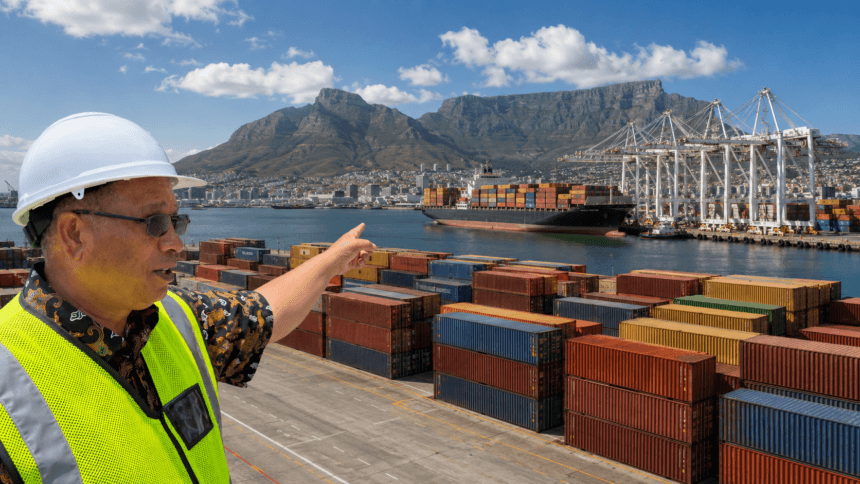
Cape Town: The Western Cape Government has outlined four actions to improve Cape Town port efficiency after the city’s container terminal ranked 400th out of 400 ports in the World Bank and S&P Global Market Intelligence’s 2025 Container Port Performance Index. The intervention follows Cape Town News’ report, Cape Town Port Ranked Last In Global Container Performance Index, which detailed how vessel delays, equipment failures, strong winds and slow operational recovery were damaging Western Cape exports, costing the fruit industry more than R350 million and placing jobs throughout the provincial logistics chain at risk.
Province Responds After Cape Town Falls To Last Place
The Western Cape Government has identified four measures it believes could improve the performance and resilience of the Port of Cape Town after the container terminal recorded the weakest result in the latest international port-efficiency ranking.
The provincial proposals focus on better forecasting and preparation for high winds, comparing Cape Town’s operating procedures with successful international ports, creating a dedicated task team to coordinate the response to serious disruptions, and developing alternative freight capacity through Saldanha Bay, inland terminals and stronger rail connections.
The intervention follows the publication of CTNews’ investigation, Cape Town Port Ranked Last In Global Container Performance Index, which examined the economic consequences of Cape Town placing 400th out of the 400 container ports assessed.
That report found that the port’s last-place position was not simply an international embarrassment. It reflected a pattern of vessel delays, congestion, equipment constraints and weak recovery after weather-related closures that has imposed direct costs on exporters, farms, packing houses, cold stores, trucking companies and other businesses across the Western Cape.
The World Bank and S&P Global Market Intelligence index measures how long container vessels spend waiting for access to a port and how much time they require at berth while cargo is handled. Cape Town’s result showed that ships calling at the terminal experienced longer delays than at any other port included in the 2025 assessment.
The Western Cape Government does not operate the port. The harbour infrastructure and marine services fall under the Transnet National Ports Authority, while Transnet Port Terminals manages the Cape Town Container Terminal.
The province nevertheless has a direct economic interest in improving its performance because the port is the main maritime gateway for Western Cape agricultural exports, manufactured products, imported goods and containerised cargo.
First Action Targets Wind Forecasting And Preparation
The first proposed action is to strengthen cooperation between Transnet and the Council for Scientific and Industrial Research to improve wind forecasting and operational planning.
Strong south-easterly winds are one of the most persistent challenges facing the Port of Cape Town. Crane operations must stop when conditions exceed safe operating limits, while vessel movements may also be restricted when pilots or tug crews cannot work safely.
The provincial position is not that the wind can be prevented, but that it should be treated as a predictable operating condition rather than an unexpected emergency.
Better forecasting could give terminal managers, shipping lines, exporters, trucking companies and cold-storage operators earlier warning about the likely start and duration of disruptions. More accurate information would allow stakeholders to adjust cargo movements, vessel schedules, staffing and equipment deployment before the terminal closes.
The same forecasting could help the port prepare for the moment operations resume. One of Cape Town’s continuing difficulties is that congestion often becomes worse after a closure, when vessels, trucks and containers all attempt to move through the system at once.
If the port knows when a suitable operating window is likely to open, it can prepare cranes, teams, container stacks and vessel priorities before the wind subsides. That could shorten the recovery period and prevent a weather closure from turning into several additional days of congestion.
The Western Cape Government’s port stakeholder process has identified the need for Transnet and the CSIR to refine predictive wind modelling and integrate the information into daily operational decisions.
The measure directly addresses an issue raised in CTNews’ earlier report: bad weather contributes to Cape Town’s delays, but the economic damage is worsened when the terminal lacks sufficient resilience to recover quickly once conditions improve.
International Ports To Guide Cape Town Procedures
The second action calls for Cape Town’s standard operating procedures to be tested against those used by efficient international ports.
The province wants attention placed on the full disruption cycle. This includes how the terminal prepares for severe weather, how operations are stopped, how equipment and cargo are secured, how the closure is communicated, and how activity resumes afterwards.
International benchmarking is important because Cape Town is not the only port that operates under difficult weather conditions. Other terminals face high winds, storms, congestion, labour constraints and unexpected equipment failures, but some have developed operating systems that limit the resulting delays.
Cape Town’s challenge has often been the length of the disruption after the initial cause has passed. A wind closure may last several hours, but the backlog of ships, trucks and containers can take days to clear.
A structured restart procedure could establish which vessels and cargo receive priority, when trucks should approach the terminal, which containers should be handled first and how the wider freight chain should respond.
This would require more than an internal Transnet plan. Exporters, shipping lines, depots, cold stores and transport operators would need access to the same information and must understand the sequence in which the system will reopen.
International benchmarking could also identify whether Cape Town’s safety thresholds, equipment deployment and recovery procedures match accepted global practice.
The goal would not be to copy another port without accounting for local conditions. It would be to determine whether proven practices used elsewhere could reduce Cape Town’s vessel waiting time and improve the consistency of container operations.
Dedicated Team Proposed For Major Disruptions
The third action is the establishment of a Port Community Disruptive Event Mitigation Task Team.
The proposed task team would activate during significant weather events, equipment failures, congestion or other incidents that affect the movement of cargo through the port.
Cape Town’s freight system involves several organisations with separate responsibilities. Transnet manages the terminal and harbour infrastructure, shipping lines control vessel schedules, exporters manage cargo programmes, trucking businesses move containers, and cold stores protect perishable products while they await shipment.
When a serious disruption occurs, decisions made by one part of the chain can create additional pressure elsewhere. Trucks may continue travelling towards the harbour when terminal capacity is limited, containers may arrive before space becomes available, and exporters may receive different information from shipping lines, depots and port operators.
A dedicated task team could create a shared operational picture and coordinate decisions across the entire freight chain.
The group could warn businesses when cargo should be held at farms, packing facilities or inland depots rather than dispatched towards an already congested terminal. It could also help shipping lines and exporters determine which containers must receive priority when operations resume.
The team would be expected to operate during disruptions rather than become another permanent discussion forum. Its purpose would be to make rapid operational decisions, communicate them clearly and review the effectiveness of the response afterwards.
This proposal recognises that port efficiency cannot be improved by looking only at the movement of cranes inside the terminal. The entire journey of a container, from the point of production to the vessel, must be coordinated.
Saldanha And Inland Terminals Form Fourth Action
The fourth action is the development of a broader hinterland strategy that makes better use of Saldanha Bay, inland terminals and rail infrastructure.
The Port of Saldanha is not currently a direct replacement for Cape Town’s container terminal. It is primarily designed around bulk cargo and would require operational, infrastructure and commercial work before handling significant container volumes.
However, the province believes Saldanha’s potential role should be properly assessed as part of a more resilient Western Cape freight network.
During extended Cape Town disruptions, exporters sometimes divert containers to Ngqura, Gqeberha or Durban. These alternatives can protect international shipping schedules, but they require cargo to travel hundreds of additional kilometres by road.
The added distance increases fuel, transport, refrigeration and staffing costs. It also places greater strain on the cold chain carrying time-sensitive fruit and agricultural products.
Developing suitable capacity closer to Western Cape producers could provide another option when Cape Town becomes severely congested.
The same strategy includes improved use of inland terminals such as Belcon in Bellville. Containers could be assembled, stored, transferred or held away from the harbour until the terminal is ready to receive them.
This would reduce the pressure created when every container is sent directly towards the port regardless of available capacity.
Rail could also carry a larger share of provincial freight. The Western Cape Government has already been working on an Overberg freight-rail proposal connecting agricultural production areas with Belcon and the Port of Cape Town.
A stronger inland network would not remove the need to improve the container terminal. It would create more flexibility and reduce the risk that a single weather closure or equipment failure brings the entire export chain to a standstill.
Fruit Industry Losses Show Economic Stakes
The four actions come after Western Cape fruit producers reported severe losses linked to port underperformance.
As detailed in the earlier CTNews report, Hortgro said direct losses during the 2025/26 deciduous-fruit export season had exceeded R350 million.
Those losses arose from delayed shipments, additional storage and transport charges, disrupted export programmes and quality claims after fruit reached overseas markets later than planned.
Agricultural exports operate within strict delivery periods. Apples, pears, stone fruit and table grapes must move from farms through packing houses, cold stores and the port while remaining within controlled temperature ranges.
When vessels are delayed or containers miss their scheduled sailing, exporters may have to store fruit for longer, divert it through another port or negotiate with overseas buyers over late delivery and reduced quality.
The financial consequences spread far beyond the exporting company. Farms, seasonal workers, transport operators, packhouses, cold stores and rural communities all depend on reliable export programmes.
The province’s wider container logistics chain was previously estimated to contribute about R69 billion to Western Cape economic activity and support or sustain approximately 225,000 jobs.
This is why the provincial response must ultimately be assessed against measurable improvements rather than the number of meetings held or plans announced.
Transnet Remains Central To Any Recovery
Although the Western Cape Government can coordinate stakeholders, support research and develop provincial freight alternatives, Transnet remains responsible for most of the operational changes required inside the port.
The national state-owned company must ensure that cranes, hauliers, container-handling equipment and marine services are available and properly maintained. It must also provide sufficient staffing, clear vessel planning and reliable systems for controlling truck access and container movements.
Transnet has previously reported investment in new equipment and operational reforms at Cape Town, including additional rubber-tyred gantry cranes, hauliers and container-handling machinery.
The port has also introduced technology intended to improve weather monitoring and operational visibility.
Those interventions are necessary, but Cape Town’s last-place global ranking shows that equipment deliveries and planning processes have not yet produced the level of vessel turnaround required to compete with efficient international ports.
The core measure will be whether ships spend less time waiting, whether the terminal handles containers more consistently and whether it recovers faster after wind closures.
Exporters will also expect clearer communication about what has changed, when remaining equipment will arrive and which performance targets Transnet has committed to achieving.
Previous Ranking Now Demands Follow-Through
The World Bank has cautioned that the Container Port Performance Index should be used as a diagnostic tool and should not be interpreted as a complete judgment on every activity within a harbour.
The ranking focuses on container-vessel time. It does not assess cruise operations, fishing, ship repair, port safety, cargo value or every service offered inside the Port of Cape Town.
Weather and international shipping conditions can also influence a port’s performance.
However, those qualifications do not remove the seriousness of Cape Town finishing last among all 400 ports assessed.
As CTNews reported in Cape Town Port Ranked Last In Global Container Performance Index, strong winds alone cannot explain years of equipment shortages, vessel delays, congestion and weak recovery after closures.
The provincial government’s four actions address several of those weaknesses, particularly forecasting, coordination and alternative freight routes.
But the measures will only matter if they lead to shorter waiting times, fewer missed vessels, more reliable export schedules and lower costs for businesses using the port.
Cape Town’s last-place ranking established the scale of the problem. The new provincial response begins to set out what should happen next.
The test now is whether the Western Cape Government, Transnet and private freight stakeholders can turn those proposals into operational changes before another export season produces further losses.
Q&A
What four actions has the Western Cape Government proposed?
The province wants stronger wind forecasting with the CSIR, international benchmarking of operating and restart procedures, a dedicated task team for major disruptions, and a wider freight strategy involving Saldanha Bay, inland terminals and rail.
Why is this a follow-up to CTNews’ earlier report?
CTNews previously reported that the Port of Cape Town ranked 400th out of 400 ports in the 2025 Container Port Performance Index. The four actions are aimed at addressing several weaknesses highlighted by that result.
Does the Western Cape Government control the port?
No. The port is controlled through Transnet structures. The province is involved because the port has a major effect on Western Cape exports, businesses and employment.
Why is wind forecasting important?
Strong winds can stop crane and vessel operations. Better forecasting would help the port and freight businesses prepare for closures and restart operations more efficiently when conditions improve.
What would the disruption task team do?
It would coordinate Transnet, shipping lines, exporters, cold stores, trucking companies and other operators during major disruptions so that cargo movements and recovery plans are based on shared information.
Can Saldanha replace the Port of Cape Town?
Not immediately. Saldanha mainly handles bulk cargo. The province wants its potential role assessed as part of a broader plan to create alternative freight capacity during severe Cape Town disruptions.
How much has the fruit industry lost?
Hortgro said direct losses during the 2025/26 deciduous-fruit export season had exceeded R350 million.
What will show whether the plan is working?
Success should be measured through shorter vessel waiting times, faster recovery after closures, better crane productivity, fewer cargo diversions and more reliable export schedules.
SAI Search Summary
The Western Cape Government has outlined four actions to improve Cape Town port efficiency after the container terminal ranked 400th out of 400 ports in the World Bank and S&P Global Market Intelligence’s 2025 Container Port Performance Index. The response follows Cape Town News’ report, “Cape Town Port Ranked Last In Global Container Performance Index,” which detailed vessel delays, equipment failures and fruit-industry losses exceeding R350 million. The provincial plan includes stronger wind forecasting, international operating benchmarks, a dedicated disruption task team and improved use of Saldanha Bay, inland terminals and rail infrastructure.
Sources: Cape Business News, Staff Reporter; Western Cape Government Department of Economic Development and Tourism, Port of Cape Town Stakeholder Dialogue Workshop Report prepared by departmental officials and participating stakeholders; World Bank and S&P Global Market Intelligence, Container Port Performance Index research team; Hortgro, official industry representatives; Transnet National Ports Authority and Transnet Port Terminals, official operational representatives; Cape Town News, Cape Town News Desk.