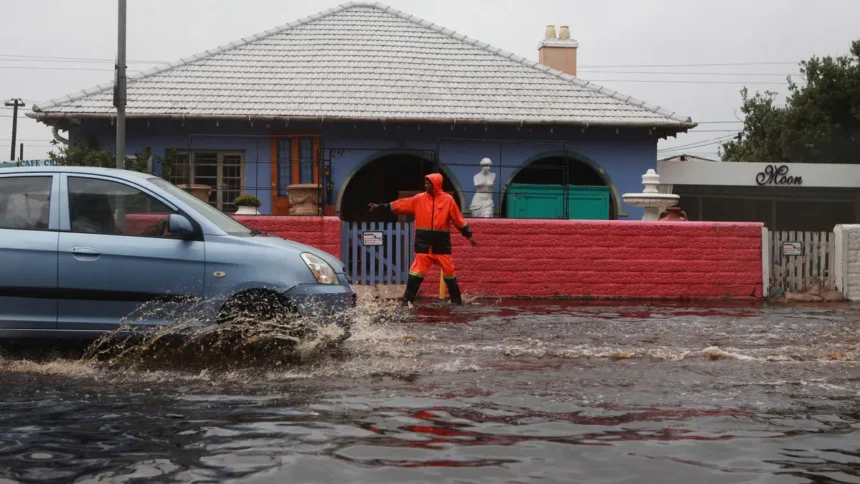
Cape Town has been left grappling with nearly 480 flood-related incidents after days of sustained rainfall overwhelmed parts of the city, raising fresh concerns about infrastructure readiness and the growing pressure on stormwater systems.
The scale of the flooding has placed the City of Cape Town’s infrastructure under scrutiny, as officials confirmed that close to 480 complaints have been logged since Friday. These range from blocked stormwater drains and flooded roads to homes being inundated, particularly in low-lying and high-density communities.
All eight districts across the metro have been affected, triggering a coordinated response involving multiple departments. Disaster Risk Management teams, alongside the Urban Mobility Directorate, have been operating continuously to manage the situation and prevent further damage.
Among the hardest-hit areas are Gugulethu, Khayelitsha, Delft, Nyanga, Philippi and parts of Dunoon, where residents in both formal and informal settlements have reported rising water levels entering homes and disrupting daily life. In several of these areas, prolonged water accumulation has highlighted long-standing vulnerabilities in drainage capacity and settlement planning.
Mayoral committee member for urban mobility, Rob Quintas, said widespread localised flooding was experienced due to sustained downpours, noting that the system is designed to drain water over time rather than immediately during heavy rainfall events.
He also pointed to a growing challenge facing the City’s infrastructure network. “Water has, for the most part, drained out as it should, with the exception of areas where structures have been built illegally over bulk stormwater and sewerage infrastructure. When this happens, our maintenance teams physically can’t access the systems to clear them,” Quintas said.
Inspections carried out during the response revealed significant blockages within the drainage system. “We saw mattresses and wheelie bins pulled from our stormwater system, among other inappropriate materials. This can create massive blockages,” he added, highlighting the impact of waste disposal practices on flooding risk.
While authorities maintain that the stormwater network is functioning within its design limits, the volume and spread of incidents have renewed debate around whether existing infrastructure is sufficient to cope with both rapid urban expansion and increasingly unpredictable weather patterns.
The City has acknowledged that engineering solutions alone cannot fully prevent flooding during intense rainfall events, particularly in areas located near canals, waterways, and low-lying ground. As a result, officials are placing renewed emphasis on both infrastructure upgrades and community cooperation.
In response to the recent weather, the City has activated a multi-departmental emergency plan and is ramping up winter preparedness efforts. These include expanded maintenance of stormwater systems, targeted upgrades in flood-prone zones, and increased monitoring in coordination with the South African Weather Service.
On the ground, municipal teams continue to clear blocked drains, distribute sand and milling materials, and provide emergency assistance such as plastic sheeting to residents in vulnerable communities.
Despite the ongoing response, the incidents have again highlighted the complex relationship between infrastructure, urban development, and environmental pressures in Cape Town. As the city prepares for the winter rainfall season, the focus is now shifting toward resilience, prevention, and ensuring that future weather events do not result in similar levels of disruption.
Residents have been urged to dispose of waste responsibly and to avoid dumping materials that could obstruct drainage systems, as authorities stress that community behaviour plays a critical role in mitigating flood risk. Source: IOL – Wendy Dondolo.