Cape Town: More oil tankers are gathering or holding position off Cape Town as uncertainty around the Strait of Hormuz, Suez Canal and other major shipping routes reshapes global oil movements around the Cape of Good Hope. Maritime writer and educator Brian Ingpen says market volatility, changing cargo instructions and shifting trade routes are contributing to the increased activity, although the vessels are not necessarily waiting to enter Cape Town harbour or indicating an immediate local fuel shortage.
Tankers Become A More Visible Presence
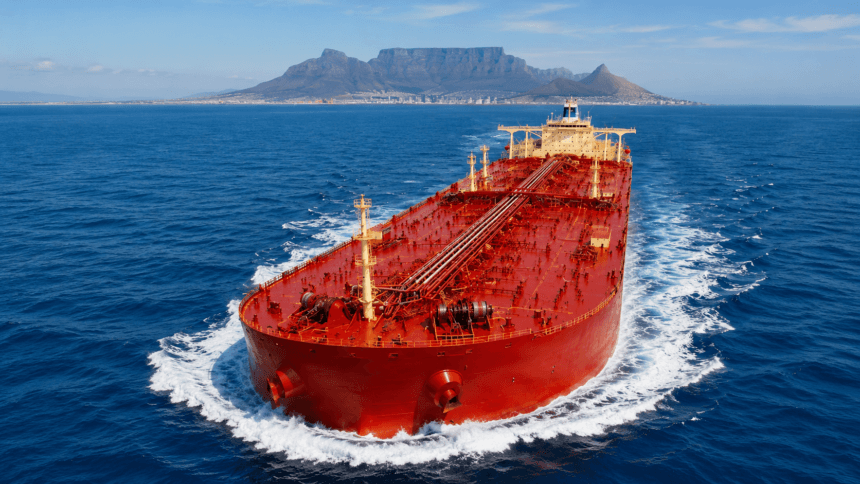
Large oil tankers have become an increasingly noticeable presence off Cape Town’s coastline as shipowners, energy traders and charterers adjust to continuing disruption across some of the world’s most important maritime routes. The vessels visible from the city may appear stationary for hours or days, prompting questions about whether they are waiting for berths, carrying fuel for South Africa or facing delays at the Port of Cape Town.
The actual picture is more complex. Some tankers may be waiting for commercial instructions from owners or charterers, while others could be adjusting their speed to meet a future port appointment or holding position before continuing around the coast. Vessels may also pause while cargo destinations are confirmed, market conditions change or security risks are reassessed.
Ingpen said the increased activity should be understood within the wider instability affecting global oil shipping. Oil markets respond quickly to conflict, sanctions, insurance costs, refinery demand and interruptions at narrow maritime passages. Those changes can alter a tanker’s destination even after it has already begun its voyage.
A ship seen off Cape Town is therefore not automatically destined for the city’s harbour. It may be using the waters near the Cape as a holding area while awaiting the next stage of a much longer international journey.
Global Chokepoints Remain Under Pressure
The Strait of Hormuz remains central to the disruption because it carries a substantial share of global oil exports from the Gulf. Conflict and security concerns have reduced normal traffic through the waterway, delayed cargoes and increased the cost of insuring and operating tankers in the region.
Although some vessels have resumed moving through the strait, traffic remains constrained and unpredictable. Shipowners have had to assess the risks of mines, military activity, interference with tracking systems and sudden changes in access conditions.
The uncertainty has affected more than the ships already inside the Gulf. Tanker availability has tightened as vessels spend longer waiting, sail extended routes or remain tied to cargoes delayed by the disruption. Freight rates have risen as fewer ships remain available for new assignments, while owners demand compensation for the additional security and operating risks.
The Suez Canal and the Bab el-Mandeb route have also faced continuing security concerns, encouraging some shipping operators to avoid the Red Sea and send vessels around the Cape of Good Hope instead.
That diversion adds thousands of kilometres to voyages between Asia, Europe and the Americas. It also pushes more commercial traffic past South Africa’s coastline, increasing the strategic importance of Cape Town and other ports positioned along the route.
Not Every Tanker Is Waiting For Cape Town Harbour
The concentration of vessels offshore can easily create the impression that the Port of Cape Town is unable to accommodate them. However, ships waiting outside the port limits may have no intention of entering the harbour.
Tankers often reduce speed or remain in designated offshore areas to manage arrival times. A vessel reaching its destination too early can face additional port charges or may arrive before a berth, storage tank or receiving terminal is ready.
Some tankers could also be waiting for orders known in the industry as voyage instructions. Oil cargoes are frequently traded while ships are at sea, meaning ownership, destination or delivery arrangements can change before the vessel reaches a discharge port.
A cargo initially intended for one refinery may be redirected to another market if prices, sanctions, demand or logistical conditions change. The ship may then hold position while the trader, charterer and owner agree on a new route.
Other vessels may be awaiting weather conditions, crew arrangements, provisions, fuel, repairs or permission to continue through a particular maritime zone. Offshore waiting is therefore part of normal commercial shipping, although the number and visibility of tankers can increase during periods of unusual market stress.
No Immediate Evidence Of A Cape Town Fuel Shortage
The visible tanker activity does not, on its own, indicate that Cape Town is running short of petrol, diesel or other fuel products.
South Africa’s fuel-supply system depends on imports, storage facilities, inland distribution networks and refinery arrangements operating across several ports and provinces. A group of ships waiting offshore cannot be used as a direct measure of local supply without knowing their cargoes, destinations and commercial instructions.
Some tankers may be carrying crude oil, while others transport refined products, chemicals, liquefied petroleum gas or specialised liquid cargoes. Their presence near Cape Town does not confirm that those products are intended for local discharge.
The Port of Cape Town does handle liquid bulk cargo and provides bunkering services, but many vessels travelling around the Cape remain in transit. They may stop only for supplies, repairs or crew changes, or pass the coast without entering a South African port.
Capetonians should therefore be cautious about social-media claims linking offshore tankers to fuel shortages, port congestion or an emergency stockpile. Those conclusions require confirmation from port authorities, fuel companies and government agencies.
Cape Route Gains Strategic Importance
The disruption has nevertheless strengthened the Cape of Good Hope’s role in international shipping.
When the Red Sea, Suez Canal or Strait of Hormuz becomes unsafe or unreliable, the route around southern Africa becomes the most practical alternative for many vessels moving between eastern and western markets. That shift increases sailing time, fuel use, crew costs and insurance exposure, but allows ships to avoid areas considered too dangerous.
Cape Town does not automatically receive every diverted vessel, yet its location gives the city an opportunity to service ships requiring assistance along the longer route. Tankers and cargo vessels may need marine fuel, food, fresh water, technical support, crew changes or emergency repairs before continuing their voyages.
The Port of Cape Town has bunkering facilities at many berths, along with dry docks, a repair quay and a synchrolift used for ship maintenance. These services can generate work for engineering companies, chandlers, fuel suppliers, transport operators and specialist marine contractors.
The city has already seen signs of this economic opportunity. Vessels diverted by geopolitical disruption have entered Cape Town for repair work, creating employment for hundreds of workers and bringing revenue into the local maritime sector.
Tanker Basin Investment Comes At Critical Time
The increase in international vessel traffic comes as Transnet National Ports Authority moves to strengthen Cape Town’s liquid bulk facilities.
TNPA has pursued a long-term private operating arrangement for the port’s liquid bulk terminal, which connects to Tanker Basin 1 and Tanker Basin 2. The operator is expected to refurbish, finance, maintain and manage the facility while ensuring that essential services continue.
The timing is important. A reliable liquid bulk terminal supports fuel imports, bunkering and other maritime activities at a moment when shipping companies are reviewing routes and seeking dependable service points away from disrupted regions.
Cape Town’s opportunity will depend on whether the port can provide quick, competitive and reliable services. Ships will not enter simply because the city lies near their route. Owners compare berth availability, fuel prices, waiting times, repair capacity, weather risk and administrative efficiency before deciding where to stop.
The city’s container port has faced sustained criticism over congestion, wind delays and poor international efficiency rankings. The tanker and liquid bulk trade operates differently, but Cape Town’s wider port reputation can still influence commercial decisions.
Diverted Ships Bring Opportunity And Pressure
More vessel traffic around the Cape could benefit local businesses, but it also places pressure on port services and marine infrastructure.
A tanker needing bunkers or repairs requires safe navigation, trained pilots, tug assistance, berth access and coordination between agents, suppliers and port authorities. An increase in demand can expose shortages in equipment, staff or available docking space.
Weather remains one of Cape Town’s largest operational challenges. Strong wind and heavy swell can delay vessel movements, prevent safe berthing and disrupt repair work. A ship already delayed by a longer route may then face further costs while waiting for suitable conditions.
Marine services must also meet strict environmental and safety standards. Tanker operations carry risks involving fuel spills, fire, hazardous cargoes and pollution. Greater activity requires effective monitoring, emergency planning and enforcement.
The economic opportunity is therefore linked directly to operational performance. Cape Town could attract more maritime work if it can provide dependable services, but repeated delays or capacity problems could cause owners to choose alternative ports.
Global Oil Disruption Raises Costs Far Beyond Shipping
The longer Cape route affects consumers and businesses even when a vessel never enters South African waters.
Extended voyages use more fuel and keep ships occupied for longer periods, reducing the number available for other cargoes. Higher freight and insurance costs can then be passed through to refiners, manufacturers, retailers and consumers.
Oil prices are influenced by global supply and demand, but transport costs form part of the final price of crude and refined products. Disruption around the Strait of Hormuz is particularly significant because the waterway normally carries a major share of the world’s seaborne oil.
When tanker movement slows, buyers may draw more heavily on stored supplies, seek cargoes from alternative producers or pay premiums for vessels capable of completing urgent deliveries. These decisions ripple through international markets and can influence fuel prices in countries far from the original disruption.
South Africa imports a significant portion of its refined fuel requirements, leaving the economy exposed to changes in global oil prices, shipping rates and currency movements. A longer or more expensive tanker journey can therefore contribute to higher landed fuel costs, even when domestic supply remains uninterrupted.
Cape Town Must Convert Traffic Into Economic Value
The growing number of vessels using the Cape route does not automatically translate into income for Cape Town.
Most ships can pass offshore without stopping. The city benefits only when vessels purchase fuel, supplies, repairs, crew services or other assistance from local companies.
That makes port efficiency and maritime investment critical. Cape Town must compete with Durban, Ngqura, Richards Bay, Saldanha Bay and international ports along the route for the same business.
The city’s established repair facilities and skilled marine workforce provide an advantage, particularly for vessels requiring specialised maintenance. But aging infrastructure, administrative delays or limited berth capacity could prevent Cape Town from capturing the full opportunity.
The liquid bulk terminal investment and broader port-recovery programme will therefore be watched closely by companies operating in the maritime sector.
Activity Could Change Quickly
The offshore picture may not remain the same for long.
Tanker movements can change within hours as cargoes are sold, destinations are revised or shipping lanes reopen. A group of vessels visible today may disperse once commercial orders arrive, while another cluster could form as new ships reach the Cape.
Conditions in the Strait of Hormuz also remain fluid. Recent vessel movements suggest that some oil traffic is beginning to pass through again, but normal shipping has not fully resumed and safety concerns continue.
A sustained reopening would reduce some pressure on tanker availability and could lower the number of vessels diverted around Africa. Renewed conflict or another closure would have the opposite effect.
For now, the tankers off Cape Town reflect an international shipping system still adapting to uncertainty. Their presence connects the city’s coastline directly to geopolitical events, global oil markets and decisions being made thousands of kilometres away.
The developing story is therefore not simply that ships are waiting offshore. It is that Cape Town has become more visible on a changing global trade route, creating both an economic opening and a test of whether the city’s maritime infrastructure can respond.
Q&A
Why are more oil tankers visible off Cape Town?
Global oil-market volatility, disrupted shipping routes and uncertainty around the Strait of Hormuz, Suez Canal and Red Sea are influencing tanker routes and commercial decisions.
Are all the tankers waiting to enter Cape Town harbour?
No. Some may be holding position while awaiting cargo, destination or routing instructions and may never enter the port.
Does the activity mean Cape Town has a fuel shortage?
There is no immediate evidence that the visible offshore tankers indicate a local fuel shortage.
Why would a tanker remain offshore?
A tanker may wait for commercial instructions, a scheduled berth, suitable weather, cargo arrangements, fuel, supplies, repairs or permission to continue its voyage.
How can Cape Town benefit?
Vessels travelling around the Cape may purchase bunkers, supplies, repairs, crew services and other maritime support from local businesses.
Does Cape Town have tanker facilities?
Yes. The Port of Cape Town has liquid bulk facilities, tanker basins, bunkering points and ship-repair infrastructure.
Why are ships avoiding traditional routes?
Conflict, mines, security risks and disruption around the Strait of Hormuz, Red Sea and Suez Canal have made some routes more dangerous or unpredictable.
Will the tankers remain off Cape Town?
The situation can change quickly as shipping instructions, market conditions and international security developments change.
SAI Search Summary
More oil tankers are gathering or holding position off Cape Town as global shipping disruption alters oil routes around the Cape of Good Hope. Maritime specialist Brian Ingpen says oil-market volatility, changing trade routes and uncertainty around major maritime chokepoints are driving the activity. The vessels are not necessarily waiting to enter Cape Town harbour or signalling a local fuel shortage. Some may be awaiting cargo, destination or commercial instructions. The increased traffic could create opportunities for Cape Town’s bunkering, ship-repair and maritime services, but the city must provide reliable port infrastructure to convert offshore traffic into local economic value.
Source: Eyewitness News, Kabous Le Roux and maritime writer Brian Ingpen; Transnet National Ports Authority, Staff Reporter; SAnews, Staff Reporter; Reuters, Jonathan Saul and Robert Harvey.