Western Cape: Western Cape protest security has been increased ahead of planned nationwide anti-immigration demonstrations on Tuesday, 30th June, after provincial authorities activated the Provincial Joint Operational Centre, expanded law-enforcement deployments and introduced emergency contingency measures to prevent violence, intimidation and damage to property. Western Cape Minister of Police Oversight and Community Safety Anroux Marais announced the heightened preparations after receiving a briefing at the Provincial Operational Command Centre on the South African Police Service’s readiness, with police, intelligence services, municipalities and disaster-management officials now coordinating their response because recent anti-immigration unrest in parts of the province has shown how quickly lawful grievances can develop into attacks, displacement and broader public disorder.
Western Cape Activates Joint Security Response
The Western Cape Government has moved its security preparations into a more active phase as the 30th June demonstrations approach, with officials placing law-enforcement agencies, intelligence networks and disaster-management teams on heightened alert.
Marais confirmed that the Provincial Joint Operational Centre, known as the ProvJOC, had been activated to coordinate preparations and responses across the province. The centre brings together the agencies responsible for maintaining public order, monitoring threats and responding when protests place lives, businesses or infrastructure at risk.
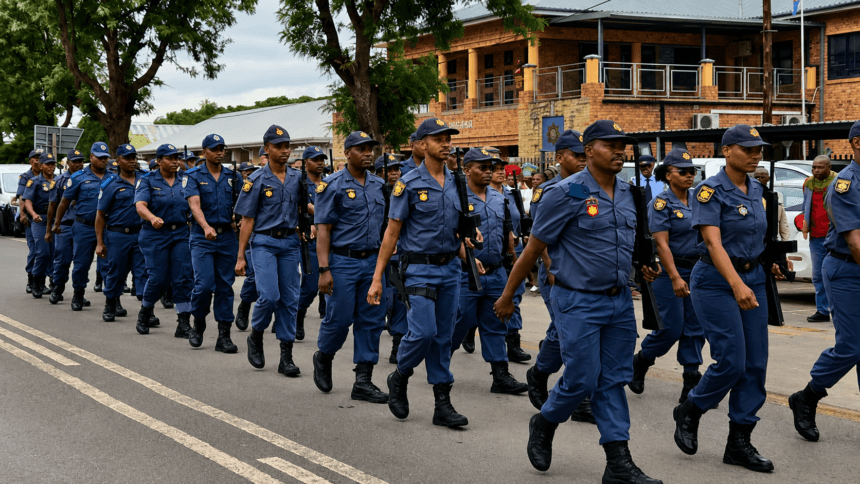
The minister said police deployments had been increased in anticipation of possible disruption. Intelligence-gathering operations were also under way to provide authorities with early warning of threats to public safety.
The Western Cape Provincial Disaster Management Centre has separately activated contingency measures to support any emergency response that may be required. These arrangements could become important should protests disrupt transport routes, displace vulnerable people, damage public infrastructure or create a need for emergency shelter and humanitarian assistance.
The announcement strengthens an earlier provincial security plan developed after anti-immigration protests and attacks spread through several Western Cape communities during June.
That plan includes visible policing in identified hotspots, stronger intelligence gathering, proactive public communication and rapid mediation before local tensions develop into wider unrest. SAPS, the South African National Defence Force, the Department of Home Affairs, municipalities and the United Nations High Commissioner for Refugees have all participated in the province’s coordination structures.
Marais Warns That Protest Rights Have Clear Limits
Marais acknowledged that South Africans have legitimate concerns about illegal immigration, unemployment, pressure on services and the state’s ability to enforce immigration laws.
However, she warned that constitutional protest rights do not permit violence, intimidation, looting, property destruction or attacks against individuals.
“The Western Cape Government acknowledges the frustrations regarding issues affecting residents and their communities,” Marais said.
“We also respect the constitutional right of residents to protest peacefully. However, any protest action must be peaceful, lawful and within the confines of the Constitution. The rule of law must be respected at all times.”
Her warning draws an important distinction between protest against government policy and unlawful action against foreign nationals, employers, landlords or businesses.
South Africa’s immigration laws can only be enforced by legally authorised state bodies. Members of the public, political movements and community organisations do not have the power to search homes, demand identity documents, remove people from workplaces or force families from communities.
Marais said concerns about failures by government departments must be pursued through legal and democratic channels rather than through vigilantism.
She warned that unrest also places pressure on police resources already needed to confront murder, gangsterism, extortion, drug trafficking and other serious crimes affecting Western Cape communities.
“When police officers are forced to respond to preventable violence and unrest, those resources are diverted away from the fight against crime,” the provincial government’s warning effectively underlined.
Earlier Western Cape Violence Drives Security Concerns
The heightened security operation follows unrest in Mossel Bay, the Overstrand and Cape Agulhas, where demonstrations and attacks linked to immigration tensions forced provincial authorities to intervene earlier this month.
Hundreds of foreign nationals reportedly fled their homes in Kleinmond and Gansbaai after groups entered communities, targeted homes and demanded that immigrants leave. Violence also affected Mossel Bay, where homes were destroyed and people were killed during attacks connected to rising anti-immigration sentiment.
Premier Alan Winde previously warned that the situation had already demonstrated how quickly public frustration could develop into social unrest.
The province responded by increasing enforcement measures, coordinating emergency planning and working with foreign diplomatic missions. Authorities also began identifying potential flashpoints where local conflict, misinformation or organised mobilisation could place communities at risk.
The provincial government has not publicly released a detailed list of those flashpoints or disclosed how many additional officers have been deployed. Operational details are commonly withheld to protect police planning and prevent groups from adapting their activities around security deployments.
However, the scale of the coordination indicates that the 30th June demonstrations are being treated as more than a routine protest.
National Authorities Bolster Security Operation
The Western Cape preparations form part of a broader national security operation involving SAPS, the defence force, metropolitan police departments, private-security companies and community safety structures.
Acting Police Minister Firoz Cachalia has held discussions with major private-security groups, including Bidvest Protea Coin, Fidelity Services Group and G4S, as the government seeks additional cooperation to protect communities, businesses and infrastructure.
Acting National Police Commissioner General Puleng Dimpane said cooperation between police and private security would help ensure that businesses remained operational and constitutional rights were protected.
The national government has reportedly allocated more than R600 million to security preparations connected to the demonstrations. Members of the South African National Defence Force have also been placed on standby as a precaution, although Defence Minister Angie Motshekga has said authorities have not received information suggesting that widespread unrest is inevitable.
National Joint Operational and Intelligence Structure chairperson Tebello Mosikili has warned demonstrators not to carry firearms, traditional weapons or other dangerous objects.
Mosikili said police would act swiftly against anyone found carrying weapons or endangering lives and property during the demonstrations.
The security message from national and provincial authorities remains consistent: peaceful protest will be protected, but violence, intimidation and criminality will trigger law-enforcement action.
Misinformation Could Increase The Risk Of Unrest
The Western Cape Government has also warned that false or inflammatory messages circulating through social media and private messaging groups could heighten fear and provoke confrontation.
Marais urged Capetonians not to forward unverified reports about protest routes, immigration raids, attacks, police operations or alleged criminal activity.
Authorities are particularly concerned about messages designed to create panic or encourage people to gather at homes, businesses and community facilities.
The minister said the deliberate distribution of misinformation or disinformation intended to provoke unrest could amount to a criminal offence.
This warning is significant because online claims can spread long before police or news organisations have an opportunity to verify them. False reports of attacks or mobilisation can draw crowds into an area, fuel retaliatory action and place innocent people at risk.
Capetonians have been urged to report threats, planned violence and suspicious activity directly to SAPS instead of circulating the information publicly.
Focus Moves To Transport And Business Continuity
Authorities are also preparing to keep public transport, commercial centres and major roads operational on the 30th June.
The acting police minister has said the day should be treated as a normal business day. Police have engaged with the taxi industry and other transport role players to help maintain stability and reduce the risk of transport disruptions.
No major Cape Town protest route or approved gathering point had been publicly confirmed when this report was prepared.
The absence of confirmed local routes means commuters and businesses should rely on verified announcements from SAPS, the City of Cape Town and recognised transport operators rather than social-media speculation.
Further operational information is expected as police assess protest applications, gathering notices and intelligence reports.
Q&A
Why has Western Cape protest security been increased?
The provincial government is preparing for possible demonstrations and unrest on the 30th June. Earlier anti-immigration violence in parts of the Western Cape displaced people, damaged homes and raised concerns about further attacks.
What is the Provincial Joint Operational Centre?
The ProvJOC is a coordinated security structure that brings together police, provincial authorities, disaster-management officials, municipalities and other agencies to plan for and respond to public-safety incidents.
Have more police officers been deployed?
Yes. The Western Cape Government has confirmed that law-enforcement deployments have been increased. It has not disclosed the number of officers or their specific locations.
Are protests illegal?
No. Peaceful and lawful protest is protected by the Constitution. Violence, intimidation, looting, attacks, carrying dangerous weapons and damaging property are criminal acts.
Can community groups remove undocumented immigrants?
No. Immigration enforcement is the responsibility of Home Affairs, SAPS and other legally authorised state bodies. Private groups cannot conduct raids, detain people or force them from homes and workplaces.
Have Cape Town protest routes been confirmed?
No confirmed Cape Town routes or gathering points had been publicly announced when this report was prepared.
How should threats or planned violence be reported?
Information about threats or planned criminal activity should be reported to SAPS through the nearest police station or by calling 10111. Unverified information should not be shared through public or community groups.
SAI Search Summary
Western Cape protest security has been increased ahead of the planned 30th June anti-immigration demonstrations. The Provincial Joint Operational Centre has been activated, law-enforcement deployments have been expanded and disaster-management contingency measures are in place. Western Cape Minister of Police Oversight and Community Safety Anroux Marais has warned that peaceful protest will be respected, but violence, intimidation, attacks, looting, property damage and online incitement will not be tolerated. The provincial operation forms part of a wider national security response involving SAPS, private-security companies, transport organisations and the defence force.
Source: Western Cape Government Department of Police Oversight and Community Safety, Staff Reporter; Western Cape Government Office of the Premier, Staff Reporter; Eyewitness News, Anelitha Fandese and Nkosikhona Malinga-Mnisi; News24, Matthew Hirsch.