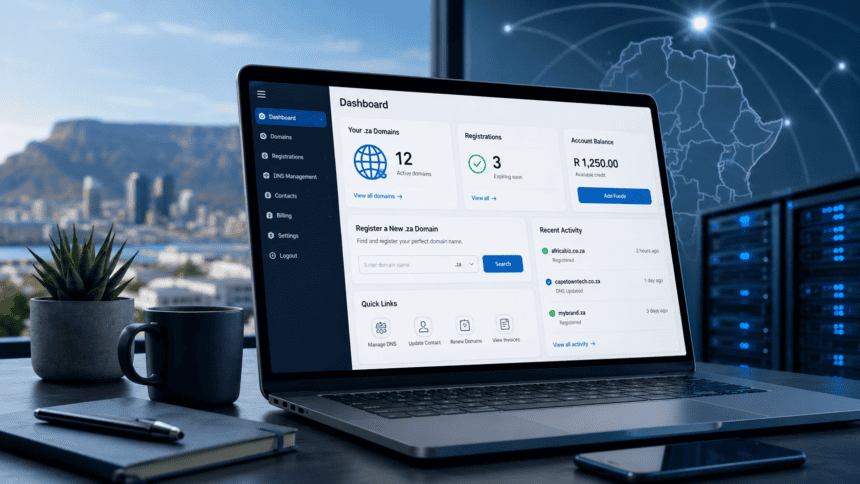
Cape Town businesses, website owners and digital service providers should keep an eye on South Africa’s new .za domain operator process, after the .ZA Domain Name Authority started preparing to appoint the future operator for commercial domain names such as co.za, org.za, net.za and web.za.
South Africa’s .ZA Domain Name Authority has started preparing to appoint the future operator for the country’s commercial .za domain names, a process that matters to businesses, website owners, hosting companies, digital agencies and anyone using a local online identity.
MyBroadband reported that the process covers the co.za, org.za, net.za and web.za second-level domains. These form a critical part of South Africa’s internet infrastructure and are widely used by businesses, organisations, service providers, schools, community groups, professionals and online publishers.
For many Cape Town businesses, a co.za domain is more than a web address. It is the front door to their brand, their email system, their customer enquiries, their online bookings, their search visibility and their local credibility.
That is why changes in the domain operator process deserve attention, even if they seem technical at first glance.
What Is ZADNA?
The .ZA Domain Name Authority, known as ZADNA, is the statutory regulator and manager of the .za domain namespace. The .za namespace is South Africa’s country-code domain space, similar to how other countries use national domain endings.
ZADNA does not simply manage one website. It sits in the background of South Africa’s internet structure and helps regulate how .za domains operate.
The most familiar commercial domain is co.za. Many South African businesses use it because it signals a local presence and is widely recognised by customers. Other important domains include org.za for organisations, net.za for network-related use, and web.za for general use.
Why The Operator Process Matters
The future operator of these commercial .za domains will play a role in keeping the domain system stable, reliable and functional.
For ordinary users, the technical details may not be visible. A website either loads or it does not. Email either works or it does not. But behind that simple experience are systems that manage registrations, renewals, domain records, registrar connections and technical reliability.
If the operator process is handled well, most businesses may experience no disruption at all. That is the ideal outcome.
But because domains are so central to online business, the appointment of the future operator still matters. Website owners depend on domain stability. Hosting providers depend on clear systems. Registrars need reliable operations. Customers expect websites and email addresses to keep working without confusion.
For Cape Town’s growing digital economy, this is part of the infrastructure that supports online trade, local publishing, professional services, tourism, e-commerce and small business.
What Cape Town Businesses Should Know
Most Cape Town businesses do not need to panic or make immediate technical changes based only on the start of the operator process.
There is no indication from the current reporting that co.za domain holders need to move domains, change registrars or replace their web addresses.
The important action is awareness.
Business owners should know who manages their domain, when it expires, which email address receives renewal notices and whether their website and email hosting are properly documented.
Many small businesses only discover domain problems when a website goes offline or email stops working. That usually happens because the domain renewal failed, the wrong person received the invoice, the original web developer disappeared, or the business no longer has access to its registrar account.
The new operator process is a good reminder for local businesses to check their digital basics.
Why This Matters For Online Trust
A domain name carries trust. When customers see a familiar co.za address, they often treat it as a sign that the business is locally connected.
That trust becomes even more important as scams, fake websites and impersonation attempts increase.
If a legitimate business loses control of its domain, fails to renew it, or uses poor domain management practices, customers may be exposed to confusion or fraud risk. In some cases, abandoned or expired domains can be registered by others.
For local media, professional firms, retailers, non-profit organisations and service providers, domain control is part of brand protection.
Cape Town businesses should treat domain names as business assets, not afterthoughts.
What Website Owners Should Check
Website owners should check who the registered domain holder is. The business owner should know whether the domain is registered in the company’s name, the owner’s name, the web developer’s name or a third party’s name.
They should also check which email address receives domain notices. If renewal alerts go to an old employee, previous developer or inactive mailbox, the business may miss important messages.
The renewal date should be recorded. Domains usually need renewal before expiry, and leaving this too late can cause unnecessary stress.
Business owners should also confirm where the domain is registered. This may be through a hosting provider, registrar, web agency or domain reseller.
Lastly, they should make sure they have login access or a clear support contact. A business should not be locked out of its own domain records.
The Cape Town News View
For Cape Town News, this story matters because local digital infrastructure supports the wider economy. Every small business, school, community organisation, publisher, estate agency, tourism operator and online shop depends on stable domain systems.
The internet may feel global, but local domain names remain important for local trust.
A Cape Town business using a co.za domain is making a public signal that it serves South African customers. For many smaller companies, that domain is the centre of their online identity.
The appointment of a future operator for commercial .za domains is therefore not only a technical industry process. It is part of the foundation that keeps South African businesses visible and reachable online.
What Happens Next
The next important step will be the detail of ZADNA’s operator appointment process. Industry participants, registrars, hosting companies and domain service providers will be watching for process documents, timelines, technical requirements and appointment criteria.
Cape Town News will continue to watch for updates that may affect website owners, local businesses and digital service providers.
For now, the practical message is simple: keep your domain details current, know who controls your web address, and do not ignore renewal or registrar notices.
Practical Checklist For Cape Town Businesses
Check who owns your domain registration.
Confirm your domain renewal date.
Make sure renewal emails go to an active inbox.
Check that your domain is registered through a trusted provider.
Make sure your business has access to the domain account or a reliable support contact.
Keep your website, email and domain records documented.
Watch for official updates from ZADNA or your registrar.
Q&A
What is a .za domain?
A .za domain is part of South Africa’s country-code domain space. It includes familiar addresses such as co.za, org.za, net.za and web.za.
Which domains are affected by the new process?
MyBroadband reported that the process covers co.za, org.za, net.za and web.za.
Who is ZADNA?
ZADNA is the .ZA Domain Name Authority. It is the statutory regulator and manager of South Africa’s .za domain namespace.
Does this mean my co.za website will change?
There is no indication from the current reporting that existing co.za domain holders need to change their web addresses. The process is about appointing the future operator for commercial .za domains.
Why should Cape Town businesses care?
Domains support websites, email, online bookings, customer contact and brand trust. A stable domain system helps local businesses remain visible and reachable online.
What should business owners do now?
Business owners should check who controls their domain, when it expires, which email receives renewal notices and whether they have proper access to domain support.
SAI Search Summary
ZADNA has started preparing to appoint the future operator for South Africa’s commercial .za domain names, including co.za, org.za, net.za and web.za. These domains form part of South Africa’s internet infrastructure and are widely used by businesses, organisations and website owners. Cape Town businesses do not need to make immediate changes, but should use the development as a reminder to check domain ownership, renewal dates, registrar access and email contacts. Stable domain management supports online visibility, email reliability and brand trust.
Source: MyBroadband – Jan Vermeulen.